If you're new to real estate investing, you've probably heard the buzz about Airbnb and short-term rentals (STRs). But what if we told you there's a smarter, more scalable, and less competitive path? One that doesn’t require expensive amenities, hectic turnover schedules, or navigating complex regulations?
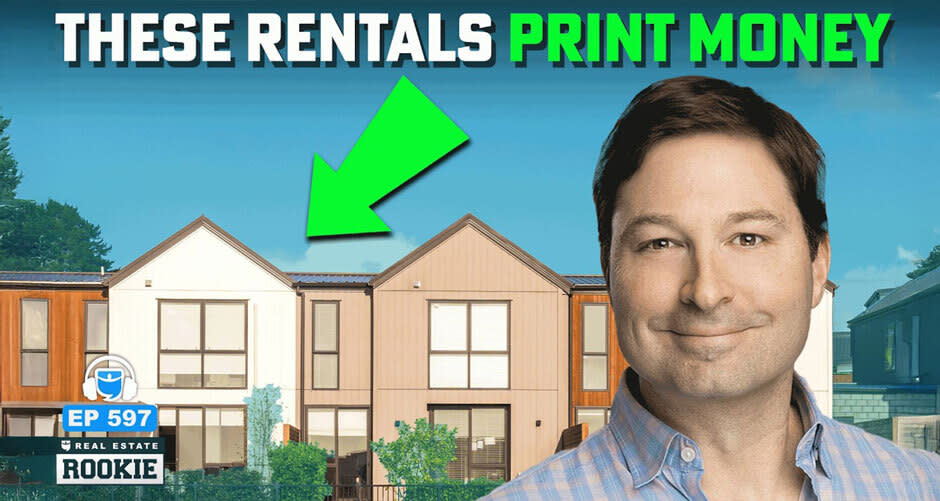
Monthly furnished rentals, also known as midterm rentals (MTRs), are quickly becoming the go-to strategy for first-time landlords and seasoned investors alike. And as Jeff Hurst, CEO of Furnished Finder (opens in new tab), recently explained on the Real Estate Rookie Podcast (opens in new tab), monthly rentals are the perfect entry point for investors looking to generate steady income with lower startup costs and broader market opportunity.
Monthly rentals have broader demand than short-term rentals
Most short-term rentals thrive in vacation-centric areas: beaches, ski towns, and tourist-friendly cities. But that only covers a small slice of the U.S. housing market.
Monthly rentals, on the other hand, work almost anywhere. That includes suburbs, commuter corridors, university towns, and even rural areas. Why? Because the demand is driven by essential, everyday reasons, not tourism.
Here are a few tenant types fueling monthly rental demand:
Corporate travelers, consultants, and contractors
Travel nurses and healthcare professionals
Relocating families “trying before they buy" or dealing with insurance claims or home repairs
Academics and graduate students
Digital nomads and remote workers
Takeaway for rookies: You don’t need to own in a high-demand vacation market to succeed with furnished rentals. You just need to understand the real-world tenant use cases in your area.
The start up cost is lower than you think
One of the biggest advantages of monthly rentals? You can furnish and launch a unit at a fraction of what it costs to compete in the short-term rental game.
You don’t need hot tubs, game rooms, or designer decor. Instead, monthly tenants want:
Clean, comfortable furniture
Full kitchen and basic cookware
High-quality bedding and towels
Reliable Wi-Fi
Workspace and blackout curtains (depending on the tenant type)
You're not designing for a spring break or bachelor party. You’re designing a place to live comfortably, work productively, and cook easily.
More locations, fewer regulations
Short-term rentals are increasingly regulated, often banned or restricted to specific zones. But most cities allow monthly stays (30 days or more) with minimal or no regulatory hurdles.
This means:
No licensing headaches
Easier entry into new markets
Better long-term sustainability
And because monthly rentals aren't tied to tourism, you can invest in more affordable cities or suburbs, where inventory costs are lower and returns can be higher.
Short term rentals are built around a core leisure use case. That rules out 90% of population zones in the U.S. Monthly rentals work where the people are: hospitals, universities, schools, and commuter corridors.
Room rentals = hidden cash flow opportunity
Want an even more affordable way to start? Room rentals are a powerful entry strategy.
With over 60,000 room listings on Furnished Finder, many investors are tapping into house hacking or converting unused space into steady income.
Whether you're renting out a room in your home or buying a duplex to live in one unit and rent the other, room rentals allow you to:
Start with minimal capital
Learn how to manage tenants
Build cash flow to fund your next property
Data-backed demand research for any city
Not sure if your city has demand for monthly rentals? Use Furnished Finder’s Market Insights page (opens in new tab) to research monthly rental demand in your area:
Size distribution by bedroom count
Average rental rates
Inventory supply and demand
Market saturation indicators
You can also pretend to be your target renter:
Search hotels nearby (are they $150+/night? That’s your comp.)
Check Airbnb for 30-day listings
Talk to local hospital HR departments or relocation companies
Jeff's blueprint for real estate rookies
Start with what you know. If you live near a hospital, school, or industrial corridor, there’s likely demand.
Start small. Rent out a room, convert your garage, or furnish a small unit.
Furnish cost effectively. Stick to the essentials: good bed, good cookware, good internet.
Price monthly, not nightly. This simplifies operations and reduces turnover.
Focus on affordability + livability. You’re creating comfortable housing, not luxury experiences.
Ready to Get Started?
You don’t need a second home, a beach condo, or a huge renovation budget to make monthly rentals work. Whether you're looking to supplement your W-2 income, build wealth slowly, or simply earn extra cash without the stress of short-term rentals, monthly rentals may be your best path forward.
Explore your market today. (opens in new tab)
Listen to Jeff’s full interview on the Bigger Pockets Real Estate Rookie Podcast
Episode Transcript
Think real estate starts and ends with Airbnb? Well, today's guest is shaking that belief. He's the CEO of Furnished Finder, helping landlords tap into monthly rentals that outperform both short-term and long-term rentals. From booming relocation demand to under the radar opportunity in mid-term renting, Jeff's got the data and the vision. This is the Real Estate Rookie Podcast. I'm Tony J. Robinson. My usual co-host Ashley Kehr is out being irresponsible on the beaches of Mexico with her kids and her family, but she brought in the next best co-host I could ask for, which is Garrett Brown from the Bigger Pockets, Bigger Stays team. Garrett, thanks so much for joining me today, brother. Always a pleasure. And big shoes to fill with Ashley Gone. And I'm super happy to be here. But let's welcome along our our guest for today, Jeff Hurst. Thanks for joining us. Thank you for having me. Very excited to join you guys. And uh jealous of Ashley also. My wife and I head to Mexico this Saturday for our 20th anniversary. Oh, there you go, man. Well, congratulations on 20 years. Yeah. Well, Jeff, super excited to have you on with this, man. So, Jeff, you said in other interviews before that monthly is different than midterm. What's behind that reframing and why does the the search demand support that? Yeah. So, the uh the insight here is we used uh Google Analytics to just look at how do people search the category? What are they talking about? And you know, like almost everything in business, just follow the consumers, know your customers and what's happening. And what we learned was that they're typing into Google monthly furnish rentals or monthly rentals 50 times more often than they're typing in midterm rentals. I think most of the people typing in midterm rentals are people who are actually in the real estate industry and have grown up with the term. It's kind of an inside baseball term around, well, there's short-term and long-term, so what's the thing in the middle? It's midterm. But if you're a renter, you want a monthly rental. Like you're actually more likely to search for monthly or sublet or short, you know, um month-to-month terms like that. And so we're trying to encourage people to like use the language that the the tenants and the renters actually want to use because that's how the category is going to going to grow faster is to kind of keep it in that every man speak. It's so interesting because I I feel like the same thing has kind of happened in the short term rental days. As a consumer, people search Airbnb and maybe to a lesser extent, they search Verbbo or vacation rental, but very few people are searching the phrase short-term rental in XYZ city. They're just going to go, you know, to Airbnb or whatever it may be. So, it's interesting that you're seeing the same thing in the the kind of midterm rental space. How how are you seeing demand kind of shift within the the monthly rental search volume? Yeah, it's um you know and then you know as as backdrop almost all of my career is short-term rentals and so I was the chief strategy officer at home away when we sold to Expedia. I was then the president of uh Verbbo for several years and then was the chief operating officer at Expedia Group. So for more than a decade I lived that short-term life and kind of saw how that evolved and it was what got me excited about Furnished Finder. I when I left Expedia I didn't think I'd end up back in travel. I couldn't believe this platform existed because I'd been in short- term for a decade and never heard of it. And I got really excited about like what's changing in kind of like macroeconomic and with short-term rental that could fuel this rise. And there's a handful of things that are really changing. So, first of all, from the short-term side, it's regulatory. Almost every city has some sort of restriction on short-term rentals now. And almost no city has a restriction that's 30 days or more. And so there's a little bit of a sweet spot that comes in when you start to sign a traditional monthly lease. The second thing that's going on is inflation. Um, and inflation, you know, has impacted pocketbooks, but it's also impacted the ability to buy homes, mortgage rates. And so, not only are more people renting, but also more people are choosing to stay in a rental for these kind of midterm stays because it's cheaper than hotels and it's cheaper than Airbnb because we don't have any service fees. And then the third thing going on has been, you know, co kind of reshuffled how people work and there is a lot more flexibility. There's digital nomads that can travel and there's a greater openness to being gone for 2 months in the summer and staying somewhere for 2 months, but also in working somewhere four days a week and then going home for the weekend and like it's it's created this dynamic where we're seeing a lot of growth outside of traveling nurses. which is what we became famous for, but into relocations, corporate academics, and all these new use cases that people don't associate with. Yeah. No, that's that's great insight cuz I'm a real estate agent in Houston, Texas, and I have been for eight or nine years now. And just anecdotally, in the past year or two, the shift from, you know, the amount of buyers out there has dramatically went down, but monthly rentals and, you know, some long-term rentals are are prevalent, like becoming more prevalent every day. Like people forget that, you know, there's oil and gas workers that travel around and are looking for rentals in different areas, monthly rentals. And so the opportunity has kind of exploded in a lot of areas. Where are you seeing the opportunity gap today for rookie investors in this space? I mean, one thing I' I'd start with for rookie investors is like, you know, I do encourage people to kind of like either stick with what you know or stick with what you're passionate about. And so if you have friends or family who are in the construction industry, learn more about how they travel. If you have friends in the nursing industry, learn about how they travel. If you're like me and maybe kind of came up through more corporate, understand who's going to be staying in these units. And then what you're basically who you're competing with. And I think that who you're competing with is what's often most misunderstood is that for the most part, midterm rentals are still often competing with like an extended stay America or, you know, Embassy Suites and like these hotels that might be charging $150, $200 a night. Well, you play that out. You can charge $4,500 to $6,000 for a studio that's way nicer than these. And so you're not competing on the same sorts of things, but like really emphasize with what you know. Like for my own portfolio, which is mainly short-term, like I know Central Texas, Texas triangle, got a lakehouse, got a ranch, got a beach house, and I knew who was traveling there and how to help build and design for it. And so I'd really start there. Houston's a fascinating one because it kind of has everything because not only does it have oil, it's got this huge medical center and people think about it for like um traveling doctors, traveling nurses, but the bigger use case I think is actually traveling to Houston for cancer treatment, traveling to Houston for this where you want to be comfortable and you need a monthly furnish rental and there's been a lot of inventory growth to help serve that need which is more of a community service than you know a leisure STR for bachelor parties. Jeeoff, one one followup on that is you just talked about like, you know, supply increasing in Houston on the on the short-term rental side. We saw massive massive increases nationally in supply postco and 2122 I think the the the industry was able to absorb that supply growth, but you started to see cracks late 2022 definitely in 2023 where in most markets year-over-year revenue had come down. Are you seeing a similar saturation in the midterm rental monthly stay market as well where there's this over supply that's starting to pull down revenues or do you feel that there's still a lack of supply in this space specifically? Yeah, I think it it's it's much earlier there's a lack of supply and and part of the reason is there's there's two things going on. So like there's the macroeconomic things I was talking about around, you know, there's these shifts that are encouraging people to not only buy this as an asset class, but live in these or travel to these. But the other thing that's happening is when you think about the diversity of use cases between short-term, you know, Airbnbs and what we do at Furnished Finder, Airbnb is really built around a core leisure use case. And so it's close to restaurants, it's close to downtown, rivers, beaches, lakes, mountains. that rules out 90% of the population zones in the United States. Like they're really concentrated. And so getting overs supplied is really over supplied more to neighborhood level. And then you think about where midterm rentals are. They're by hospitals, they're by universities, they're by good elementary schools, and they're by commuter corridors. They're really not where a lot of the Airbnbs are. And they do kind of start to take up a different space. A challenge I've seen is that the Airbnb owner who bought it for a short term and wants to just make it a midterm may not be in the right neighborhood and may not have the right outfit for what's going to be successful. It's often a like how do you go get this thing or supplement your short-term strategy with midterm. You can't just swap them in and out because they're different customer types. How how would in somebody that is curious about figuring out if they're going to be some demand in the area they're in? Like short-term rentals is in my op, you know, I I only mainly do short-term rentals, so it's a little easier for me to analyze it. But if I was trying to figure out if there is demand in an area or if there's even a chance to, you know, find some possible offmarket deals in the in this particular market that I'm thinking of, how would somebody kind of evaluate that or what are your tips for a rookie that's thinking about it? Yeah. So, the first tip is we do um we have a page we power called it's Furnished Finder.comstats and you can look up any city in the US and it'll tell you the most recent I think it's the most recent 90 days of what's happening. So, it shows you how many searches have happened, how many times a page like a property page has been viewed, what the inventory makeup is, and there's a few rules of thumb I kind of apply to it. If you go to any one of those cities, and this is a a product experience we want to improve. So, if you get there and are discouraged, know it's going to get better. But there are some rules of thumb. And the rule of thumb I'd start with is if you divide the total property views by the amount of inventory and you're kind of like around 200, you're you're in the ball game. Um like that's average. You know, people are performing well. If you get to 300, you know, it's more like you're a top performer. And if you're above 300, then you're really on to something. And that's a rule of thumb that I think you can apply. It's easier to use at a um in the more rural areas and I actually think this strategy is better for suburban and rural. It works perfectly fine in urban, but um the way we built that particular experience is kind of geography radius based. And so if you were looking at Houston, you just cover a whole lot of different use cases because the commute times so different if you're in dense Houston versus if you're in Colleen, Texas or something like that. So that's the first thing I do is go to the stats page and check it out. The second thing I'd do is pick whatever use case you're solving for, relocation, corporate or nurse, and pretend to be them. And that really starts with go to Expedia and see what the, you know, long-term hotel market is. Is there an extended stay America nearby? Is there a garden suite nearby? Is there, you know, going on down the list, then look at Airbnb and see if you see people who have, you know, long blocks of calendar or 30-day minimums. I love the point that you make about the the limitations of short-term rental market selection and how it it reduces the opportunity you have to select the right markets because you're right, 90% of the United States probably doesn't make sense for a true profitable short-term rental, but you've got a much larger geographic radius or options when you go the the midterm rental route. It's not only larger, the inventory is cheaper. you know, it is a lot cheaper to buy something in, you know, Houston suburbs than it is, you know, in Rice Village. Um, and so if you start looking at this as, you know, I can buy a duplex or a quadplex for the same price as the short-term rental I was shopping at a leisure destination, it really changes the dynamics of the cash profile. And I and I think that's maybe the the challenge at times with the short-term rental industry is that you want to go into markets that are mature enough to, you know, to to actually perform well. You have some level of confidence. But then typically in those markets because they are mature, because people know they perform well, you've now got this this upward pressure on pricing. And it's like, well, it might perform well from a revenue perspective, but I'm am I actually still profitable given the price I have to pay for that property? So you're you're almost able to solve that issue with this midterm rental strategy because you can still get a a strong revenue profile in relation to the purchase price that you're paying. And I think that's where the that's where the magic it seems to be. I was going to say short-term rentals have such an amenities arms race right now too that you're you're you're spending almost as much on the amenities as you are just to buy the property. Yeah. And you know there there's there's two other things at play. You know, the a tricky dynamic with short terms in particular, what I'd call like the uh a lot of the higherend or cash cow ones is you're not only competing with people who are buying them as rational economic investors, you're competing with people who are just buying like a second home and they may not actually care how much they spend for it. They're treating it for a very different use case. And so I always called it the vanity premium. Like there's a vanity premium when you're shopping on 3A in Florida or when you're trying to buy a ski in ski out condo because you may be bidding against someone who doesn't care if they make money. And if you go to another market where people are more rationally bidding and you've got a strategy that's a superior strategy, there's just a better chance you're going to have a higher cash on cash return. I think MTRS pretty consistently would beat on a cash return profile and they might underperform on an appreciation profile, but then they also overperform on they're just less work. there's three to four turns a year. So, you just gave us the I think one of the best arguments as to why people should start considering uh midterm rentals or or monthly rentals, but let's talk about actually setting it up. So, what are the practical steps that you've seen for outfitting a successful midterm rental? Yeah, I mean, the the thing I'd start with is, you know, again, start with who do I think is going to be my tenant? You know, a traveling nurse is a very different tenant than traveling corporate. You know, one you might have more emphasis on blackout shades. um and the other you might have more emphasis on work space. So start with who you're designing for. Then remember that you're not designing for a family's most important 4-day long weekend or spring break. You're designing for a place that needs to mainly do three things. It needs to be able to sleep comfortably, work productively, cook easily, and you know, maybe there's a little bit of downtime rest, but this is not, you know, it's not pickle ball and it's not a foosball table and it's not all this stuff. It's like and and and then the stuff you want to be sure you do is you don't skimp on towels, you don't skimp on sheets, and you don't skimp on cookware. You know, in a short-term rental, you can kind of get away with some of that cuz they're there for three nights. This is 90 days on average. You care about the bed, you care about the bedding, you care about the towels, and you don't want to travel with your own towels if you're going on a 90-day trip. And so, you know, I think those are the most important things. You can do it a lot more cost-effectively. Think like5 to$7 a square foot. you can soup to nuts out for a mid mid-term rental than a short-term rental. And if you want to learn more about it, we recently did a webinar with Manoan um that highlights, you know, tips and tricks for how to think about the space. My head's spinning now because it's hearing 5 to7 per square foot is like I'm like I spent on on the low end is 25, but most likely 50 to 100 just to get a a short-term rental to be com, you know, competing with everything out there. And then you've got all the maintenance on all that stuff you had to buy. It's probably $5 a year of maintenance. I I heard three and four turnovers the whole year. And again, like my I am afterwards going to be adamantly searching for monthly rentals I can turn into in my area cuz that that just sounds like an operations dream for me. So I think I think we have 13 turns today in my portfolio, you know? So I couldn't imagine three or four for the whole year. Oh yeah. I'm I'm making sure in the back end my my phone isn't blowing up from a a cleaner telling me right now like, "Hey, you know, your sheets are ruined and this hot tub is ruined." And so, and the most frustrating thing is you get a phone call and it's like, "You're out of ping pong balls." That ruined your trip. I No. Yeah. No. Not long ago, I had a guest get so upset with me because they didn't understand how to start a fire with firewood outside in the in the in the fire pit. And I'm like, I can't teach you everything. Like you could simply, you know, like that's not my fault that you can't put twigs together. You know, you know, we we more frequently hear from our landlords that the tenants left it better than they found it because they're living there and they're like, "Hey, you didn't have you didn't have a Dustbuster and I bought one. I'm just going to leave it. I don't need to take it with me." Or, "You didn't have this and I bought it and left it for you." And it's like, you know, that has never happened to me in any of my three short-term rentals where I showed I was like, "Well, you guys left it better than you found it. Thank you." So, it it sounds, you know, this is obviously there's a lot of operations that go into the short-term rental side and monthly rentals seem to be a little more easygoing, and I'm I'm loving that portion of it. What What operation strategies work best for rookies that are looking to get into this and looking to scale it as a, you know, a profitable real estate investing journey? Yeah, for sure. I I I think on the midterm side, um you know, one thing I'd emphasize because you're not chasing leisure destinations, look at how you can do this close to your home. You know, is there enough, you know, try to start self-manage? Can you buy something where you can be the primary point of contact to get started? You can learn more about how this works. And I mean, it also puts you in that, you know, position I talked about earlier of like start with what you know. You know who's coming to your neighborhood. You know more about what type of industry is there. And so try and build something that your community or a suburb near you needs and really begin there. Um there's not as developed of like a software management community for midterms. You really I mean four turns a year. You don't really need software as much. Uh pricing is much simpler. You price by the month, not by the day. You're not repricing every six hours. Like that part's just simpler. Um the thing that you know is also different, there's not as much management opportunity. You know, almost every major leisure destination has three to five vacation rental managers. This is more likely to be managed by a long-term manager. Um, and it's can be hard to talk someone into it because they think they think like four turns a year. Geez, I'm used to one. And so, you kind of have to talk them into that, but you know, you're going to make 50 to 100% more monthly rent. You can talk them through that side. And then they typically charge more like 10 to 15% fees. you know, across my three rentals, I think the management fee when you add everything up as a percent of what the guest paid, it's more like 40%. Um, and so there's a big discount if you aren't going to self-manage by being in the midterm because they just take less of the rate. Jeff, I know you said that like the tech stack is still developing for the midterm rental space, but obviously Furnished Finder is one of the tools that midterm rental hosts are are using. What are you seeing as like the best practices to stand out on the Furnished Finder platform? Is there a golden ticket that you've seen that's like, man, this works every time? I think the um people who know their target audience have an advantage and so I I'll start with like how do I compare it to short-term? The biggest thing I I I've changed people's frame of reference on is like imagine you were competing on Airbnb in 2016 as opposed to 2025. And so what that means is like one there is less inventory so it's easier to stand out. Photos probably matter even more. Like you can't possibly be competitive on Airbnb without professional photos. You can be standout on Furnished Finder with great professional photos. Um and so it kind of changes the competitive positioning. And then something that more than anything is a communications like remember that these function more like Zillow or Apartments.com (opens in new tab) and Furner like we're classified lead sites. And so the necessity of replying fast and communicating clearly raises the bar a lot because there's not just an instant book. You're not going to get an app notification. Good news, the weekend booked. You know, you're get an app notification from somebody who's applied to stay at your house in one more and if you wait a day, they're probably going to pick the other one. There's a lot my my brain is still just like I'm just so ready now to figure out where the next steps are in my investing journey because now I'm thinking like, okay, there's all these things that I've learned in the short-term rental space that the mistakes I've made that I don't want to make again. Are there mistakes that are kind of common that you're seeing other landlords make in the monthly rental space that I could learn from and other rookies like hearing this right now to avoid going forward? Yeah, I think there's a um you know, one thing I'd emphasize is the uh you know, going back to the knowing your customer, it's like people overinvest because they assume they need to do something more than what the actual use case in their area needs or they undervest for the underinvest for the exact opposite reason. And so I'd say that primary research, you know, and Garrett, you're you mentioned the $25 a square foot. If somebody's done six short terms and then jumps into midterm is like, "Oh, I've got a playbook for this. let me go use my, you know, my furnishing scheme. You know, you've spent four times as much on, you know, outfitting the home as you needed to. And on the flip side, if somebody's coming from long-term and they're just like, well, they're only going to, you know, we just need to kind of like bare bones and I'm going to do it all at IKEA, you may not be competitive enough. And so, I think that's probably the first thing. The second would be that assuming that a good short-term rental will be a great midterm rental. You cannot make that assumption. I think you can assume that a short-term rental that doesn't perform well in a shoulder season or offseason, you should take a crack at midterm rental because, you know, people don't go to Michigan in winter for vacation. They still work in Michigan. There's still universities in Michigan. There's a chance to make money in that, you know, that shoulder off season. And then the third mistake that I'd say people can get into is not appreciating that four turns a year still means the phone rings. It doesn't ring nearly as often, but if you're in Texas and you've got an HVAC issue or if you've got a plumbing issue, like you do need to have a plan. And so getting ahead of it from a process standpoint still makes sense. It's just that your process manual is more likely to be two or three pages instead of two or three dozen pages. Jeeoff, you bring up a good point around not every short-term rental will also work as a midterm rental. And I I think that's a very important distinction for especially rookie investors to understand because I know that there are folks out there who say, "I'll buy this property as a short-term rental and if it doesn't work, I'll just midterm rent it." And it sounds good in theory, but to your point, not every market supports midterm rentals in the same way. And I'll give you guys a real example. We had one of our properties in Joshua Tree near the national park and um it there was just like a long delay getting the permit for that property, like much longer than it ever been. They were super backed up and it was like a a 90-day time frame before they would even give us like the first response of what it was going to be, right? So, we're sitting on this property for for a while. We said, "Hey, let's try and and midterm rent it." And we put it up everywhere to to try and get people to book. Turns out no one is really coming to Joshua Tree and planning to stay for 90 days. you know, there just wasn't a lot of demand for that. So, you've got to make sure that if you're if you're underwriting a property, especially if you're underwriting in like a true vacation destination, that it actually works in that model and don't feel like you can just fall back to midterm or long-term renting it. Yeah. My my my biggest advice here is underwrite it so that your backup plan is to turn it into a long-term unfernished rental. And so maybe as a long-term unfernished rental, you've got something that's going to do whatever 6% cash on cash or 4% cash on cash. But if it works as a midterm, it's going to do 20 or 15. And then your your backup plan is actually just like, I've got to figure out what to do with some furniture or have a furnished, you know, year-long lease product as opposed to I spent $25 a square foot for a short term and now it's not working and it's an oversold market. What do I do? It's easier to solve from the other side. Jeeoff, I guess just one last question because I I feel like a lot of rookies are are going to want to know the answer to this, but AirDired DNA and the and the in the short-term rental space, they put out their annual list of best places to invest. And um the the internet, you know, the short-term rental community always goes crazy when that list comes out. Do you guys have something similar for the midterm rental space? Like, hey, here are kind of like the 10 upand cominging places that we're we're seeing a lot of traction. Yeah, we do. We uh we actually published on our site the I think we did the five uh five markets by small, medium, large that have the most supply and then those that have the biggest imbalance of demand to supply in a good way. Um and so a few trends jumped out. Um you know I think the biggest trend and something for people to really pay attention is just data centers. Where are you building data centers? I'll tell you where you're not building them. Seattle, Los Angeles, Chicago, Manhattan. Like data centers need a lot of space. They need a lot of power. They need cheap land. And so an example, the fastest growing market we had in the US was Abalene, Texas. That's where Oracle and Open AI are building the biggest data center in the world. You know, there is not enough housing in Abalene to house all the workers needed to build this thing for the next six years. It's just it does not exist. And so you're seeing people turn in, you know, turn create housing on the spot. you know, think people are talking about we're going to build an RV park. We're going to build container housing, we're going to transition this multif family here, we're going to outfit this motel differently. And so data centers is a big one. And it's great because if you know where they're going to be, one, they're usually built by like Meta and Google and Microsoft, like they're willing to spend money to have their workers have a good experience. And the time to value for them to get that done faster is massive. So if you can get there and be early, there's a great opportunity around data centers. The second thing, and this is one that's probably changed the most in my year and a half at Furnished Finder, is more and more families are trying before they buy. Mortgages are high, and inventory is expensive. And so, a lot of families are actually moving into neighborhoods on a three-month rental or six-month rental that's furnished, being sure they like the school, like the neighborhood while they shop for a home. And plenty of times they actually reup, sometimes they don't. What's interesting about it is you're not solving to give them the home, you know, their lifetime home or their dream home. You're solving to give them a comfortable place in the community they want to be in. So, they might be shopping for a four-bedroom home, but be willing to put their family of four in a two-bedroom home for the next 6 months. And that opens up duplex strategies and town home strategies and investing more of what you know. And just think about like how many people do you know that have moved in and out of your neighborhood that have remodeled, you know, that have had an insurance claim or they needed temporary housing. You can almost think of like maybe filling these with friends and family network in some places. And that's a very different dynamic and we're seeing that open up more and more neighborhoods. One last question on that piece, Jeff, because that that's like super interesting insight because the the AI boom, I think everyone's thinking about it from like a technological standpoint, but you're you're coming at it from like a completely different angle, which I haven't heard anyone talk about before, which is is so interesting. I I guess one last question on just like the the demand and and and the kind of trends you're seeing. What are your thoughts on room rentals in the midterm space? Is that also something that you're seeing gaining traction or is it really just the whole place that folks are looking for? No, it is uh it's gaining traction. Um, you know, I'm a big fan of what the guys at Padsplit do. And so, you know, if people haven't checked them out, certainly do. Um, we have 60,000 room rentals on our site. And so, it's a big number. You know, we're probably one of maybe next to Airbnb. We're the biggest room rental site out there. And, you know, what is interesting about it is, you know, we're kind of like the self-s served version for that. And so you, you know, you might have an ADU or just a room you're trying to rent out in your house. And you can get started that way with a very traditional house hacking strategy and start to dip your toe in the water or potentially even create some cash flow to where you can then use that cash flow to fund a mid-term rental acquisition or an arbitrage purchase. And that's something we haven't talked about is arbitrage is much more prevalent in the midterm space than it is in the short-term space. And it's because you're much more likely to be able to get a landlord to give you a three-year master lease that lets you sub if you're subbing it out 90 days at a time instead of three days at a time. It's not doesn't have the same community nuisance type of concerns. And you can very often basically start a midterm business with like one or two months down payment instead of 20% or 10% of a purchase price. And so those are those have changed the dynamic a lot. I am a big fan of the growth opportunity in rooms mainly because of the original macroeconomic point of like I think affordability and housing crisis are here to stay and there's going to be a large chunk of Americans that need to find a more affordable way to live. So Jeff, what you know this I'm can't wait to go into bigger deals after this and go to Abalene and start looking up some deals and see if there's anything out there that could possibly work. But what what shifts in your life has you know have you seen come about this since you've been championing this type of model for everyone? You know, I think there's there's kind of two questions here. What shifts have I seen in the industry and what shifts have I seen in my life? Um, and so I'll start with kind of the life one, and that the um it is very different than running a short-term rental platform. You know, as a president of Verbbo, and we were obsessed over like trying to make these moments perfect for somebody's like highly leveraged spring break or for, you know, someone to be able to afford their dream vacation home or whatever it is. this is a much more I'd say connected to most of the world type of business and that we're really much more solving for um the bell curve of America and we're solving for like can they afford a place to live can they afford a place to work can they afford a place to be when they're disrupted and when they're you know really in need of housing and so whereas I used to spend a lot of time on like a dim movement like I'm not in my backyard how do we prevent this what's the regulatory environment now it's much more to me like of course you want one of these. Like, of course you want traveling professors or doctors in your neighborhood. Of course you want families to be moving in and thinking about how to buy. And so, it's changed my perspective on some of just like how housing works in general. And also like how we got to the regulatory place we got to in short-term rentals. And I don't think that's around the corner for midterms. Um, personally for me, what's been a lot different is like I'm working at a much smaller company. Um, we're only in the US. It's a much simpler type of approach and we're very committed to keeping it simple and really keeping control with, you know, rookie real estate investors and real estate pros. You know, I think that there's probably been overreach on the short-term side of how much control they've taken into the platforms from the end users. And our perspective is that we can build something that's leaner and more affordable by putting more of that trusted control back with the landlords and tenants to just figure it out yourselves. like, I don't know, have a conversation. Get on a FaceTime. You guys can do this. It doesn't have to be disintermediated communication where you don't talk to them until after the booking and you can never talk to them again once the booking closes. Like, it doesn't have to be that complex. Jeeoff, I'm I'm I love so much of what you said and I I think that the the affordability piece is what really stood out to me because like you said, it feels like unless something dramatically shifts within like the US uh housing industry, the affordability challenges are going to persist, if not get worse. And I think the the ability to give folks an option um to to maybe try and relieve some of that pressure in a way is is is an important thing, especially when you talk about like the room rental side. And and I really think it is a you know, it's not like it's a band-aid. If more people would invest in quadplexes and duplexes to solve affordable housing, then you would have more affordable housing. And if more people were furnishing it and like you know furniture is not a it's one of the worst return on investment things you can ever do. Um like as an individual furnishing your home as it's like buying a car as soon as it's in your house you know you're selling it for less than you paid for it yesterday. And so more and more people are also thinking about well I'm just going to rent the furniture through a Furnished Finder. And then, you know, if you start to do the math on, okay, I've got a $2,000 a month apartment that I'm going to come out for, but I've got to go spend three or four months rent to furnish it. Why not basically just rent the furniture along the way and save all that money? And that money might also be enough for you to go buy a midterm rental and start to create cash flow instead of buying furniture for yourself. And so that's the other hidden dynamic is when people ask me about the strategy, I often describe it as like the strategy is how fast can you pay furniture back? And we usually think the payback period on furniture is like 6 months, maybe a little more. And after that, you're just making an extra 50%ish every month on paidback furniture. Like you've actually turned it into a cash flowing asset instead of a couch that needs to be reupholstered. So, for all the rookies that are listening that are maybe somewhat convinced, Jeff, by the wonderful information you've shared so far, what is your challenge to those folks who are sitting on the sidelines thinking about getting into the the monthly rentals, but they haven't yet pulled the trigger? Yeah, my my my biggest challenge to you is to um uh be creative about how how little capital it could take to get into this. You know, if you're going to rent out a room in your house, perfect. You know, wouldn't you rather have a mid-term tenant than short-term tenants coming in and out? Like, that seems reasonable. And so, you can start there and then start to look at what does it cost to buy something that's an efficiency studio near my house. It is going to be a lot cheaper than a short-term rental is going to be in a leisure destination. And so, how can I basically look into that? And then, you know, one of the things that I'm also encouraging people is to think about is like, you know, there's a big aging demographic issue or issue there opportunity in the United States. You know, when you see things that are like estate home sales that you're like, "Oh my god, I can't imagine renovating that and fixing it up." There may be an opportunity to make it a midterm rental that doesn't have to have the same high design, the same feature, the same functionality, and get into a spot to where you're just trying it. And for anyone who's already got a rental, you know, for $179, you can put it on Furnished Finder and find out if you're running so close to the wire that you don't have $179 in your rental business, you should not be in the rental business. Like, you don't have a big enough support fund. And it's these these are the types of things where you need to be able to take risk and just try it. Jeff, that that's some amazing advice. you you pretty much laid out the blueprint for all the rookies listening and myself included to, you know, not just make this something that they've thought about or they hear about online and YouTube and that's kind of getting, you know, buzzy and trendy now, but I think you've really laid it out for everyone to take some actionable steps going forward. If people wanted to reach out to you and ask a few questions or just connect going forward, where's the best place for them to find you? Yeah. So, we have a, you know, real humans on a sales and customer support team, hundreds of them that if you come to the site and reach out to us, uh, they'll answer questions. Uh, I'm also, you know, frequently accessible on LinkedIn if people want to reach out to me and connect. You know, I'm happy to meet prospective customers and think about how we can help people. And then definitely check out our um, Landlord Diary podcast where two of our resident landlords talk through midterm rental experience. I think we're 150 episodes in and a million views and so there's a lot of great content there for very specific topics like room rentals and arbitrage and how to think about target audiences. Well, Jeeoff, thank you so much for coming on. I I can tell that you've got extensive knowledge not just about mentor rentals, but the travel industry in general and I appreciate you sharing that with us. Garrett, thank you for jumping in for Ashley while she's off frolicking on the beaches in uh in Mexico. And to all of our listeners, thank you for hanging out with us today. This has been the Real Estate Rookie Podcast. I'm Tony. He's Garrett and we'll see you guys next time.