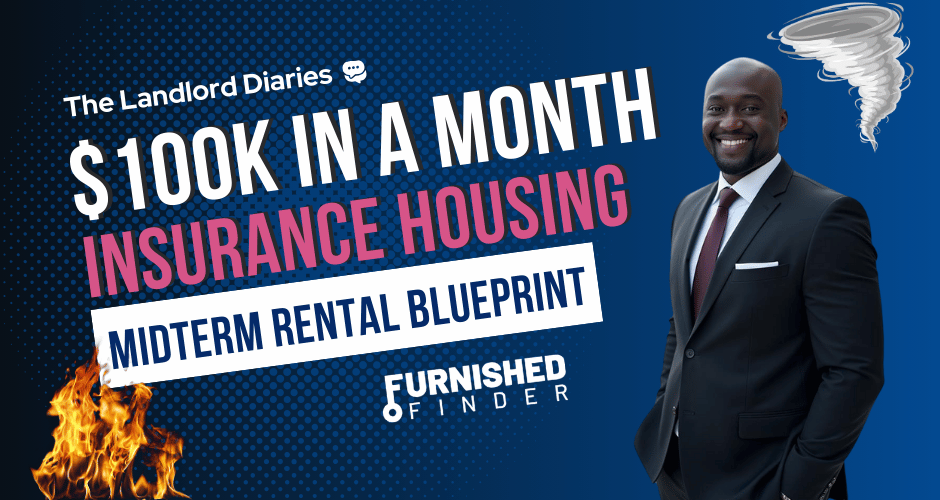
The world of real estate investment is dynamic and full of opportunities, especially in the midterm rental market. If you're aspiring to scale your rental portfolio like a seasoned investor, KP Akom's journey offers invaluable insights. Based in Phoenix, Arizona, KP Akom, a US Army veteran and real estate investor, has successfully expanded his rental business, Streamlined Stay Solutions, to approximately 40 properties on Furnished Finder (opens in new tab). Let's delve into his strategies and learn how platforms like Furnished Finder (opens in new tab) can be your allies in this field.
Market research and smart financing: keys to success
One of KP's core strategies is thorough market research combined with smart financing. Before entering a new market, KP arbitrages a few properties for a year to gather data on tenant demand and property trends, using Furnished Finder to track inquiries and identify profitable opportunities (opens in new tab). For example, in Phoenix, 82% of inquiries were for one-bedroom properties, shaping his investment focus. KP complements this with creative financing, such as owner financing and subject-to deals, often leveraging VA loans for zero down payments. By incorporating rental arbitrage to test markets before purchasing, he minimizes risk while maximizing returns.
Leveraging Furnished Finder's tools
Furnished Finder plays a crucial role in KP's operational success. The platform's housing request feature (opens in new tab) enabled KP to fill 100 FEMA housing needs after Hurricane Helene. By sending targeted requests to potential landlords, KP was able to quickly secure necessary housing, showcasing how effective Furnished Finder can be in emergency or large-scale needs.
For landlords seeking to engage with midterm rental markets, listing properties on Furnished Finder (opens in new tab) is key. It provides direct bookings without the hassle of commissions and hidden fees, ensuring a straightforward and lucrative investment journey. For more information on joining this thriving marketplace, visit Furnished Finder (opens in new tab).
Efficient property management with KeyCheck
Managing a large portfolio requires robust tools like KeyCheck, which optimizes property management through tenant-paid screenings, online rent payments, and customizable lease agreements. For landlords looking to simplify their operations while ensuring security and ease, KeyCheck is an indispensable resource. Explore how KeyCheck can streamline your property management at KeyCheck.
The importance of a diverse tenant base
With changing market dynamics, diversifying your tenant base is crucial. KP's properties cater to a broad range of tenants, from travel nurses to digital nomads and insurance housing clients. This diversity not only stabilizes cash flow but also opens up new avenues for growth and collaboration with organizations.
Building a responsive and insightful team
At the heart of KP's success is a well-organized team. With a mix of virtual assistants focused on customer service, market analysis, insurance and government contracts, Streamlined Stay Solutions maintains a responsive presence in their markets. This team ensures that properties are competitively priced and that inquiries are addressed promptly, fostering strong tenant relations and occupancy rates.
Government vs. insurance contracts
Understanding the differences between government and insurance contracts can further enhance your positioning in the rental market. While government contracts may offer longer terms, they often come with specific requirements and slower payment cycles. In contrast, insurance contracts, provide faster payment and can cover higher rental rates. For instance, KP grossed over $100,000 last month from just 15 insurance stays, compared to $47,000 from housing 46 veterans through government contracts. This highlights the significant monetary differences between the two types of agreements.
Conclusion
Expanding a midterm rental portfolio demands strategic planning, market insight, and leveraging the right tools. KP Akom's journey underscores the importance of platforms like Furnished Finder and KeyCheck in achieving efficiency and profitability. Whether you're aiming to grow a few properties or expand on a larger scale, adopting these strategies could be the key to your success.
For a seamless start into your rental journey or to enhance your existing operations, consider exploring the myriad benefits Furnished Finder and KeyCheck offer. By being proactive and informed, you can navigate the real estate investment landscape with confidence and flair.
For more insights into scaling your real estate investments, visit Furnished Finder's Blog (opens in new tab) or tune in to new episodes each week on Furnished Finder’s podcast, Landlord Diaries (opens in new tab). For more insights from KP Akom, catch episode 125 (opens in new tab) of The Landlord Diaries podcast now.
Episode 125 Transcript
I think we housed about 15 insurance families last month and the gross about that was literally over 100, 000 from just insurance. 15, right? But then on the flip side with the government, you know, we, with the veteran housing, for instance, we did house about 46 veterans. Over just a period of like a month, right?
And then the gross over on that was about just 47, 000. So there's a big difference, right? On how much, you know, you can make really. Welcome to the Landlord Diaries, where we talk about midterm rentals and the opportunities behind them. We'll share landlord stories, talk about maximizing investment potential, and discuss how to live the very best landlord life.
This podcast is proudly brought to you by Furnished Finder, the leader and largest online marketplace for midterm rentals. Remember to like, and subscribe if you enjoy our content. In today's episode, we're joined by KP Akom, a US Army veteran and seasoned real estate investor based in Phoenix, Arizona. KP operates Streamlined Stay Solutions, a midterm rental business with around 40 properties listed on Furnished Finder, primarily in Phoenix and Tampa.
KP shares how he grew his portfolio through. Creative financing and his unique approach of testing markets with a rental arbitrage before buying. Stay tuned for his incredible story, filling 100 FEMA housing needs for Hurricane Helene using Furnished Finder's housing request feature. Ooh, there's a lot of great topics in today's episode.
KP, how are you? Hey, I'm doing well. How about you doing great? We've already had so many great conversations. I think you guys are just everyone listening is just going to really enjoy hearing KP's heart, his story, his business mindset. So get ready for a fantastic episode. And as always, let's start with what is your real estate story?
How did you get started? So I really got started in around 2018. And what actually piqued my interest really was Reading a book called Rich Dad Poor Dad, right, by Robert Kiyosaki. And in that book, he talks a lot about how to use real estate to And create generational wealth, right? So I was getting out of the military, you know, trying to figure out what I wanted to do next, and then that's when it piqued my interest.
So getting out, I had, you know, the opportunity to use a VA loan, you know, so I used that zero, zero percent down, 0 down payments, really, which was actually pretty nice because I ended up getting. So I got cash back from, from buying the house really. So I bought it for 0 and then made money back. I know.
Right. And which was nice because that helped me to buy furniture, furnish the house, you know, and when I got it, I didn't know I was actually gonna. Um, use it for midterm rental, like Airbnb, I was actually thought I was going to stay in there, you know, but my brother in college had told me about Airbnb because he planned on listing his property on Airbnb for the summer.
So I decided to try it out. So I just, no pictures, just, I think one picture of the front of the house. I loaded on Airbnb and then like the next day I got somebody booked for 90 days and the place wasn't furnished, you know, but luckily I had about three days to get a place furnished. So I got it ready.
And then the person came here with a security guard that was coming to Clarksville, Tennessee to work, you know, for work. So he came in there for about 90 days and I'm like, this is great, you know, so that's when I fell in love with, you know, really real estate as a whole when I saw how much Potentially had, you know, how much the cashflow was the potential and also helping people.
So from there, I moved to, um, Tampa, Florida, and I did like a, I bought a house that was a duplex, you know, did a light flip on it, and then also use that as well, you know, for midterm rentals at that moment, I didn't know what's called midterm rentals, right. I was put on Airbnb, but luckily most of the people that I was getting were coming in for longer time periods.
Right. So that's where my, the journey really started for me. Yeah, and when did Furnished Finder enter the picture? So, Furnished Finder really came into play around, I'd say around 2019 when I moved to Tampa, you know, right before COVID. And we had property, we actually had an arbitrage. So, I had my property there, I got my property, and then wanted to get more.
So, I got an arbitrage in Tampa through my girlfriend at that time. And it was a three bedroom, like it was a three unit apartment complex. That we had and no, she said she had a trap because she also had her own property. So as well, right? So she had a travel nurse that came to a place and the travel nurse told us she usually uses an app a website called Furnished Finder so she told me about it And that's when I started looking into it.
So after that, you know, majority of the tenants and, um, uh, guests we're getting were from Furnace Finder. And we'll get to this later, but you actually, uh, majority of your stays are not just travel nurses. You have staff. such a large variety, including this insurance housing, some government contract housing, uh, coming up.
So you want to give us a little brief overview of who your main tenant type is. Uh, and then we'll continue with scaling to 40 rentals in just about six years. That's amazing. Yes, definitely. So when we first started, you know, it was when we first started going big in this space, right. It was. More of a tribal nurses, but as the years went by, you know, the dynamics have changed.
Right. So right now we get in a lot of entrepreneurs, digital nomads, construction crews, you know, and that's what MTO said. And we also do like the corporate housing too, where, you know, we are getting from different organizations like Boeing. Right. And then we do the insurance relocation. So we're helping house displaced families.
You know, people that like their house burned down to fire or flooded for, you know, for some sort of reason, you know, we're housing a lot of those as well. So I'll say our dynamics is pretty broad, you know, even helping veterans too, right? We house a lot of military veterans too as well. And tell us what your current portfolio looks like.
How many properties do you have? How many of those do you own? How many are arbitrage? So the ones that we own, we own 40 right now. Everything we have on Furnished Furniture is one that we own. We, we have managed for people in the past and we still currently do manage. So I think in total we have, we are probably around like 60 that we, so about 20 of them are ones that we are managing, right?
And then 40 other ones that we own. So we currently don't, we have two arbitrage going on right now, but those, um, just specifically for insurance relocation, right? So, okay. What happened was our insurance connects, reached out to us and like, hey. We need a property like in North Phoenix. Do you have anything available?
But at that time, all our properties were booked. So we had when we're doing arbitrage, and we can go back into it when we get into the arbitrage section, but we had really good relationships with a lot of apartment complex managers. Right. So we reached out to one like, hey, this is what's going on and like, yeah, they can give us the rooms for them.
You know, but I'm currently in my portfolio don't really count the arbitrage as part of our portfolio right now. Okay, I think this is a great time to dive into that scaling through creative financing and starting with arbitrage in each new market. So why don't you first tell us, how do you choose what markets to like to look in, uh, and, and arbitrage in the first place?
So a lot of times. You know, we do a lot of market research before we move into the market, right? And we use a lot of different tools and French Finder is one, right? So I'll say it's actually our number one tool we use because that's our main platform. So what we do is when we are going to a new market, a lot of times we do like an arbitrage.
So we've heard, let's say, a perfect example is Phoenix, Arizona, right? Before we came to Phoenix, We have Phoenix was a great market, right? I was about to think about relocating to Phoenix. So like, okay, you know, let's just try it out. So we've got an arbitrage unit here in Phoenix. We posted it on Furnished Founders.
And even though it booked really fast, what we started doing was the market research. And how we do ours is we take all inquiries we get, right? Direct and indirect inquiries. And over the year, right? So every time we get, we are tracking. And then that allows us to see the demand. Right. So let's say as a small Is that Furnace Finder inquiries or where are your inquiries coming from?
Yeah. Sorry. Furnace Finder. So we get all the Furnace Finder inquiries. We have like an Excel spreadsheet and we are always tracking every single inquiry that we get. You know, so that over the course of months, like let's say six months, gives us a lot of data to make actual decisions. Right. So we know that, okay, a place market like Phoenix.
You know, it's easier to work out a one bedroom and two bedroom as opposed to a four bedroom on Friends Finder, right? So the last time I checked the data, for instance, I think out of 2, 000, about 2, 600 inquiries that we've had in the Phoenix area, out of the 2, 600, I think 82 percent were for one bedrooms, which is mind blowing, right?
82 percent was for one bedrooms, and we had about 10 percent for two bedrooms, which I thought would be higher because we usually get our two bedroom rent out pretty fast. And if three bedrooms and was the lowest, right. And then four bedrooms were like 0. 7%. Right. So having that data in mind, we know that, okay, if you're buying a property in Phoenix.
Right. We want to get a one or two bedroom, preferably a one bedroom. Right. So then if it's like, let's say a four bedroom house, single family house we're buying, you're going to get a permit to just split it into like a four bedroom mini apartment. I mean, sorry, one bedroom, like four units. Right. And then rent it out by the one bedroom.
And that helps us to maximize our cash flow. And also really helps with the occupancy because we know that's what, that's a model that works in Phoenix, you know, um, the other markets that we've tried in like, um, Florence, Kentucky, for instance, you know, that the one bedrooms worked Florence, Kentucky. We did market research there too, as well.
The one bedrooms were okay, but I realized that there they wanted bigger properties, you know, so it's very interesting to see the dynamics across the US on the types of properties that people are looking for, right. The number of bedrooms, I mean. That people are looking for. Yeah, that is very interesting.
So when you start in a new market, how many properties do you typically arbitrage? Uh, and then through that whole first year, you're collecting those 2, 600 inquiries you're referring to, and you're turning those in, in any other markets you've been in, and then you're turning those into a strategy of what size to buy, where to buy in the, in that space.
City, et cetera. So how many arbitrage properties do you normally start with? So usually we do three, right? Okay. And I'll spread them out or they're all in the same area. Did you throw in the same area? Actually, it just happened to be, it just happened to be that way, you know? Um, so I'll say like the first one I got in Tampa, for instance, you know, we're trying to get one and then the landlord was like, Hey, we have these other two.
You're going to take it, you know? So I'm like, okay. They gave me like first month free. So like, I'll take it. Right. And a similar thing happened in Phoenix where I actually bought somebody out of his business for that one. You know, it was a very interesting story how that came about. But I bought someone out of his business and he was doing arbitrage, so he sold the three to me.
You know, so it was all in the same area. But once we started expanding arbitrage in Phoenix, because we wanted to try different areas in Phoenix. Phoenix is huge. You know, and we found out about a TSMC project going on in North Phoenix, so we're like, hey, you know what, let's get a few apartments in North Phoenix.
So, with that one, we did start with one, and actually, so we started with two, two bedrooms. And then it was, we realized it was really good, and the data was showing a really good demand for one bedrooms as well. So we ended up getting, I think a month or two later, we ended up getting another one bedroom.
Okay. And so for those listening, what is TSMC? Oh, sorry. So it's Taiwan Semiconductors, um, one of those big chip making companies. And they had like a, I think a 60 billion facility they're building in Phoenix, you know, so we got a lot of, and that's also very interesting dynamic too, right? So even though it was.
In North Phoenix in the U. S. at that moment, a lot of our tenants were actually international people, right? We got a lot of people from Taiwan, you know, because we're coming here as independent contractors to work for TSMC, you know, so that's also very interesting dynamic to add to that. The group of people that we rented out to.
All right. So wrapping up, scaling to 40 midterm rentals already. So intriguing how you go about, uh, you know, really securing a market and knowing that it's going to be a solid midterm rental investment, I think a lot of people are going to, uh, enjoy that takeaway, um, the creative financing side, how did you, uh, secure those deals to be able to purchase in, uh, your main two markets, Tampa and Phoenix?
So. Now, all we buy is credit finance deals, right? That's how we scale up. We've been scaling is through creative finance. So we usually do either like owner finance or subject to, right. And, you know, we spend a lot of time on Zillow. We have a team on Zillow that's perhaps looking for potential deals. We work a lot with wholesalers, you know, we also part of, um, pay small beast group and the sub two group as well, where we get a lot of deals from.
So. What helped us to scale is really, you know, partners, right? Getting a lot of private money lenders that usually will help fund the deal for us, right? Because we try to use a lot of OPM, like other people's money to buy these properties, right? So it's either we're using like a VA loan with like zero, zero dollars down, or we're going to get a creative finance deal and get a partner to go in with.
Right, so the way we structure it usually is, you know, the partner brings all the cash we need for closing, whatever, you know, cash for furnishing and then we do interest only payments for like, probably like, let's say a year. And then we pay them out after that, right? So that helps us keep our cash to furnish and.
You know, expand it, but like get multiple properties at a time, if I would say. We'll come back to how you operate your team a little later in the conversation, but I really want us to get to the Hurricane Helene story and filling the 100 FEMA housing request needs through Furnished Finder's housing request feature.
Today's episode is proudly sponsored by Furnished Finder, the ultimate platform for hassle free midterm rentals. Whether you're a seasoned landlord, Or just getting started, Furnished Finder has everything you need to find your next tenant. With Furnished Finder, you can say goodbye to booking fees, markups, and commissions, and hello to direct bookings.
If you're ready to experience all the benefits renting your property for 30 days or more, head over to furnishedfinder. com where you can list your property for one low annual price. We make it easy to get started.
So, we are about to talk about, uh, the FEMA 100 housing request that KP was able to help fill. First off, we want to take a minute to say hur to those that may have been impacted by Hurricane Helene, uh, our hearts are with you, we're happy that KP was able to use the Furnished Finder, uh, database to, um, help.
successfully provide hope through housing, uh, to so many that were affected from this disaster. And one of the things in the heart of disaster that you never want to go through, but the, the part that comes out of it is how you see a community. community come together and really work, uh, to solve the issues and needs and support those that have been impacted through such a tough, uh, situation.
So, um, we're with you. If you have anything you want to put in the show notes, uh, from a disaster that you've been through, uh, please share. We'd love to connect with you. Uh, but can you share the story and fill us in on what that was like and how it worked? Oh, yeah, definitely. So, you know, when it was like, oh, the hurricanes have come out, you know, and what happened was, um, they released a solicitation that we responded to.
Right. And, and they had different counties within North Carolina that they wanted properties in. So it was single family houses, apartments. We focus more on single family. Right, because of, like, it was easier for us to find. So what we ended up doing was we went on Furnished Finder and did a housing request as an agency.
Right, and you can set the radius on how wide or small you want it to be. So we set the county that we needed, right? We did a housing request. And Furnished Finder sent it to all the landlords, basically. That area, right? So like, Hey, I'm KP with streamline state solutions. You know, we're helping fill out this FEMA need, you know, would you be open to let, I'm giving your property to FEMA for an 18 month lease basically.
Right. And there we got an overwhelming amount of response from people that were interested, you know, and it also showed, you know, how people, I guess people have, it's like, it showed a big thing about humanity, really, because a lot of times people reach out and be like, Hey, you know, I rent it, let's say, usually for like 3, 500, but if it's for this hurricane effort, I'm willing to do like 2, 000 a month, you know, which was really nice to see, but to see.
But um, yeah, I did the request and I think overnight we had almost like 200 people interested, you know, so we had to obviously Through that Furnished Finder housing request? Through, yes, through the Furnished Finder housing request. So I will say it was a bit overwhelming because we were expecting to get that many people in that short amount of time.
Yeah. Yeah. Yeah. You know, so, um, we had to vet, obviously, you know, um, to see what's like the upfront fees, where the costs and stuff like that, you know, but yeah, that definitely helped us, you know, reach what we need in probably less than a week. We got all the number of houses that we needed and submitted them.
I think there's some good points here because really KP you're playing landlord and tenant in a way, right? Cause you're helping to place these tenants. So it's almost like you get to view what it's like as a tenant when you're placing these housing requests, um, and especially placing so many or for so many, right.
But I think there's a really good visual here of, you know, when, when a traveler places a housing request, depending on their needs, they might get. a handful of landlords or property owners that respond, they might get hundreds. So this is your chance to stand out. I'd love to take a minute here and, and listen to you almost as like the placement agent or the quote unquote tenant, right?
What did you learn as a landlord from that experience? Like what responses stood out to you? What gave property owners or landlords a leg up? Like, what was that whole experience like for you? I'll say it was a, I don't, for lack of better words, it was a fun experience, right? Because really doing it the first time, I didn't know what to expect.
You know, I didn't know if anybody was going to respond to it, right? If anyone was going to see it. So getting that response back was nice. But then also like going from the tenant part, right? A lot of people asking a lot of questions. Okay, so they'll be like, Hey, you know, I have like a, let's say like a three bedroom house.
I'm going to rent out one room, but then we have like a guest policy. You can't bring in a guest at the 6 p. m. Literally, I saw that. I'm like, what, you know, or like the smoking policy, right? Or, you know, their pet policies, you know, so it was just interesting to see the different kinds of policies. A lot of people have in their properties, you know, and also the different kinds of fees.
So one person actually, which was very interesting, has a catering company. Right. And one of the fees that she charges if you book a place is a food fee, is a mandatory food fee. Mandatory. Not optional. Mandatory. No, it's mandatory food fee. I don't know. It was because she knew the type of, you know, tenants we're going to be.
You know, it's like, okay, hey, you know what, since they're displaced, you know, maybe we're going to do food for them, but she's probably one of the ones we had to let go because like, we can't pay a mandatory food fee, you know, but that was nice. And also seeing the dynamics of people, like houses or properties people have available to.
You know, somebody will respond like, Hey, they have a pool with a hot tub, you know, for 2, 000. I'm like, wow, you know, that's really nice. And they have somebody that just has a one bedroom with a sofa that wants to charge the 2, 500, you know, so seeing those dynamics, you know, and I think the hard part as a tenant and that situation is really narrowing down.
On Twitch makes the most sense, right, because you have multiple people posting like multiple rent rates and they have different amenities, you know, so trying to find the ones that had the most amenities and that made the most sense was the probably like the hardest part of the whole thing, really. Yeah, and the what I liked is one thing you did is you're like, whoa, that's a lot of responses I only need a hundred.
I have well over a hundred housing request responses Which we call tenant leads on the landlord side and you said okay, I'm gonna pause How can I address all these in a timely matter and get back to FEMA quickly? And you developed a questionnaire to kind of, uh, allow landlords to apply for you to work with what, tell us about that process and what it was like getting those all responses and pausing for a minute.
Yeah. So what, what helped us a lot, like you said, so we, on our website, We created a link to our website on our website, which had basically is like links out a database, right, where people go in and put in a property information, the number of bedrooms that they had, like the county that was in, because one thing we also realized where we're getting responses from people in different counties, right?
Because initially, like our, the radius was super big. We're getting people from Georgia, for instance, when we didn't need it. Right. So what we did was we said, okay, we have all these people. We just showed them the link. Like, Hey, you know, if you can upload your property directly into the database, that'd be great.
Right. We shared the link with them and then they go in there and upload it, which was also very interesting to, to see, right. In the sense that there are times where, so on the website we had it for, global weekend, North Carolina, Tennessee. Florida, right? And you have people in this clearly stays like Florida properties, Tennessee properties, but they have people from, let's say, North Carolina go and put that data in Florida.
I'm like, did you see that? It's a Florida, you know, but I'm doing that though. Definitely help streamline. Right? So instead of going through emails to get information. They just, when they put that information on there and they went to like a Google sheets and we easier to just get the information, clean it up and submit.
And I like, uh, I want you to give the listeners like a broad overview. One thing that you do is you're constantly in tenant leads keeping track of what average deposits are, what average fees are for cleaning, for pet fees, et cetera. And you're taking that data and building this. Amazing, a powerhouse of a business all with midterm rentals.
So, uh, what have you seen are some of those fair deposits and those fees? And what is it like combing the data into a usable form? So we do have a team that literally goes through furnished vendors every single day, you know, being people's property. So we're checking like the rent rates, how much I went to properties for, you know, the security deposits.
And the reason why we do that is one, We want to understand the markets we are in, right? To stay competitive, right? And two is also like, just get a general idea of what other people are doing, right? So one thing we've realized is a place for like Phoenix and Tampa, for instance, right? The security deposits are usually parallel to the number of rooms, bedrooms, I would say, right?
So for instance, most people that have a one bedroom are charging like 500 in security deposit, right? A two bedroom is 1, 000. A three bedroom is 1500. You know, I'll say the max I have seen those around 1500, you know, um, we have seen a few like 2000, but most of them usually for like a three, four bedroom is usually around 1500 is what they do, you know, so which I think is a good dynamic really, because then it makes us very competitive to read because you're not going to charge higher than the market rate on security deposits.
You know, with the properties, you know, there's a big variance right where you see 1 bedrooms, even just the Phoenix market as an example, you see a lot of 1 bedrooms, you know, between, like, let's say, let's just say, like, I think, 1400 to like, let's say, 2200 or something like that. Right. And then you see, like, 2 bedrooms around, you know, the next bracket, basically, but then within that range, still, you know, we found out that the sweet spot is like an 1800, right?
Because what we do is we don't just get the data. What we do is we actually reach out to these tenant people, like these tenant leads. Right. So even though it's in an unmatched, you know, section of Furnished Finder, we still reach out to them like, Hey, we realized you're looking for a one bedroom, you know, your budget is like, let's say 2, 000 for instance, right?
We have a one bedroom for like, let's say 1500. Is this something you'd be interested in? You know, because a lot of times people have their sweet spot, but they're also okay with going higher or lower. So they'll be like, Oh, yeah, it's sending more information than we can send or they'll be like, okay, no, it's way, way higher than, you know, my budget.
And then we go from there, but we still reach out to every single lead we get on Furnished Finder, either matched or unmatched, just trying to see what they're comfortable with, with the range, how higher than the range they want to go or how lower they want to be. And that also helps us gauge. on how to do a person.
Hey landlords! Are you ready to level up your rental game and simplify your midterm rental business? Well, get ready to meet your new best friend, KeyCheck! KeyCheck is your all in one solution for stress free property management. With tenant paid screenings, online rent payment processing, custom lease creation, and a suite of incredible landlord tools, you'll wonder how you ever lived without it.
No more chasing down checks or sifting through piles of applications. Keycheck helps you organize and manage all things landlording in a simple and efficient way. Make landlord life a breeze with Keycheck. The game changer for modern property owners. Visit keycheck. com to unlock the power of stress free property management and take your rental business to new heights.
One more thing to wrap up the FEMA section in the housing request is how does the process work, right? When a request like that comes in, especially with disaster, mind, you have to move extremely quickly. You needed to fill a hundred housing request needs. So how do you partner quickly with those Furnished Finder hosts?
Do they give you pushback? And then what do the contracts look like between you, the host, FEMA, et cetera? Yeah, so we do, we have received some pushback, you know, and a lot of it is mainly because they want to do like a credit check on the people, right? But with that is, most of the tenants are coming from FEMA, right?
FEMA is the one that's paying for it and you really can't do a credit check on FEMA, you know, so that has been like one of the pushback, which is the third thing, right? Um, that happens, but usually what happens is we get the solicitation. We know, okay, there's a number of houses that they need in this area, right?
So we provided, okay, great. You can go ahead and start filling this, the list of people, you know, so what happens is we signed, we signed a lease with FEMA. And then we sign a lease with the landlord to be like the middle person, right? So FEMA pays us and we basically pay the landlord, you know, um, so we try to pay for, you know, Cater for all the landlord's needs, like all the fees that they want, all the utilities, you know, all the bills and whatever it is, we do cater for that.
Right. And then we also cater for FEMA's requests. So that is the hard part, right? Finding the properties that are in line with the FEMA requirements. Right. Because the thing is. A lot of times FEMA actually also will inspect these properties to as well to make sure that like, they're compliant, you know, because I want to make sure, hey, they're saving a safe area.
You know, it has all the basic amenities and needs as well, too. Right. So once we submitted, FEMA will actually inspect these properties before they give the go ahead. I think this is an important note here for landlords too, right? Like, make sure that your properties, you know, You don't have insane fees.
Um, you don't have a crazy security deposit. Maybe consider using worry free waiver. Um, if you do want that high of damage protection, but you, you know, you're going to be much less appealing if you have a really high security deposit, but also make sure that you're checking those boxes and that you're offering the things that these travelers are in need of and that you are at a competitive price.
Right. And I, I really like how you've mentioned being, um, active, like within furnished finder as well. Just kind of keeping up with what's going on in your area. What are the demands right now? Kind of what's supply at, what's the market at? Because. It changes and it doesn't change as frequently as short term where you're going off of like changing daily rates or that weekends are obviously higher than weekdays, things like that.
But you do still have some swings in supply and demand. And it's really important to keep track of those and not just say, okay, I'm going to put my property up and then, you know, wait for my check to come in the mail. You have to be a little bit more Involved in that any stories to share that came out of this experience that might be, um, you know, motivational or provide hope for those that are going through disaster.
I would say there's a lot of help out there, you know. For, you know, for people going through disasters, right? Even besides FEMA, we've had to also help a lot of the insurance relocation companies to house. You know, displaced families. So there's definitely is a lot of. Help and resources out there, you know, and they're readily available to everyone.
You know, there's a lot of company, including us that you can even reach out directly to help you find housing, regardless of your situation or your income bracket or whatever it is. There's definitely a lot of resources out there. And then you also find out that a lot of landlords are actually really willing to help.
You know, we've had so many instances where. A lot of callers and like, Hey, you know, we, I know you were requesting for, let's say one house in this county, North Carolina, but we have like five houses in Georgia. We want to give if needed, you know, we actually had one landlord I spoke to last week that had 15 properties.
He wanted to just give him Florida, you know, which was really nice, you know, like, Hey, I'll just do 15, you know, we can give that with the first month off. So definitely a lot of people that are really interested in just helping out in this recovery efforts. That's amazing. And the part we haven't, uh, finished to wrap this up yet is these were 18 month contracts, like as a midterm rental host coming in, that all of us hope, I mean, our average stay is 90 days, uh, for midterm rentals, but anytime you get longer than that, you're really excited.
So that was a, that was a huge perk for, for the landlords as well, uh, that they can be part of the recovery. And have an 18 month contract with a reliable, uh, government agency as part of that. So, um, before we, uh, kind of get into, uh, the differences between government contracts and insurance contracts, why don't you give us a quick, quick overview of, you have this massive midterm rental operation.
You're combing the Furnished Finder data daily. What does your team look like and how does it operate? So I'm more like, so I'm the CEO of the company Streamline State Solutions. My wife is the president, right? So I do more with the government side of things, and she deals more with the insurance location, but we both help each other out in each way.
So we have that, and then we have a CFO, right? And then we have a COO as well. So the COO helps with all parts of the organization, right? Okay. Like, the hotel lodging, like, veteran housing, the insurance relocations, government contracts and everything. And under that, we have, like, a team of, like, virtual assistants that they are, like, they keep the organization moving.
Right, so we have 7, actually 8, sorry, we have 8 virtual assistants. And out of the 8, 5 are just dedicated solely to maintain rental customer service. You know, so in our operation, we like to do a 24 7 customer service. So anytime you call like the numbers, there's going to be someone to help you out, you know, and that we have another VA that focuses solely on the government contract.
So, they are communicating directly with FEMA every time, right? And anything that government related, right? And we have another VA also does in the insurance relocation part, right? They are also reaching out to landlords, right? Trying to help if we don't have any inventory, trying to find more inventory to help place like the tenants in there.
So, that's really how it does, it's a general like overview of it. But like everyone has their defined duties on what they do, right? Actually focus. So we also have another team that just goes through furnace Finder and get the data. So we call them our market analysis team as well as a team of three VAs.
And that's all they do in the markets. Just go through. They don't respond to people. They just go through looking, combing through getting the data. And we have a team. So the customer service team is. One in charge of responding to people and doing the outreach on furnace Finder, and we have the team that just gathers just the data for all the markets that we are in.
If you're listening, you're thinking that will never be me. I am happy with the one or two properties I have. Uh, so what in the world am I listening to? for the things to keep in mind are he's giving you a ton. KP is giving you a ton of insights of how to be ready with your one to do properties. When corporate housing agencies and providers and travel nurse agencies, anyone that is coming to Furnished Finder to find reliable housing for their travelers or tenants, uh, they.
want to be able to know that you are ready to partner with them. So listen to this episode and take those key takeaways of what are, what fees, like how can I stay competitive? How do I stay responsive? How do I be ready for, uh, you know, those types of contracts that come in? So that's how I advise you to listen to this episode if you don't have a desire to scale in the way that KP has.
But you're just as valuable, uh, in your midterm rental, uh, business as KP is. And all of us together provide over 300, 000 properties nationwide on Furnished Finder for reliable, affordable, uh, midterm rental housing with no booking fees. So keep it up, everybody. We're doing a great job as a team. Uh, and so gov, uh, KP.
As an army veteran, thank you for your service. Uh, feel free to share any, uh, experience you'd like associated, uh, with being an army veteran and then what's the differences between, uh, insurance stays and government housing contracts. Definitely. So, you know, being an army veteran helped us to certify our business as a service disabled, you know, veteran owned small business, you know, and, and the government contracts and realm that is.
Pretty big, right? Because you get a lot of contracts directed, especially from the Department of Veterans Affairs. If you're going to deal with veterans, they usually want a veteran to deal with veterans, right? So providing housing for veterans, usually they want it to be a SDV or SB certified business.
So that has definitely been great. And then, you know, talking about like the differences between like the government contracts and then the insurance relocation, I would say, you know, usually the insurance relocations, As you can get one of the government contract, like 18 months with FEMA, but on average, insurance relocation stays longer than the government's contract.
Right? So, you are seeing some contracts with governments for 6 weeks, some for 3 months, you know, some for 9 months, you know. Um, but the cool thing about the government too, is they do repeat it. They can extend. So you can have like, let's say a 9 month initial term, and then they extend for 5 years. For You know, so one contract we're actually working on, which is more for, like, um, hotel lodging for, like, hospital patients going for medical treatment.
For instance, it was a 1 year base contract and then 5 year option period, right? To extend for 5 years. So, that's pretty cool, but obviously with the insurance relocation, right? It's case by case basis as well, where, you know, you have a family that needs a place for, like, let's say 1 month, but then that's also cool because they usually extend.
Right. Because they're there maybe because their house burned down or it got flooded and, you know, working with GCs, right. It can take a lot of time, you know, so I think they're all, they both have their pros and cons really. And one of the cons with the government, I would say is you need a lot of cash upfront.
Right. You need to pay the landlords because the government is net 30, you know, so you're having to pay the landlords out of your pocket, right. Of your business funds or whatever it is. And then later you end with the government by insurance relocation. Usually within like 24 hours, you're getting paid.
So that's a, I say it is a difference. And also depending on how you do it or your markets, you can really cash flow more or make more from insurance relocation than the government. Right. Even though it's just one property or two properties that you have probably given at a time, you know, you're making way more than the government contracting, you know, so for instance, you know, I think we housed about 15 insurance families last month, and the gross of that was literally over 100, 000 from just insurance.
15, right? But then, on the flip side with the government, you know, with the veteran housing, for instance, we did house about 46 veterans. over just a period of like a month, right? And then the gross over on that was about just 47, 000. So there's a big difference, right? Um, how much, you know, you can make really, but I would say both of them are just great businesses.
And both of my great business models, you know, it's just having to get in, then actually, you know, and then one thing, sorry to, I forgot to add with government contracts, you have to be more proactive, right? You have to reach out, build these relationships and also reach out to the organizations, the usual give you solicitations that you have to fill out the solicitations, right?
So it's more of a bidding process with them as opposed to insurance relocation, right? Is they need it, right? So they are reaching out to you. Like, hey, do you have this property available? Can you house this? Can you, you know, so, um, insurance allocation is more reactive and government is more proactive. Uh, and one thing I found interesting in a previous conversation is the traveler types for government contracts.
While military and veterans are, of course, one of the large government contract types, you mentioned also homeland security. security, people that need stays during trials, things of that nature. So there's a lot of different reasons. I, and I think you see two, uh, government contract needs on average in your markets, right?
So every time he has about two to three on average. That come out, you know, that actually people actually respond to really, you know, um, there are some that I've seen that, you know, like, I think I mentioned in one of our previous conversations where there was a housing for convicted felons, right, where they were staying before trial.
And then nobody wanted to be like, nope, I don't want anyone to stay in my house, even though there's going to be security. But that's the dynamics of, you know, where you're facing, right? You have contracts, they have houses for judges, right? And you have some for felons. So it's really broad with, with that side of the, I guess, the business, the government contract side of the business.
Okay. We've got one last question. This is a question. Our amazing customer service and operations team have been communicating with us from what they hear from you guys, the Furnished Finder Landlords. And they're like, Hey guys, we hear questions like this all of the time. We would love to know what some of your podcast guests do.
So this is just kind of a little, Back and forth conversation, but really we're looping in feedback. So that's kind of fun. Um, and this question is, we have a lot of landlords who connect their furnish, who want to connect their Furnished Finder, um, account successfully to a PMS. PMS is a property management software.
So hospitable host fully there's. Dozens of them, right? You typically with midterm rentals, don't need a PMS until you're probably at 10 or 15 properties, um, because they are so much more simplistic than short terms, but KP with 40 or so is definitely going to want to have some sort of system. Um, Um, but right now Furnished Finder does not directly connect into these platforms, right?
I won't, I won't bore you guys with the details, but it's a, it's a big challenge and it's something that we have goals of integrating with at some point. Um, but, uh, you know, it'll be a future time when that happens. So KP right now you're manually adding projects or bookings into hospitable that you get on Furnished Finder.
Is that right? Yeah. Yes. Okay. And tell us how that helps you manage because you're like a lot of Furnished Finder landlords. You list on other places too, right? Which we totally encourage like list on Airbnb, list on Furnished Finder, list wherever you see fit. Right. It's just that Furnished Finder is such an important part of that puzzle.
Um, but tell us how that kind of helps and how you manage that. Cause I feel like a lot of times when people learn that we don't directly integrate, we They're like, Oh, well then I can't use that software. And that's definitely not the case. Oh yeah, definitely. I'll say, you know, hospitable is a big part of our operations, right?
So like you mentioned earlier, we, every property we have is listed on Furnished Finder and we also list on Airbnb as well, right? So the cool thing about hospitable is it directly pulls your listens from Airbnb. You know, so it's on there already, so we don't have to be good upload pictures or whatever it is, because it's already on there and then once we get a booking from, like, let's say, friends find it like a direct booking.
What we do is we go on hospitable and manually upload that booking in there. And what that does is one, it helps us with our metrics. Right. Because we know, okay, let's say 50 percent of our bookings are direct bookings. And if it's direct, we know, okay, it's from Furnished Finder. Right. And let's say 30 percent is from Airbnb.
So HospitalBook actually gives you that metric. There's one thing that we like. And another thing is also the calendar management, right? The worst thing you want to do as a landlord is double book, right? You don't want to do it on any platform, really. So doing that helps keep our calendar up to date, right?
And prevents us from double booking too, as well. So that's why we use the hospitable feature and I think the 3rd feature of hospitable that I like that I think other landlords can do is it has the guest experience. Okay, so you can do your check in information, your checkout information, you know, parking, laundry, whatever it is that usually you use for Airbnb.
You can also use it for your furnished final guest, but instead of it, like, texting, I mean, send it to them on an app, it emails it to them. So that's how we use this. Once we put that guest in our hospitable. Like 24 to 48 hours before their check in, it sends them the check in information, right? So this is what the Wi Fi, your parking, this is going to be your door code providers.
And then right before the check out too, it also sends them that information too as well. And we also use it to do like a mid stay check in for like the longer stays. So like usually have 14 days. After the check in, we just want to check in to see if there's anything they need from us. If there's anything we can do better during their stay, you know.
So, all that is automated, really, so you don't always have to think about it. Oh, I forgot to message this person who forgot to send the check in information. You know, as soon as we add the manual booking from Furnished Finder. That's a great feedback. And for those of you listening that don't have 10 to 15 properties or more, uh, some of the Furnished Finder tools you can use, which I use successfully, uh, to operate my midterm rental business with, uh, eight midterm rental doors is the house rule section of the edit listing process, uh, to welcome all of my guests.
And then there's also. Tenant tracking. So anytime I want a quick reminder of when my next property is coming available, I keep everything up to date in my Furnished Finder dashboard under the tenant tracking tool, uh, cause I'm, that's the site I'm in the most. I constantly, you know, check my calendar availability.
Uh, if I'm within 30 to 60 days of, uh, my next day, I go recheck my marketing to make sure it makes sense. If it's winter, I switch my. Uh, fire pit pictures towards the beginning and move my pool pictures towards the end. So, you know, you want to stay active in your furnished finder account and we've created all the tools you need To successfully run a midterm rental business from within furnished finder and we're continually adding products So stay tuned to our channels, uh, such as this podcast the landlord diaries Our emails our social media channels and we're going to keep you up to date on Any new products or product changes, uh, that are important for you to be aware of.
So to wrap up the episode KP, how should people connect with you? And for those that are considering invest, uh, investors that are considering Furnished Finder, what would be your like first, okay, this is, this is your action plan. Yeah, definitely. So, you know, I'm, I'm on some, I think one of the easiest way to connect us to our website, which is www.
kp. com. Streamlinedstates. com, you know, um, because that has a link to our LinkedIn, our LinkedIn page, which is Streamlined States Solutions, and then also our Instagram as well. You know, my private Instagram is K W A Y K U U, quite cool, but spelled differently. And then, yeah, you know, people trying to jump into the mid term rental space, I'll say, you know, Furnished Furniture is your go to.
Right 1, 2 that actually like is that they have is the demand in the area, right? So you can actually go on there and that's something I forgot to mention earlier. Sorry about that. But it's 1 thing that we do actually, right? Where we are thinking of a new market. Before we even think of arbitrage or even set up a listing, we want to see that demand student, the searches in the last 12 months, right?
The demand in the last 12 months, because that can also gauge how good that market is. Finnish Finder is definitely your best friend. You know, um, one thing advice I'll give to when posting your properties is make sure you take those professional pictures, right? They really make your property stand out.
I think a lot of people just use their phone and just take a picture and you can really tell the differences. Right? So you really want to make sure you're very particular on your pictures that you're taking your descriptions, you know, all the amenities that you have available or the whatever you have available on the property.
You really want to make sure you're putting all out there. Well, guys, you've heard it on the landlord, Dyers, another great episode. Stay tuned every week for new content from all over the nation with investors in the midterm rental space of all different sizes, going from one property up to 40 plus properties like KP.
So, uh, thanks for being with us. KP, we'll catch you all next week. Don't forget to subscribe, share this episode with a friend, like the episode. Comment, we love to engage with you or, uh, we would absolutely appreciate your reviews on Apple podcasts or Spotify. Have a great day. We'll catch you next week.