Are you a real estate investor searching for a niche that combines stable income with meaningful impact? Dive into Insurance Midterm Rentals (iMTR), a growing sector in the rental industry that offers lucrative opportunities and a chance to support families in times of need. This comprehensive guide will explore the fundamentals of iMTR, highlighting why it's a compelling choice for both seasoned and novice investors.
Understanding insurance midterm rentals**
Insurance Midterm Rentals (iMTR) focus on providing temporary housing solutions for families displaced from their homes due to unfortunate events such as fires, floods, or other damage. Unlike short-term rentals, iMTR leases typically range from one month to several months, offering stability and reliable income.
Why choose iMTR?
Stable and Secure Income: iMTR tenants are generally homeowners themselves, well-versed in the responsibilities of maintaining a property. Since their rent is covered by insurance policies, landlords can expect consistent payments without the risk of non-payment or squatting.
Growing Demand and Limited Supply: The demand for iMTR properties is on the rise, particularly among families seeking a comfortable and homey environment as their primary residences are being repaired. This demand presents a significant opportunity for investors willing to cater to this niche.
Positive Impact: Beyond financial gains, iMTR allows landlords to make a meaningful difference by providing stable housing during challenging times for families.
Getting started with iMTR: key considerations
Location Matters: Choose areas with high homeowner density, good schools, and proximity to urban centers to maximize occupancy rates.
Property Features: Opt for single-family homes with fenced yards to accommodate families and their pets. Ensure the property is well-furnished and equipped with family-oriented amenities.
Pricing Strategy: Analyze local market data from platforms like Furnished Finder (opens in new tab) to set competitive rates. Tailor pricing to reflect the amenities and size of the property, and remain flexible to accommodate longer stays.
Listing your iMTR property
To reach a broader audience, list your property on specialized platforms such as Furnished Finder (opens in new tab). With over 300,000 listings, Furnished Finder is a leading marketplace connecting landlords and tenants for medium to long-term stays. Ensure your listing is SEO-optimized with detailed descriptions, high-quality photos, and an accurate representation of your property’s unique selling points.
Listen and learn: dive into the Landlord Diaries podcast
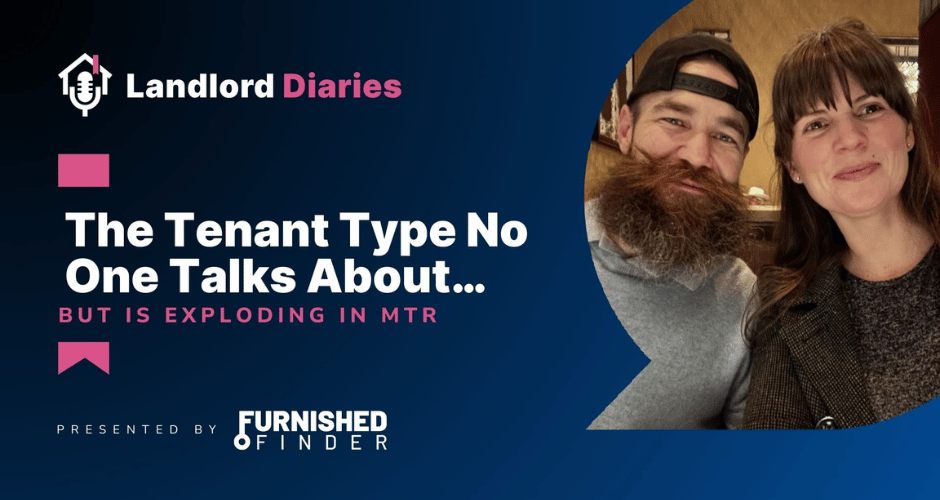
To delve deeper into the iMTR landscape, listen to the episode featuring Jason and Jackie McClure (opens in new tab) on Landlord Diaries, the official podcast of Furnished Finder (opens in new tab). Gain insights from successful iMTR operators who have harnessed this niche to build thriving rental businesses.
Conclusion
iMTR offers real estate investors a unique blend of reliable income, market growth potential, and the satisfaction of helping families in their time of need. By strategically selecting properties, understanding the market, and optimizing your listings, you can capitalize on this burgeoning niche.
By aligning with platforms like Furnished Finder and implementing a strategic approach to property management, you can position yourself for success in the midterm rental market, a niche that promises both financial rewards and enriching experiences.
Episode 154 Transcript
IMTR. The reason we love it, besides that destiny thing, is that you're dealing with homeowners. These are not like passersby that you're never gonna see again. They're not party throwers. They're not, it's not a bachelor party that they're doing. They're responsible people that already own their own house, so they know what it's like to be responsible for a property.
They don't want to squat. They're not, you're not gonna end up with them, not, staying in your property without paying because they wanna get back to their own house. They have their own house that they wanna get back to. They have a day-to-day routine. And on top of that, they're not paying out of their own pockets, their insurance policy is paying.
So it's like a win. The insurance company is. Glad to place them into a place that makes them happy. They just want to get into a nice place and we're loving doing business with them and their insurance.
Welcome to The Landlord Diaries, the official podcast of Burnished Finder, your trusted companion for building success and monthly rentals. I'm Kelly Bailey with eight Cash Flowing Monthly Rentals in Texas. And I'm Katie Lyon, marketing director at Furnished Finder and Real estate Investor with 13 furnished rentals across multiple states.
In every episode, we share real stories, practical tips, and expert insights to help you grow with confidence from securing better bookings to maximizing your rental income. So follow up the show and let Furnished Finder be your partner in building a thriving monthly rental business.
Jason and Jaclyn McClure have built a real estate business around one of the most underrated niches in the rental world. Housing displaced families through insurance midterm rentals. They manage over a dozen IMTR properties across the country, a strategy that aligns with Furnished Finder’s fastest growing tenant type, with 185% year over year growth.
Relocating families now make up. 25% of our tenant audience as co-founders of Vetted Homes and IMTR coaching program, they'll walk us through how to book insurance stays, what these guests really need, and why this model might just be your most profitable and meaningful move yet. This sounds like a great topic.
Thanks for being here with us to discuss all things monthly midterm rentals. Jason, Jacqueline. Which we're gonna go by. Jackie, how are y'all doing today? Hey, we're doing awesome. How you guys? Doing good. Doing good. Yes. If you're not watching, if you're listening versus watching, you gotta jump on and see this really cool mustache.
Yeah. Jackie's been growing it for a long time. It's taken her a while. She want, she grew up wanting to be a bearded woman in a circus, but all she could get out. It's coming from the, so it's coming. It's all coming true. Jackie, I'm so happy for you. I married you. I'm so grateful. So y'all see a little bit of their humor already that's gonna come out, which we're gonna love.
So let's start off with, what is IMTR? That insurance, midterm rental space for someone that's brand new and doesn't really know that part of the world. So it's basically what it sounds like it's not short term, which is, a few days or even like a couple weeks. And it's not long term year leases, but it's right in the middle.
Midterm, which if you're listening to this podcast, you probably know a lot about midterm, but we specifically deal with insurance families, so it would be somebody's house gotten a flood, a fire, a car hits it. A number of things could happen. And this is not just natural disaster fires and floods, but this could be toilet leak, whatever.
If the home becomes unlivable, the insurance companies pay to relocate the families while they're remodeling, rebuilding, whatever. And that's where IMTR comes in. So we have those homes ready to go for the families to just seamlessly plug and go. And tell us what your IMTR portfolio looks like because you guys are like, this is what we do and we only do IMTR.
Yeah, so it's true. Although this last year we have really worked to hone down and cut out a bunch of our properties. We do a combination of arbitrage and ownership. We are originally from Los Angeles, so we have a small group of homes that we maintain in LA area, LA County and Ventura County.
And then we have, we're located currently in Dallas Fort Worth area. So we. Oversee a group of homes out here as well, both arbitrage and owned. And then we have a one-off home up in Indiana that we own. We have a home down in Florida, Tampa area that we also own. And we also used to manage a home in Tennessee and also Cleveland, but we.
Weren't super happy with how they were performing, so we cut those out. This last year, that's our goal is to keep it focused on insurance midterm. So we tried like a downtown Cleveland, a downtown Orlando, and we're like, man, we're gonna be forced into short-term it to really make the kind of cash flow that we wanna see from a property.
And we're like, that is just not our thing. We just do not love doing short term or relying on short term. Yeah let's dive into that a little bit because I think a couple of things. Honing in on what you're good at or what you find to be really successful at for you and your real estate strategy.
And also the arbitrage mix. Arbitrage for anybody who's new is where you don't own the property, but you work with the owner of the property, you lease it from them. And, being completely transparent, letting them know what you're gonna use the property for. So you lease it from them and then you're gonna.
Furnish it if it's not already furnished, and release it out to families or individuals who are in need. That's different from co-hosting. Co-hosting is where, you're not taking on any of the liability as a lease. You're more just managing it and using it as one of your properties, and usually you take a percentage cut.
So tell us how you guys, like, how do you use arbitrage to help you figure out what's gonna be successful and what. Like how do you use that as a part of your strategy? Because it can be tricky to figure out like what you're gonna settle on, right? Yeah. I think we view it more like arbitrage is a great tool for generating cash flow quickly, whereas ownership is really a long-term play.
So if you when we first landed out here in Dallas-Fort Worth, January, 2020, we started from zero out here. We didn't have any properties out here. And so the quickest way to grow for us was to arbitrage, 'cause we could pick up multiple homes at once, furnish them, get, go, get going. We don't have any 30 day escrow or longer.
We'd have to come up with a ton of liquid cash to push put down. So that got us from zero homes to probably seven homes in the first year and a half out here. And then we had a big snowmageddon, a winter storm, and that just filled us up like we were over. That demand was crazy.
And the contractors were all backed up for a year and a half. So we had super long tendencies during that time. But yeah that's how we describe it. If somebody doesn't have a lot of of cash reserves to put into this and they want to get going right away. Then arbitrage is a fantastic way to start generating cashflow almost immediately.
And of course, like if you have the money, like we actually now, as we're getting older, we prefer owning so that he alluded to it earlier is that we've been dropping off the arbitrage properties. If they're willing to sell to us at the end of the term, then we're like, we'll buy it if they've done well, and if not, then we're like, we'll just.
Easily take that furniture, move it into a storage while we find a home that we know is gonna perform better. So for example, like the Orlando property, when we were getting inquiries, like Furnished Finder, yeah, I have a client, an insurance client, and they need six months and where's the home? And I would send an exact address and oh, they drove by it.
It's too urban, or does it have this or does it have that? So you're taking notes on the side and you're keeping records of. The whole year we've had this arbitrage. We've lost the client, six times because we didn't have a fence backyard or because it was too urban, or they needed to be west of the railroad or east of the whatever, the freeway.
And then, at the end of the year we're not gonna renew the lease. You might have. Barely made a little money might, we ended up falling on STR 'cause that's what we do, right? When you can't get MTR if you're just waiting and you get impatient, we just gotta pay the bills.
So we just STR too much work. Did not wanna keep it for that reason. But you're taking notes and you know what you're gonna not do the next time. And that furniture can all just go into the property that you buy, that people have asked for this property. I would've had it filled six times if I had this home instead of that one.
So it's like. The broken road that led me straight to you. Oh, so romantic. I've, I've used the analogy 'cause we have quite a few arbitrage properties as well, and it is, it's a very easy entry point. It's, you don't have to have 20% down, you don't have to go through the process, I feel like, and.
For listeners who have listened to a few episodes, they're probably getting sick of this analogy, but it's dating before you're getting married, right? It's like you get to test it out, you get to see what is this property gonna per perform? What kind of travelers are gonna be interested, like you said, like I don't have a fenced yard.
Is that gonna be a big deal or not? Sometimes you can take hints, but sometimes you just gotta test it out. And these bigger properties have. I feel like the way I describe it is they have a more intense demand, but it's typically a smaller amount of demand, but there's also a smaller supply.
So I'm interested to hear from you guys the appeal of IMTR based on the fact that there can be like more sporadic and less supply, or I'm sorry, demand, but there also is less. Supply, but there's a big upside. Tell us about why do you like IMDR? IMTS are amazing for a number of reasons.
And I think the reason that we primarily do I mt. R is because we were blessed with this path. Like we weren't expecting to end up doing, I MDRs 10 years ago when we started. We actually had a condo in North LA County that we were upside down on. It was after I had refinanced at the height of the market, and then everything crashed in 2008, nine.
And so we're just sitting on an upside down property. We moved to China our first year of marriage, and so we had tenants in the property that were not covering the full mortgage. We had first and a second, and then HOAs in California are wild, so that also every month we were just sending mon money back every month to cover the bills.
And then all of a sudden through this crazy turn of events, we ended up. Learning about a huge natural gas leak that occurred the valley south of us. So we were in a valley, and then the valley south of us had this huge natural gas leak, and all the residents in that area, or many residents were having nose bleeds, migraines, all sorts of symptoms.
And so it turned into this big. Insurance fiasco. They didn't know where the leak exactly was coming from, so they ended up having to relocate hundreds, maybe even thousands of families out of that valley, out of their neighborhoods someplace, until they could figure out where this leak was happening and remedy the situation.
So we heard about it. We called in. I remember Jackie called in. We were back to China. It was like reverse hours, right? So in the middle of the night and she's calling in and Hey we heard that you're looking for properties. We have a home that's in, this valley, it's pretty close to you.
And he is is it available right now? And she's yeah. And he's how much is it? And she was like thinking, oh I'll go big 'cause this is an insurance. So she's I was thinking just $3,500 a month. And he's okay. I think I can get you closer to 5,500, maybe even more.
And she's per month? And he's yeah, per month. And he's she's oh yeah, okay, it sounds great. And they ended up getting us $7,000 a month on that property. And when that happened, everything changed for us. Our view of real estate changed. It changed from just this thing that we're holding onto, waiting for appreciation and hoping that one day we could pass it on to our kids and it'd be valued more to an actual vehicle for building.
Wealth today as well as tomorrow. And that's what kind of thrust us into this thing. We're like, we are never going back to LTR ever. And then that, so we started with M-T-R-I-M-T-R specifically. It was our first booking. We did STR, those were the early days of Airbnb where you could just.
Throw someone in a room and they pay you a bunch of money, and you're like this is crazy. And everyone's just paying and you're building up these reviews and you're like in the middle of nowhere and you're like, why are people booking? And you're asking 'em, they're like we're in town for an underwater hockey tournament, underwater hockey and whatever, so many different reasons, right? Yes. It's so great crazy when you ask people and so that's what got us going, but IMTR, the reason we love it. Besides that destiny thing is that you're dealing with homeowners. These are not like passersby that you're never gonna see again.
They're not party throwers. They're not, it's not a bachelor party that they're doing. They're responsible people that already own their own house, so they know what it's like to be responsible for a property. They don't want to squat. They're not, you're not gonna end up with them, not, staying in your property without paying because they wanna get back to their own house.
They have their own house that they wanna get back to. They have a day-to-day routine. And on top of that, they're not paying out of their own pockets, their insurance policy is paying. So it's like a win. The insurance company is. Glad to place them into a place that makes them happy.
They just want to get into a nice place and we're loving doing business with them and their insurance. I think that's a great way to tie it all in. I'm thinking what those listening M might be gearing towards a, but what about this? And so you are operating in a niche of a niche, right? First monthly, midterm rentals is a niche of real estate.
And then within that you have the insurance niche of monthly midterm rentals. My guess, everyone is thinking, great. I'm so glad it's working for you, but how would I get started and what should I do about it to make sure that the property I have in mind or already have is a good fit because furnishing is not cheap, right?
That's. Furnished Finder I is one low annual rate for the year. It's a no brainer. Yeah. It's choosing to furnish your property. That is the big decision, right? For sure. So when you're thinking of, I think it's the number one question y'all get in your Vetted Homes coaching program, and the number one question we get as well is, you knows it's how do you analyze a new IMTR property in this case and determine rental rates.
Looking for a simple professional way to manage your monthly rental furnish binders, landlord tools brings everything together. Tenant screening, lease templates, and online rent payments all in one place. Stay organized, save time, and stay in control. For more information, explore landlord tools. Today like we have a few that we. Just know they're always gonna be booked. I don't know what it is. It's this kind of the secret sauce, but the basic formula is, where there's a lot of homeowners. So like the most, at the most basic level is like we, we talk about like where there's a whole foods, where there's good schools.
You wanna find good school districts, but all those things are actually just targets pointing you to where people buy homes. Because we're dealing with homeowner policies, right? Homeowner insurance policies, right? So you wanna find a neighborhood or an area of town that has a ton of. Homes that are occupied by the owner.
You could do Google searches and stuff to find that out. And then we like to have within the 30 minute radius, we like to have a decent sized population, 75,000 or more within a radius. That doesn't mean your little town. Like we have a house that in a population of 9,000, but just 20 minutes up the road is a larger town of whatever, 80,000 or something?
Yeah, 180,000. Ooh. Yeah. Now, do you guys care about the age of the homes or the neighborhoods? Because like you're saying, a lot of these insurance claims don't just come from like fire or natural flood, but the toilet leaked or the roof fell in, or whatever it is, have you found any association with that and the age of the neighborhood?
You would think that it would work that way, but it doesn't, unfortunately. It doesn't. Okay. That's interest. Interesting. Tell me more. New reconstruction is not always the best. That's just the fact of the matter. So yeah, the floods happen and electrical issues happen in new homes just as much as they do in old homes.
And then you have this other trade off it. It might be actually a little bit more in the older homes, right? Because you're dealing with older hardware. However, when you get into older neighborhoods. You're not necessarily dealing with a neighborhood now that has a high, as high of a home ownership rate.
So there's this trade off going on. So if you're gonna go into an older home, you still need to make sure that this area has a lot of homeowners. Otherwise, you're just cutting down your population that much. And also remember that there's a lot of choice here. So if there's an older neighborhood.
And then five minutes away is a brand new neighborhood that you're like, I wanna buy in there. But maybe in that neighborhood there's not gonna be as many problems. If you have a really nice house, people from five or 10 minutes away are gonna prefer staying in your house anyways, rather than a house.
Maybe that's closer, but it's old and ghetto and our, we have some older homes, but we always make them really nice. We'll get in and just at paint everything. If there's popcorn, ceilings, remove, we want it to feel like somebody's gonna look at it and go, wow, this is as nice or nicer than my house.
Yeah. We want them to walk in if they're touring the house. We want 'em to walk in and be like, I want to stay here. This is beautiful. Let's stay here. If I get a choice, I'm picking this right. And that's what we train our community members to do. It is not just about getting a house in a certain area, but making the house something that where somebody wants to land.
Because a lot of times these guys do get a choice, right? And they do get a choice so tell us like, what's on your list of if you're like, we're gonna make an ideal IMTR that has a really the highest probability of success, from your experience, what does something like that look like? Is it a single family home?
Do you say you must have a fenced yard, you need to be close to court orders? You know what are some of those items where you're like. This punch list is gonna maximize your chance for success. Yeah, we call it casting the widest net. So you're trying to cast the widest net sign, net up with a, some fish in there.
Yes. Oftentimes, maybe more than half the time these families have animals. That they would like to bring along. So if they're doing that, then it's important to have a fence yard. 'cause usually it's a dog. And you have to determine if you also wanna accept cats because there's a whole nother, territory of concerns that come along with that.
But you're casting a wider net, so you just have to decide. Looking at numbers we've found that three twos up to four threes seem to be right about. What's most common? What fits most families? And remember, insurance is paying like for so if they came from a four bed, two bath, they should be able to put them in a four bed, two bath, right?
So as soon as you move up from there and move towards five, six bedrooms or more, you're dealing with a lot higher price point and a lot less population of homeowners that have that. So that would be like niche, right? Woo. We're getting real complicated. Not really. You know what?
Let's tie it back, right? It doesn't have to be complicated. We're all that rentals are is. Someone has a need and we're providing the solution. That's right. And that's where, how this niche really grew is in the insurance world, is they got displaced, they need a home. A hotel isn't necessarily comfortable especially if they have a pet, they wanna be able to settle in spread out.
Cook, take their dogs, let their dogs out into the backyard, et cetera. That's why the homes are such a great option and why this space has grown so much. So let me tie it all back in with just the idea of Furnished Finder is the largest platform for monthly rentals, right? IMTR is one of those niches.
We've already said larger homes work well for IMTR and it's. About 25% of Furnished Finder's inventory is three bedrooms or greater. So when someone says, okay, I'm calculating these things that you're saying, I'm, there's a high owner occupancy density, the population looks good, I'm in a good school district, all those things.
Now they're ready to add their property. How do you tie in the pricing like. What's the recommended route for deciding how to price an IMTR? 'cause on Furnished Finder we have our Furnished Finder pricing worksheet. I will put it in the show notes, but are there any special things to consider for IMTR for the insurance side?
Honestly, we have, we do a multifaceted approach. We look at Zillow, Furnished Finder, Airbnb, and make sure you're in the ballpark, right? A lot of times people that join vetted homes are like, there's nothing near me. There's no, but then when you learn the correct way to search, so putting in no dates in the calendar clicking be flexible, whatever, this is the Airbnb platform.
You'll actually see things that'll start to populate and you're like, oh, there are a couple, maybe three options that's, you didn't see 'em because they're booked. So if now you can really understand that there's three options and they're all booked, so whatever they're charging, you could probably be right at the high end of that if you're like for if you compare well with them.
It's like just a daily hotel rate. Oh, that's another aspect. We say, look at hotels in your area, because that is the first place that people will go. If their house, for example, had a fire for a few nights, the first few nights, they will immediately be put in a hotel usually. And so if you're a family like us of seven, that's three standard hotel rooms, plus boarding our dog and insurance pretty quickly is gonna go, yeah, we're not paying 200 a night for three rooms plus the dog, six 50 or whatever a day.
We need to find a house for less than that. And but that gives us a pretty decent budget to go find a house, there's lots of ways to budget, but just as long as you wanna make sure this is, sometimes people get this wrong too, is they will just look around on Zillow or Furnished Finder and they're just going, okay, cool, I see there's, four in my area and they're all 8,000.
So that's what I'm gonna do. Look, and make sure that you're not comparing your house to one with a pool or to one that's, has four bedrooms and yours has three. You wanna make sure you're really looking at what you're offering so you can compare correctly. There's a level of flexibility that you can have with insurance, right?
Because you're gonna work with, and you guys can talk to this, but you're gonna work with a housing specialist, right? Or a placement agent if I'm right. And that you might say, oh, I see that this family has three cats. I can accept them, but I'm gonna need a little bit of a higher rent because Totally.
I'm gonna have to. Do some extra cleaning or whatever, so I'm gonna have to red drywall everything. Yeah. But there's a little bit. I'd say with MTRs there's a lot of communication with I MTRs there's even more communication because there are typically, a lot of times families and pets and you're like, okay, you have two dogs.
What? What kind of dogs? What are their lives like? Okay. You have how many cats? Tell me more or, yeah, so tell us a little bit about how that works. The booking process with an IMTR. 'cause it is different than a travel nurse or a professor coming to the area or a digital nomad. Even though with the other ones that you just mentioned, I also love that there's the, this middle man in between you and the family.
'cause it is nice to be able, like you're not. Negotiating directly with the family. You're not putting pressure on them. You're not worried that they're like lying to you, right? Like they're just reporting straight to their adjuster. Hey, we have two dogs. We have this. But sometimes when you're dealing directly with a family, they're, oh, we're not sure if we're gonna bring our dogs, whatever.
So basically they'll reach out to us, they'll tell us about the family, and then they're not negotiating because they don't. If you're working with one of the main companies, now I will say there's a lot of lease matchers now that have come into this space. So they might be a corporate vendor for one of the larger companies that.
So they go directly to the larger company. They get some leads from them, and then they try to go hunt them down. So they're incentivized to negotiate a little bit on the rate. But if you're, she's talking about lease matches, right? So lease manager, somebody a, a third party, really a fourth party that comes in, sees that there's a need in this area, and then tries to go find that need and meet it, and then take some of that margin for themselves.
Take a little cut. Sure. Yeah. But if you're going directly with say a LE solutions, right? Or alacrity or one of the big ones, then they actually are, they have a budget. They have no problem telling you, nope, the budget's 2 75 a day, or they max out at 40,000. So I need to make sure with the contractor, how long, how many months.
They are, there's no incentive for them other than getting the family placed because they get paid when the family gets placed and they're happy to do so I am super flexible and we tell everybody in embedded homes biggest thing is moving quickly. So be willing to answer a call, emails right away within four hours.
We always say. And then if they need to move in same day, we do that. If they need us to pull out a queen bed and put in two twins, whatever we're super quick to do all of that. And then the next thing is just like flexibility. So even with our pricing, I'll say, this home, we ask 7,500 a month for this home.
If we need to be flexible, let us know, especially with a longer lease term, we're happy to do it. And then sometimes they come back and say, it was approved, we're good to go. And sometimes they say, Ooh. Could you come down a little? Because I'm nervous we're not gonna make it to six months or whatever they need.
Sure. Because it's based on their policy, right? It's black and white. Exactly. It's not does this fit in their personal budget or does it not exactly's? What are the boundaries of their policy? And usually those boundaries are pretty. Pretty lenient. Maybe not lenient, but they're pretty large because it is expensive to find temporary housing, like you say, for you guys, a family of seven and a dog, right?
Like Yep. That's built into your policy because it is something that could be very expensive. I wanna take a minute to tie in and poll the audience. We have a question that came in from a previous Landlord Diaries episode in regards to the insurance booking process, or anytime you have a relocation company involved.
So when you're dealing with relocation companies, who is the ee on the lease? And is it going to, is it the relocation company? Is it the family? Can you charge a security deposit for the person staying in the home? Do a background check. How do y'all do that for your business? To give other landlords confidence?
If someone reaches out to them and says, Hey, I got a lead from a relocation company. How's this gonna work? What advice do you have for them? So usually on our leases, they're these leases are generated by the. By the placement agency, whether it's the insurance company or the, or a third party placement agency, and it involves us and the family.
The family that's in there. But it will say payments will be made by blah, blah, blah, housing or whatever. Yeah. Who, whoever the agency is that's making the payments from the insurance policy. So the payments are directly coming from the insurance company. Now, in terms of the security deposit, they're refundable to security deposit more times than not.
Probably 90% of the time, maybe even more than that. That's being put up by the family, so they do have skin in the game. We appreciate that. Because if they leave the house, a certain way, then we will cut into that. But you also have to be mindful that these people just probably did their 1% deductible or more for their home damage.
That's why we're very reasonable with our deposit. And we typically charge a 1000. A refundable deposit. And the reason we do that is because the insurance we use if we end up having to use that insurance for any reason, it's a 1000 deductible for us. So we would just boom, use that and fix whatever needs to be fixed.
It can be a bit of a stretch for family to come up with. For sure. They wouldn't come up with a full month when you're charging, 7,500 bucks or whatever. And then what was the second half of that question on the lease? I forgot it was. They're on there. Oh, background. We actually don't, we do not do background checks and credit checks.
We have never done it in over 10 years. And I think a lot of that is to avoid things like squatters. Like where someone's gonna come in and then, move in and then stay in and stop paying. And especially in states like California, where we're from, where it's really hard to evict somebody is a really long and arduous and expensive process.
But that's not really a concern with what we do because people wanna get back into their homes. They don't wanna stay in ours. And even if they did, they still, that makes me so nervous not doing a tenant screening. Even if they did stay. Our insurance policy has squatter coverage. And they'll pay and get them out.
But what if they have a criminal history or something? Yeah. That could be a real concern, but it's gonna be a concern no matter where they live. True. We've never personally. In 10 years of doing this I don't, I've never met somebody personally who's been in this niche sector longer than us.
We know somebody else that's been in also 10 years. Nobody longer than that. It's 2025, so we'll come back to the comments in a few years if this changes. Okay, keep checking the comments. I tell you what, I'm gonna go out in a limb here as a Furnished Finder rep, and I'll give you guys some tenant screening credits.
So that you can test out using it as a part of your process. Have you used it and turned people down because of the results? Yes. Yes. And I will say it is rare. I've been ready for about three years and I've turned down, I think three people. Were they homeowners? One of them was, and one of them was because he had a nonviolent criminal record.
So it was like multiple DWIs with leaving the scene and like an okay credit. Oh, Jackie does that all the time. I, Jackie, come on, get with the program. And it was like that mixed with an okay credit score. I was like, you know what, this makes me. Uncomfortable. And you have to set your boundaries.
You have to be within fair housing, all of those things. And you have to set your policies and say what's okay with you and what's not okay? And I'm like, I don't know anybody who has a felony record who doesn't present it. Upfront. And I think that's another part of the process I really like about tenant screening is I say, Hey, we're gonna do a tenant screening, just to make a, make sure everything's good.
We're all on the same page. It's quick. It doesn't ding your credit, I give them the spiel. It's really a red flag to me when they don't say anything and something comes up. I have had multiple people say, Hey, I totally get it. FYI, I went through a bad time 10 years ago. You're gonna see that on my credit.
I'm like, cool, transparency. We're all on the same page. We're good. But it's those one, in a hundred where I'm like. It just makes me uneasy. So I challenge you guys to try it because I've actually done it with an insurance. I haven't had a lot of insurance claims. You guys are definitely the experts in that, but I have had a few and I've done it with them and they're, they don't push back.
They've been very agreeable to the process when I've gone through it, but I will give you some credits. For you to try it out. Okay. I don't want anything to happen to that mustache Hey, I'm not on site. They would have to do it, get through our manager first. But I just feel if something happens and the stress, it might create some facial hair loss and I don't want that.
It's a real concern. I appreciate you. One different angle to bring into the security to the tenant screening process is the idea of. Neighbors in your community and monthly rentals being a support to your community, right? Sure. Where short-term rentals, they're not getting screened and it makes a lot of neighbors nervous.
Who's coming into my neighborhood? There's new people every weekend. Like I don't feel like my kids can run around the neighborhood anymore. Where with monthly midterm rentals because you do the tenant screening, you can come. Confidently co like to yourselves, or let's say you do room rentals, like you can confidently communicate to the others in the home or your neighbors that, hey, this is someone that's going to be in addition to the community.
They've had a tenant screening. And it just gives that peace of mind for everyone involved and to help set you up for success. We've, when we do tenant screenings. Majority of the time, like 99%, everyone looks good, right? But then there's been less than a handful with lower credit scores.
So when we see so a credit score that is below what our standard, what our standard is, then we just go ahead and ask a few more questions or that's the time that we jump in and ask for references or proof of employment, things like that. Yeah it's great to have that tenant screening for those reasons.
Now that we've put y'all in the line of fire, do you have any thoughts you wanna add that? Yeah, I promise. We're not trying to be mean. No. The last thing though, is saying that most people with in the IMTR world. When they're displaced, they're only going within a five mile radius of their house. Sure. So if they are, for example, a crazy serial killer, they're gonna move from this street to that street, they're gonna be a serial killer anyway.
So you're not really, you're right. Making the neighborhood safer. You're just moving the. What's the game you used to play in high school? I think like your tenant type is probably one of the less risky. You've got homeowners, you've got people who are moving very close by.
They're highly incentivized. There, there's an argument for you do have something to lose. It slows down the process. Number one. Especially if someone needs to move in from same day and then, or if there's two or three houses and they're like this one's gonna make us do all these tests, and yes, and this one's not, then they might go for the maybe lesser house just because they don't have to jump through the hoop.
Especially if they have, a 600 credit score and they're like I don't know what it's gonna which I don't care about people's credit scores. I'm just one of those. Really the credit score, what does it doesn't impact us at all. I like that it's even. A consideration and that you're thinking about it.
Because I do think, and that's what's nice about, about MtR is and about Furnished Finder. You do control the process, right? And there's no one forcing you to have a transit screening. There's no one forcing you to even have a lease. It's just like best practices and all of these things to consider and to say what fits into your business model.
And I think you guys are in more of a unique position. Yeah I think it's something to noodle over, but yeah, I, that was a, I actually, that was a great conversation. I really enjoyed that, just because it is it's not always you can think about things a little bit deeper and the processes and the different tenant types, but yeah, I would encourage you to give it a try.
I feel personally attacked over, over the conversation. No, you shouldn't feel attacked because I was literal. Literal, I'm just trying to save the mustache. So this has been a fun tangent on tenant screening and lots of different tips for the IMTR world. But part of what we started with is that IMTR can be one of your most profitable and most meaningful moves yet.
So Jason, I'd love to hear a story of, what has this meant for you guys and let's, what's one of those impactful stories that has come from the IMTR world? We have a lot of super thankful tenants. It's really. Rewarding in that sense. We have lots and lots of stories. Immediately I think back to we arbitrage this one particular home in the DFW area.
It was a really older home and it did not present well when we first got it. And we did a lot of painting and we actually ended up doing the design modern Asian super, just a one of a kind of thing with these colors that you wouldn't normally see in a house. And this family said, our daughters were looking through the options and they begged us to, to book your house because it looked like the most fun.
And they did book it. They loved it. We left them a gift card. We knew their backstory a little bit before they moved in. They were super thankful. And that's the thing, when you get to know the families and get to know some of their backstory, you can cater. We do a welcome basket for every family that moves in.
You can cater that welcome basket towards their situation. If specific things, if they have pets, for example, or if they love. Chocolate chip cookies or whatever it is, and so I remember we we did a gift basket for them and we put in little gift cards for their kids specifically to certain places.
And they were just in love. And so they were so thankful and we had numerous conversations with them just because they wanted to keep the communication lines open. It's super fun. We've housed people too like that, that were going through chemotherapy and they were able to stay in our house and keep going on their routine and keep doing their treatment to get better.
We've had people that were fostering kids and so they're like, we actually need to pay the water bill 'cause we need a utility bill, blah, blah, blah. And so they're fostering kids in our IMTR, it's just sweet. 'cause we get looped in to be a part of people's lives way more. You don't in the STR world, but in more than in long term.
Because long term they just move in and then it's their house now. Like they don't even really think about the landlord, but MTR you're really hosting and you take it a month at a time, but. We've had people for 15 months, and we really get to know them. We get to see them and we're sending gifts for holidays and things, so we love them.
We're still friends with many of them. This is a very important choice for them. This is something they need. It's a big need. Yeah. Yeah. All right. You guys ready for rapid fire? Ready? Ready. Don't use me as your shield. You do it. This is my new favorite thing. Because I feel like it's some of the most interesting questions a lot of times, ones that we have heard from other landlords.
So let's get right to it. First question what is something you wish you knew when you started IMTR that you know now? I wish when we first did it, we knew how widespread it was because. Our introduction to it was the natural it wasn't a natural disaster, but it was this big thing, this gas leak, right?
So our initial thing was like, oh, that's not gonna happen again. And it took us probably another year to understand that it actually is mostly little things like. House floods or toilet leak, or a toaster fire or something. And that's when we started opening up and to moving away from more of the SSTR stuff that we had gotten into and primarily moving to IMTR.
All right. I love it. Next one. What are three furnishings that you think are really important to have in an IMTR that you might not need in a different type of MTR? Ooh, interesting. In a different type of MTR. Okay. So like different than if you're hosting a travel nurse or an intern, or a professor.
Ooh, I just so many family tailored things. So like cooking stuff, like I would put either a crockpot or an Instapot. Maybe an air fryer or a toaster oven, because they're typically gonna be families. If you might be like a traveling doctor or something. You're just solo, you're ordering in a lot, DoorDash, stuff like that.
But when you move in with your five kids, you need to cook. Yeah. We do fully kitchen equipped kitchens. And if a family says, huh, the only thing I'm missing is, we like to make whatever, and we, there was no instant pot here. I'm like, there will be tomorrow. I just ordered it for you.
Like always what's a hundred dollars when it makes their experience. Like we leave BlendTech blenders or Vitamix blenders, like really good high quality. Yep. I would say also we absolutely ensure that. Dining spaces at least equal the amount of sleep spaces. 'cause we're dealing primarily with families.
So if you don't have enough room to eat, then you can't house these families. Otherwise you're gonna come back to a lot of stains on your couch. It's not gonna be good. And that comes into play when you have a four bedroom, two bath, but it's smaller like in an older neighborhood. So it might be 15, 1700 square.
And there's a smaller area, but you're like, this house sleeps eight people, but we have a dining table for five. So Jason's always Nope. We get on chat, GPT, whatever. We do the dimensions, like how can we fit eight people? Yeah, every time. And I'll say another thing is that we really try to use upscale design because we want these families to especially mom and dad when they walk through to just, like I said before, be like, I want to stay here.
This is gorgeous house. Whereas, traveling nurse might not care about that at all. They just is it in proximity to my location? Yes. Is it sleep? Does it seem safe? All right, cool. Looks good. What's the price? Yeah. Yep. But we're not dealing with pricing directly with the families once again. So we can upscale it and really make that back and, in the margins.
One thing your business partner Kelly Davenport told me that I have held onto is kids dishes. Oh yeah, we do that too. Kids dishes, micro cups. Yeah. That has come in. Clutch. Clutch. That's a great addition. All right, you guys. Last one. Tell me some ways that you are using to using AI to help you with your business or with optimizing your Furnished Finder listing.
I just mentioned one with taking pictures which I didn't know you could do, but it's pretty incredible. I even would get a style from them. So like when we just picked up a house here in North Texas, I took some pictures and I said, this area is very high end, blah, blah, blah. Here's, we don't have a huge budget, so how can I furnish this?
And they immediately spit back modern transitional, 'cause it'll modernize it, but it's also keeping in, the fireplace. We're not gonna change it or whatever. I said, great, gimme some ideas. And that's what I used to shop on Facebook Marketplace and everywhere else worked super well. Whereas before we would've been on Pinterest sports and creating, yeah, creating much stuff and kind of casting a vision from zero, taking a week or so to build the whole idea.
But this is like minutes. And very cohesive in terms of design was really helpful. Of course, you still need the, I, Jason's the designer of the two of us, and. You can, AI works, but then he's oh yeah, that's good. But no, not with that picture. We need this and we need to plant there and we need that.
And it's oh, now it's like amazing. And then what else I do is I use it for my listing descriptions and stuff. So Furnished Finder, whatever the prompt, whatever the questions described you, blah, blah, blah. Type that into ai. And then I just talk to it. 'cause I like the voice to text. And so I put in the prompt and I say, help me write my furniture description.
The house is, in a suburb, it's blah, blah, blah. And I just talk it out however I want and then it spits out this beautiful thing and then I just delete all the things that make it look AI like that long dash. I don't know why M Dash Kelly knows those are the death of me. Yes. Another thing that we have come up with that we've shared with our veteran Homes community.
Is a prompt that kicks back, has the AI kickback, a grade for the neighborhood and the particular house, the area that someone might be looking for a perspective IMTR. We'll have a series of important points, say. When looking at these points, the safety, for example, the school districts, whatever, whatever the long series is, give me a grade level from A to F for this particular house in this neighborhood, and then it'll come back and say, give 'em these points, blah, blah blah.
We give it a B minus. So it's really fun on our weekly calls, 'cause we'll get people to say, it used to just be blind. Can you help us analyze this property? But now they're like, can you analyze this? It was a B plus on gr, but it was a B minus on chat, GBT, and I don't know. It's super fun. I love that it's tools, right?
It's about the tools. Yeah, totally. And now that I have more time to think about it, one thing to going back to your previous question, that was supposed to be a off the cuff answer, but now I've thought about it. You can't do this anymore, babe. I'm sorry. I'm breaking the rules.
I'm breaking the rules. But something that you have to think about with an IMTR that you don't necessarily, with the other types of MTRs are bedding that can be replaced. Like we have at least two sets of bedding. Especially when you're dealing with kids, 'cause that, that those sheets need to be changed continually.
And towels, same thing. And that backyard needs to be ready for pets. And a lot of cities now offer these little pooper scooper guys like these little. Yeah, it's a new business. You just hire 'em after a tenant moves out and make sure, go back there, get it ready for the next one. The last thing you want is a family coming in with no pets.
My kids stepped in all this. It's no. So utilize all the things. I think you guys have stories for days, so if you just love Jackie and Jason then get in the show notes. Feel free to connect with them. Reminder, they do have a program called vetted Homes, so why don't you guys give everyone a little 32nd elevator story of what Vetted Homes offers, and if there's any specific social pages or anything like that you'd like them to connect with you on.
It's basically everything we talked about today. So it's a course in community based all around insurance, midterm rentals. And yeah, you could find us vet homes on Instagram, YouTube. All the places. Yeah. We got a bunch of content up there. We've been on a number of other podcasts too, sharing crazy stories like on here.
And we love our community members. We love working with Jason and Kelly Davenport. They've been awesome. They're the ones that pulled us into this. Yeah. Just to clarify, we were doing our own thing. They're like, we're pulled on by too, people, we have to share this somehow. And so that's how Vetted Homes came about in March of last year.
And we love Furnished Finder. Love you girls. Love your show. Everything you guys are doing, it's so fun. And just telling people too, real estate is so multifaceted. Get into real estate. Everybody should own at least a few properties. You don't have to do IMTR, but it's one that we love. It's really fun. You guys have been fantastic members of our community and experts in your space, and you guys behind the scenes, Kelly and I and other team members at Furnished Finder are communicating with people like Jason and Jackie asking their expertise like, Hey, what do you think about this upgrade?
What do you think about that? So when you're seeing these. Updates and these releases and these upgrades on Furnished Finder. We're talking to people within the community and getting their insights and making everything as good as we can for you, because you're right, real estate is a multifaceted thing.
Furnished Finder can help anybody who is in MTR to succeed. Totally. So take advantage of it. And those changes have been amazing. Oh, thank you. And then just seeing that the growth in the IMTR space on Furnished Finder has been awesome too. So yes. More to come. Yes. Connect with these guys. They're amazing.
And until next time. Thanks girls. See y'all later. Thanks for joining us. Don't forget to subscribe, comment, and check out the IMTR playlist on YouTube if you are just loving this topic. See y'all later. Have a, and if you wanna see Jason's mustache. Yeah, that too. Bye everybody.
Thanks for joining us on this episode. If you're enjoying the Landlord diaries, be sure to like. Subscribe and share it with others. With over 300,000 listings across the country, Furnished Finder makes it easy for landlords and tenants to connect directly. No middleman, no markups. Ready to list your property.