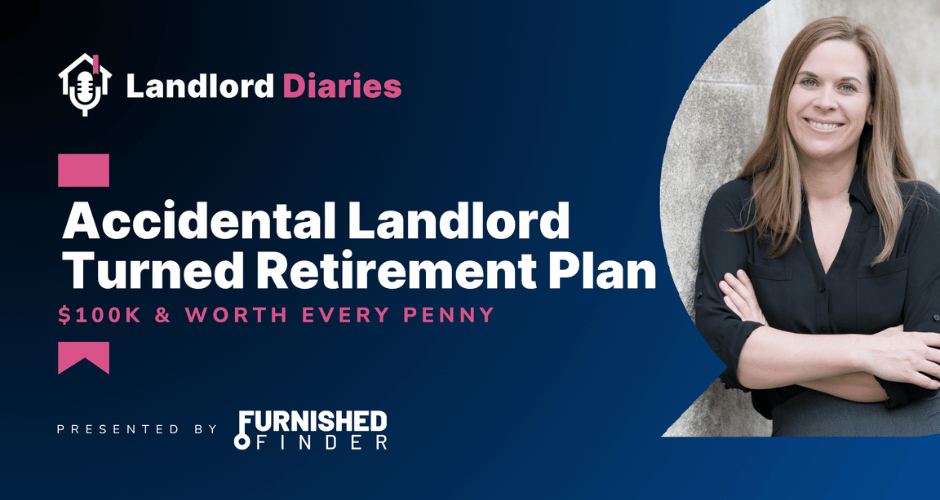
When Brenna DeWilde inherited her father's Michigan home in 2022, she never imagined it would become a cornerstone of her retirement plan. Having moved away from Michigan 15 years prior and now residing in South Carolina, the logical choice seemed simple: fix it up and sell it. But what started as a straightforward flip project evolved into something far more meaningful and financially rewarding.
Today, Brenna's property generates steady income as a mid-term rental, hosting the same trusted guests season after season while she manages everything remotely. Her journey offers valuable lessons for anyone considering the monthly rental space, especially those who've inherited property or become and accidental landlord in the real estate investment space.
The unexpected journey begins
Brenna's father passed away on his 65th birthday, just one month into retirement. The home he left behind needed significant work. With some real estate experience, Brenna understood the value of maximizing her investment rather than selling to an investor at bottom dollar.
"I knew that there was work to put in to be able to maximize our investment," Brenna explains. "I say our, me and my two younger brothers."
What she didn't anticipate was the scope of necessary repairs. Before touching anything cosmetic, she invested approximately $50,000 in essential systems:
New roof
Siding replacement
Furnace and HVAC system
Water heater
Upgraded electrical panel
When a flip becomes a passion project
With significant money already invested in mechanicals, Brenna made a pivotal decision: she would do the renovation right, not just adequately.
"I'm not just going to throw some gray paint on the walls and call it a flip," she says. "I'm one of these people that when I open up a can of worms and discover something, I can't live with myself till it gets fixed."
This philosophy led to unexpected discoveries and additional expenses. When she removed the kitchen cabinets, she found years of small leaks had rotted the entire subfloor. The floors had to be completely replaced, with the added challenge of matching floor heights using different lumber dimensions than were available when the house was built in the 1960s.
Despite the mounting costs, Brenna found herself making choices that elevated the property beyond a basic flip:
The custom cabinet decision
She went to Lowe's planning to buy standard white shaker cabinets. A 40% off sale on custom cabinetry changed everything. For only a couple thousand dollars more, she could have soft-close doors and drawers with custom configurations.
The countertop commitment
Brenna fell in love with an expensive Cambria quartz countertop. She carried a sample in her purse for six weeks searching for a more affordable alternative. When she couldn't find anything comparable, she invested in the premium option.
These decisions weren't just about aesthetics. They reflected the emotional investment Brenna was making in a property that connected her to her father and her hometown.
Falling back in love with home
Spending months renovating the property had an unexpected effect. Brenna rediscovered her appreciation for West Michigan.
"I really fell in love with West Michigan again," she reflects. "I'd really forgotten just how wholesome the people are and just how special it is where I grew up. Not special enough to want to move back anytime soon, but I really did get reattached."
By the time the renovation was complete, with approximately $100,000 invested total, Brenna had hung the kitchen cabinets herself and poured her heart into every design choice. The thought of selling became increasingly difficult.
"I just loved it so much," she says. "I was like, what is the smart play and how can I keep this house in my life?"
Why mid-term rentals made sense
Faced with the decision of how to rent the property, Brenna quickly ruled out short-term rentals.
The Airbnb challenge
"I really think that requires a property manager, somebody that's handling the hospitality side of it, the guest interaction," Brenna explains. "You really need a crew, I think, to handle Airbnb."
Beyond the operational challenges, the fee structure didn't appeal to her. Airbnb takes a significant portion of profits, whereas platforms like Furnished Finder (opens in new tab) charge one low annual fee per year and allow landlords to manage their business their way.
The long-term rental concern
After investing so much personal effort into the renovation, the thought of a long-term tenant was equally unappealing.
"I think there was probably a moment where I was meticulously touch-up painting with a fine toothbrush," Brenna recalls, "and I was like, I don't want to long-term rent this and have to go through this whole process again in a year or two years."
She'd had positive experiences with a few long-term renters before, but recognized a fundamental difference in how tenants view properties:
"When someone is renting your place long-term, they view that as their home that they're paying you money, but it is their home. Where I think the midterm rental, at least the folks that are renting my place, they treat it like it's my home and they're guests in my home."
The mid-term advantage
Mid-term rentals offered the perfect balance:
Less intensive than short-term: No constant turnover, guest communication, or cleaning coordination
More protective than long-term: Tenants respect the property as someone else's home
Manageable from out of state: Quarterly turnovers allow for self-management
Higher returns: Premium pricing compared to traditional long-term rentals
Personal use opportunities: Gaps between tenants provide time for visits and projects
The proximity to Grand Rapids hospital systems made the location ideal for travel nurses, a primary demographic for mid-term rentals but other tenant types as well.
The first year: Building confidence
Brenna's first booking came quickly and unexpectedly. A travel nurse currently staying in a hotel with his dog reached out, asking to see the property immediately.
"I was like, I don't have anyone that can let you in," Brenna remembers. "But he said that he had his real estate license in another state and I was like, you know what? I'm just going to trust you and I will send you a temporary code to go take a look."
He toured the property, loved it, and signed a lease immediately. The second tenant, a woman going through a divorce, also came out of nowhere and signed quickly.
Then came the guests who would change everything.
The repeat renters who became friends
Brenna's summer renters have now returned for three consecutive years, each time staying a bit longer.
"They were like, 'No, we are prepared to sign a lease. Like, we definitely want to do this,'" Brenna says of their first renewal. "They want to stay. They've stayed a little bit longer each time too. They come a little earlier and stay a little bit more into fall."
These renters, who live in a Florida condo, cherish their Michigan summers. They've transformed the backyard, cleaning up areas Brenna hadn't addressed and creating elaborate gardens complete with a detailed plant map.
"They created a little map of this garden and it's just spectacular," Brenna says. "They put so much work into it and they enjoy it. I think part of their appeal to Michigan is just that they get a chance to garden and that their dog can just hang out outside in the shade."
The relationship has become genuinely personal. Brenna introduced them to her mother, and they've spent time together. She plans to meet them in person this summer.
Perhaps most remarkably, after their first stay, they left the property in such pristine condition that Brenna refunded their entire cleaning fee.
"When I say rent ready, I mean like I could have rented it," she explains. "They cleaned everything, put the dishes away, waited for the trash to go out, brought the cart back out to the house, made the bed. When do you ever hear about that on a short-term rental or a long-term?"
Managing seasonality and booking strategy
One concern that emerged after the first successful summer was seasonality. Would she struggle to find renters during Michigan's fall and winter months?
"I was starting to get nervous like, am I going to have challenges in seasonality in West Michigan?" Brenna admits.
But tenants continued to appear just when needed. Her winter renters, a couple from northern Michigan, wanted to escape the extreme cold and snow while staying closer to their children. They've hinted at returning next winter.
With repeat summer and potentially repeat winter renters, Brenna has half the year secured with trusted guests.
The booking ahead philosophy
Many midterm landlords hesitate to book far in advance, worried about gaps they can't fill or the inability to extend current tenants. Brenna takes a different approach.
"I am the kind of person that learns the hard way a lot," she says with a laugh. "So I probably would take the chance and be like, sure, we'll let you book and we'll see how that works out for me."
So far, it's worked exceptionally well. Several factors make this strategy viable for her:
No mortgage pressure: Without a mortgage on the property, an occasional vacancy doesn't create financial stress.
Project opportunities: Gaps between renters provide time for maintenance and improvements, like the basement bathroom renovation she's planning.
Consistent demand: Even challenging periods, like a single month of May availability, have filled with tenants like the two travel nurses completing their internship who needed exactly 30 days.
The remote management reality
Managing a property in Michigan while running a pizza restaurant in South Carolina might sound daunting, but Brenna has made it work through a combination of self-reliance and strategic help.
What she handles herself
Surprisingly, Brenna does her own cleaning for turnovers, flying in when needed or coordinating with family visits.
"My mom helped out on a couple turnovers, but she just doesn't know the house as well as I do," Brenna explains. "I know it like the back of my hand. I know if the locks are sticking and they need to be sanded down. I can sense it. It's my house."
She also handles minor maintenance and repairs herself, drawing on skills her father taught her growing up.
"We were raised in a house where you didn't pay people to do things you could do yourself," she says. "As a child, he'd be the one being like, 'Go get me a flathead screwdriver. I need a hammer.' We worked on projects as a kid."
Where she gets help
The one area where Brenna invests in professional help is landscaping, which has become her largest expense, exceeding all other bills combined.
Michigan properties require:
Mowing and yard care in spring and summer
Leaf removal in fall
Snow plowing in winter
After an initial landscaper billed her for services not performed, a trustworthy neighbor who retired and handles several properties in the area took over. He also keeps an eye on the property and helps with small tasks like bringing trash cans back to the house.
Tools that enable remote management
Brenna credits Furnished Finder's landlord tools (opens in new tab) for making remote management feasible:
Comprehensive background checks: Tenants complete their own screening through a secure link, providing Brenna with necessary information without the awkwardness of directly requesting sensitive data.
Calendar functionality: The platform shows her property to tenants searching for her available dates, optimizing matches.
Low fees: Unlike Airbnb's significant commission, Furnished Finder's minimal fees allow her to manage her business profitably.
Lease templates: Professional agreements protect both parties without requiring legal expertise.
Rent collection: Baselane provides automatic reminders and autopay options, eliminating the need to send manual rent reminders or physically collect payments.
The financial and emotional payoff
The numbers tell one story. Brenna's property generates significantly more income as a mid-term rental than it would as a traditional long-term rental, helping offset the $100,000 renovation investment.
But the deeper value is personal.
"I think it's cool that this is becoming a part of my retirement plan so that perhaps I will get to retire sooner or I won't have to work as hard as my dad did to get to retirement," Brenna reflects.
Her father's obsession with saving for retirement meant the house fell into disrepair. Tragically, he passed away just one month after retiring at 65, never getting to enjoy the fruits of his labor.
"What I spent on just those countertops alone is probably more than he spent in the entire last year of his life," Brenna says. "But I think he would think it's really beautiful. You know, I think it's maybe what he would have envisioned his house would look like if he had won the lottery."
More importantly, she believes he'd be proud of the work she put in using skills he taught her, and that the property is securing her financial future.
The property also gives Brenna a place to stay when visiting her hometown, allowing her to see friends and family without staying with her mother. The gaps between renters provide perfect opportunities for these visits and ongoing projects.
Lessons for aspiring mid-term rental hosts
Brenna's journey offers valuable insights for anyone considering the mid-term rental space, particularly those starting from scratch or inheriting property.
You don't need extensive experience
Despite having owned a couple of rental properties previously, Brenna wasn't an experienced property manager. She learned as she went, making mistakes and adjusting.
"I definitely think it's a little crazy that I did this when I don't even live anywhere near Michigan anymore," she admits. "But it's worked out really well."
Build a reliable team
While Brenna handles much herself, she emphasizes the importance of trustworthy help, especially for out-of-state owners:
Get referrals: Don't just find service providers online. Ask other rental hosts or real estate professionals in the area for recommendations.
Spot check initially: For cleaners especially, verify the first few turnovers meet your standards.
Find multi-season help: In seasonal climates, landscapers who handle year-round needs (mowing, leaves, snow) are invaluable.
Look for property-minded people: The best helpers think beyond their specific task and alert you to issues they notice.
The numbers don't have to be perfect
Brenna's property in Grand Rapids doesn't command the premium rates of a Charleston, South Carolina rental. But the acquisition cost is also substantially lower.
"You really have to look at the whole picture of the cost to acquire real estate," she notes.
Consider your specific goals:
Are you trying to maximize profit on a mortgaged property?
Offsetting costs on an inherited home?
Creating a place you can use part of the year while generating income the rest?
You only need an average of four renters per year for a successful mid-term rental, not constant bookings.
Don't skimp on what matters
Brenna invested in quality where it counted.
"Did I go buy the most expensive of everything? No, not at all. But did I go to IKEA? No," she says.
She found quality pieces on Facebook Marketplace and curated the space thoughtfully. Mid-term renters appreciate a well-appointed home, and quality furnishings hold up better for repeated use.
Embrace the personal connections
One unexpected benefit Brenna discovered was the relationships formed with tenants.
"It's more than just strangers staying for a night or two. These are real people who have become a part of my life," she says.
These connections provide peace of mind. When you know and trust your renters, the stress of remote property management decreases significantly.
Is mid-term rental right for you?
Mid-term rentals occupy the sweet spot between short-term and long-term strategies, offering:
Steady cash flow: Higher rates than traditional rentals without constant turnover
Manageable workload: Quarterly turnovers instead of daily or weekly
Quality tenants: Travel nurses, relocating professionals, and seasonal visitors
Remote management: Feasible even from out of state with the right systems
Personal use: Gaps between bookings allow for visits and maintenance
The strategy works particularly well for:
Inherited properties you're not ready to sell
Second homes in areas with medical facilities or corporate centers
Properties near seasonal attractions
Owners who want some involvement but not daily management
Those building retirement income streams
Getting started
If Brenna's story resonates with you, here's how to begin:
Research your market: Use tools like Furnished Finder's market insights page (opens in new tab) to understand demand in your area. Enter your city and state to see what travelers are looking for.
Assess your property: Mid-term rentals work best near hospitals, corporate centers, universities, or seasonal attractions. Proximity to these anchors drives consistent demand.
Calculate your numbers: Factor in your acquisition cost, renovation needs, furnishing expenses, and ongoing costs like landscaping and utilities. Compare potential mid-term rental income to long-term rental rates in your area.
Prepare the property: You don't need luxury furnishings, but provide quality basics. Think about what you'd want in a temporary home: comfortable bed, functional kitchen, reliable WiFi, workspace.
Set up systems: Use professional tools for tenant screening, lease agreements, and rent collection. These protect you legally and create a professional experience for renters.
Build your team: Identify a cleaner, handyman, and any seasonal service providers you'll need. Get referrals from other local hosts when possible.
Create your listing: High-quality photos and detailed descriptions help attract the right tenants. Be clear about what's included and your expectations.
Stay flexible: Your first year will involve learning and adjusting. Pay attention to what works and what doesn't, and refine your approach.
The bigger picture
Brenna's story illustrates how real estate investment doesn't always follow a predictable path. What began as an inherited property she planned to flip became a meaningful connection to her hometown, a tribute to her father's legacy, and a cornerstone of her retirement planning.
The mid-term rental strategy made it all possible. It generates income that justifies keeping the property while allowing her to maintain the home exactly as she wants it. The personal relationships with renters add richness beyond the financial returns.
"I just didn't want to just sell it and be done with it," Brenna reflects. "I really was attached and I'm grateful that this is working out as a rental. It has its own challenges. No landlording is easy, but it's a balance for me to be able to keep this house in my life and not let it be a burden financially."
For anyone facing a similar decision about an inherited property, or simply looking for a manageable entry into real estate investing, Brenna's experience offers an encouraging blueprint. With thoughtful planning, reliable help, and the right rental strategy, you can transform a property into both a financial asset and a personal treasure.
The mid-term rental space continues to grow as more travelers seek the comfort and value of monthly stays. Whether you're a travel nurse, relocating professional, or seasonal visitor, these properties offer a home away from home. And for owners like Brenna, they offer something equally valuable: a way to keep what matters most while building financial security for the future.
Episode 165 Transcript
I think it's cool that this is becoming a part of my retirement plan so that perhaps I will get to retire sooner or I won't have to work as hard as my dad did to get to retirement. So from, yeah, financially, it's like I, I wanna keep that. This is an investment and, and ultimately it's an investment that will go towards my retirement.
Um, and just personally, I, I mean, yeah, like I, I like having a place to go and stay. I like being able to go back to my hometown and not have to stay with my mom. How do you turn a house that you inherited and didn't expect to have into something you can't let go of? Today, we talk about this with Brenna DeWilde from South Carolina.
Brenna, you inherited a home in Michigan from your father that started as a fix and flip project and eventually turned into a thriving monthly rental. Uh, let's dig into your story. What was this journey like for you? Well, um, my dad passed away in 2022, and, um, you know, I'd never intended to keep this house.
I- I've been gone from West Michigan for almost 15 years. Um, but it needed a lot of repairs to even get it in the kind of condition that I wanted to, to sell it. Um, I'm in the real estate industry, so I, I think there's value in real estate, and I didn't wanna just sell it to some, you know, investor for bottom dollar.
Um, so I knew that there was work to put in to be able to maximize, um, our investment. Uh, I say our, me and my two younger brothers. But I got kind of involved in it, and it needed, you know, a new roof, and then it was siding, and then it was a furnace, an HVAC, and water heater, and an upgraded electrical panel.
And all of a sudden, I was in it, um, for about $50,000 before I'd even touched anything cosmetically. And, um, so I said, "All right, well, we'll just, we'll do a nice renovation." And, um, you know, and, and then it just kind of progressed from, from there. It was little things like I went to Lowe's to just get cabinetry, you know, off the shelf, white shaker cabinets off the shelf.
And Lowe's was having a sale where, um, you could do 40% off custom cabinetry, and I said that th- there's no way I can afford custom cabinetry for this renovation, um, nor does this house need it. But when I ran the numbers, it was only a little bit more, maybe a couple thousand dollars more for custom, you know, soft-close doors and drawers.
And, you know, and then I went shopping for countertops and really fell in love with a way too expensive Cambria quartz that, um, I carried around a sample in my purse for six weeks while I looked for a dupe. And, um, I couldn't find anything. I was like, "I'm just in love with this countertop." And then it was, like, the color palette, and just everything really started coming together.
And, and I had done almost the whole renovation by myself. You know, obviously I hired, hired out the, um, the big mechanical stuff, but all the little things. I mean, I, uh, I hung those kitchen cabinets myself. And, um, so I just, I had a lot of heart into it. And over the time of s- um, you know, doing this renovation and spending so much time in my hometown, I really c- like, fell in love with West Michigan again.
And, um, and, you know, I'd really forgotten just how wholesome, um, the people are and just how special it is where I grew up. Not special enough to wanna move back anytime soon, but, um, you know, I just, I really did get reat- reattached to West Michigan. And I just fell in love with this house and how it turned out, and I didn't wanna sell it.
I, I probably would, would've sold it and, and done well, um, on that sale, but I just I just loved it so much. And, um, so I was like, "What is the smart play and how can I keep this house in my life?" I didn't wanna deal with Airbnb. Um, and midterm rentals just kind of, uh, during that time it was a, you know, a hot topic with travel nursing.
Um, and this home is close to our hospital systems in Grand Rapids, so, uh, it just made sense. And I really didn't know what I was doing, and I definitely think it's a little crazy that I did this when I don't even live, um, anywhere near Michigan anymore. But, um, it's worked out really well. I mean So you, you decide to go through with this renovation, like you said, in- instead of just kinda selling it as is.
At what point did you beco- b- did you begin to realize, like, okay, there's some real potential here versus, like, okay, I did the DIY, I made ... I, I did this transformation, I'm really proud of it, I'm not gonna sell it? At what point did, did that switch flip for you? I think, I mean, honestly, I think that switch flipped as soon as I had the first $50,000 in mechanicals, where I realized, like, to really recoup my investment, um, I, I needed to make it really nice.
And, and I didn't wanna skimp. I'm one of these crazy renovators too that, um, I'm not just, like, gonna throw some gray paint on the walls, um, you know, and, and call it a flip. I'm one of these people that when I open up a can of worms and discover something, l- I can't live with myself till it gets fixed. So, you know, for example too, in the kitchen, um, I knew that there was some plumbing issues.
I didn't realize the extent, but when I ripped out all the cabinetry and realized that there had been just a tiny little leak probably for years, um, but it had rotted the entire subfloors out. Like, I- Huh. I, I think if I would've crawled on top of the cabinetry, I would've busted the subfloors out. So, you know, even in, in that moment, it was, you know, I ripped out the kitchen, and then I also ripped out the subfloors and had to put new subfloors down.
You know, and then trying to get the subfloors to match the floor height of the rest of the flooring, you know, the, uh, wood dimensions were not the same when this house was built in the '60s, so that was challenging. Um, and yeah, I just, I ... After a while, I realized I put in so much work, and I just didn't want to just sell it and be done with it.
I, I really was attached, and, um, and I s- I mean, I still am really attached, and I'm, um, I'm grateful that this is working out as a rental. Um, and you know, it, it, it has its own challenges. It, it's not easy. No, no landlording, um, is easy. But, um, it, it's a balance for me to be able to keep this house in my life and not let it be a burden financially either.
And I, I love that, you know, you, you got into this project, you quickly realized, okay, I'm already- 50K in on renovations. I haven't even touched the inside yet. I think at the end of the day, you said, uh, in a previous conversation that it was around 100K that you ended up putting into this property. So now you're like, "Okay, I'm definitely keeping it.
It's, I grew up here. It's my dad's property. How do I take care of what I just put all this hard work into?" So you had to decide how to rent it. So what didn't fit for short-term rentals? Like, what did you not like about Airbnb, uh, or the long-term rental strategy that led you to Furnished Finder? Great question.
Um, you know, I think for a short-term rental, um, even if I were to live close by, I really think that's something, uh, that requires a property manager. But, you know, somebody that's handling, um, the hospitality side of it, the guest interaction. You need to have a reliable cleaner. You really need a crew, I think, to handle Airbnb.
And, uh, sure, I mean, you can charge a premium for that, but Airbnb is also going to take a, a large chunk of your pr- profits. And that's something that I like about Furnished Finder, is that, you know, it's a low fee, and it allows me to manage my business the way that I want to manage it. Um, I mean, I, I still could hire a property manager if I wanted.
I could go get a cleaning person. Um, but I found that even out of state, I'm able to manage a midterm rental on my own. And I, and I've come to really like it. Um, you know, that was something that I didn't think that I needed until I, I got it. But just the interaction with the people that are staying in my home, you know, it's more than just strangers staying for a night or two.
Um, these are real people who ha- have become a, like a part of my life. Um, you know, I've mentioned to you prior to, you know, my summer renters, this'll be their third summer staying. Um, I, we're hoping to, to meet in person this summer 'cause we'll be in Michigan at the same time. But, you know, I introduced them to, um, my mom and, you know, and they've spent some time together.
So, um, I just, I, I like the connection with, with people and, um, that was something that I, I didn't really think about going into it, but it's certainly something that I appreciate now that I have it. And if I remember correctly, I think they actually helped improve your property and all this work you had put in.
They did. They did. They, um, I had done this massive renovation on the house, but it was over the winter months and, um, I didn't I didn't have time to stay there all spring and wait and see what the landscaping situation looked like. Um, and they came up in, let's see, that first summer. They came up June 1st.
Um, and it, the backyard, I mean, the backyard had grass, but there was a whole area towards the back of the property where there was a shed that I had demoed. Um, and where the shed was was just, it was full of weeds and just, like, random stuff. Um, you know, a, a pile of lilies here and there and, and, um, old bricks and, you know, and things like that.
And they really spent the whole summer, just that first summer, cleaning it up. And then the second summer they planted even more things, and they've created this map too, which I, I love and appreciate them so much for, 'cause, um, you know, I would have no idea what these, these plants are. Um, but they created a little map of, like, this garden, and it, it's just spectacular.
They put so much work into it. And, and they enjoy it. They, you know, they live in a condo in Florida and, um, I think part of their appeal to, um, Michigan is just, yeah, like, that they get a chance to garden and that their dog can just hang out outside in the shade. And, um, yeah, it's really beautiful. I will send you guys pictures Yeah.
I, I mean, that's incredible, and you're, you're not gonna get that with other types of renters, right? Um, so I wanna dig into more... I, I know, like, it, it feels like it was a pretty clear no to the short-term rental Airbnb stays, and I think Kelly and I can both appreciate that. Especially all of my properties are out of state.
Like, I get it. Managing a mid-term rental out of state, totally doable. Managing a short-term rental out of state, doable, but quite frankly, pretty intimidating. Um, and it, it just sounds very overwhelming. Like, I don't even, I don't wanna touch that with a 10-foot pole. Yeah. Right? Um, but let's talk more about how you decided to rent it mid-term versus long-term.
Because at this point you've p- you already put in so much money doing these renovations. And like you said, like, stuff came up and, you know, when you're doing a renovation like this, like, the dollars just keep adding up. Yeah. And to make it a furnished rental, you have to furnish it. Yeah. Which it doesn't have to be crazy furnishings, right?
It just, basic level furnishings are perfectly acceptable and you could be really successful with that. Yeah. But what was that decision like when you're like, "Okay, I could rent it long-term for X or I could do it mid-term for this." Was it like a, was it a numbers assessment? Was it more of, like, the type of tenant you wanted to attract?
How did that, how'd you go through that process? I think there was probably a moment where I was, like, meticulously, um, you know, touch up painting with a fine-tooth brush. Um, and just again, how much work I, me personally, had put into it. By myself. You know, I, I didn't have a whole lot of help. My mom helped with, um, some cleaning and whatnot, but in general, I did the whole thing and I was alone during the whole thing.
Um, and I think there was just a moment where I'm like, "I don't want to long-term rent this and have to go through this whole process again in a year or two years." And, uh, you know, I've, I've had properties before with long-term renters and I've never had a bad experience. I've always had pretty respectful tenants in the past.
But I do believe that when someone is renting your place long-term, they view that as their home, that, that they're paying you money, but it is their home. Um, where I think the mid-term rental, at least the folks that are renting my place, they treat it like m- it's my home, and they're guests in my home.
And, you know, you had mentioned furnishings, and, uh, it's another thing I didn't skimp out on. I, I mean, did I go buy the most expensive of everything? No, not at all. But did I go to IKEA? I, no. I, I mean, I think I really, um, found the right pieces and, and I really curated it. Um, I... This is- My house, you know, here in South Carolina, I have a husband and a dog, and, you know, we have to share this space, and we both have to agree on how it's decorated and furnished.
Um, this home in Grand Rapids, it, it was mine. It, it was mine when- Mm-hmm ... it was a hot mess. It was mine, and I picked every single furnishing and every design choice. Um, you know, everything I did to that house was my decision, and how I furnished it, every art piece on the wall. Mm-hmm. I, I picked that out and, you know, and went searching for it.
A lot of it I f- you know, I found on Facebook Marketplace. It, um, you know, West Michigan's got, um, just a lot of cool art and, you know, a big mid-century influence, too. So, um, I don't know. I, I just really enjoyed decorating it, and I, I just didn't ... I, I didn't want someone coming in thinking it was their house.
I really wanted to keep it mine and- That's act- that's a really, that's a really good point. I don't know if I've ever really thought about it that way, but these midterm renters with their use cases for renting, right? Like, they're travel nurses. They're traveling professionals. They're maybe, like, snowbirds or, I don't know what you call the anti-snowbird that's coming, like, from Florida in the summer.
But - Summer fun. Yeah. I'll have to ask them- Yeah ... what they wanna call themselves, but yeah. Yeah. Like, are they traveling dolphins? I don't know. But you know what I mean? Like, they're coming to make it their home for a few months. On average, we see about a three-month stay with Furnished Finder tenants, but they do know it's your house, right?
I've had two properties as long-term renters with, with long-term renters, and you don't always know what you're gonna get after that year, right? One of them, we had a property manager for and, and we had her do, like, quarterly walkthroughs, and sometimes it was like, well, they're not technically doing anything wrong, right?
But, like, there's a lot of stuff on the wall that we're gonna have to make sure we get patched up right, or I wish they would've taken care of the pool different. Like, there's just a lot of stuff where you're right. It's, it's, there's nothing wrong with it, but they do just ... They move in, and they, they settle in, and they're moving furniture in.
Yeah. And they might ding up the walls and stuff while they're there. And I didn't want that. And- It's, I ... Listen, it's furnished. It has everything you need. If you- Yeah ... think it needs something else, let me know, and I will have it shipped to you. Just- I love that ... come and stay, be comfortable, but leave your stuff- Mm-hmm
at your house. Um- Right. Yeah. I love that. I mean, I, I think that's really smart. And you were able to recoup significantly more rent to offset some of this renovation cost, right? Yeah. Well, and, and you make a good point too with, um, you know, having a long, long-term rental, um, from out of state. Like, I like with the midterm rental, it gives me a chance to come back and do some of that maintenance every, you know, three or four months in between renters.
And I, when I spoke with Kelly, um, last week, you know, I was up at the property, and I spent an entire week just doing chores. You know, spring chores that needed to get done. It's really hard to maintain a property, um, when someone else is living there, you know? And, uh, it's just things like changing the furnace filters and, um, you know, getting the sticks that have come down over the winter months, getting that cleaned up and, you know, putting my rock salt away and getting the hoses and sprinklers out and getting things ready for, for spring.
So I, if I didn't, if I had a long-term rental, you know, I'd have to have somebody up there- Right ... basically babysitting this property, you know, on a regular basis. And so, you know, this way I've got people that stay, and then I can come up and visit and, you know, and see friends and family, spend time in, in, in my home.
Um, you know, and then I go back to South Carolina where the weather's a little bit nicer. Did you have, like, an aha moment where you're like, "Okay, this works. This midterm thing, this Furnished Finder thing, like, this getting people in here for a few months at a time, like, this works. This is, this is the move"?
Looking for a simple, professional way to manage your monthly rental? Furnish binder's Landlord Tools brings everything together. Tenant screening, lease templates, and online rent payments all in one place. Stay organized, save time, and stay in control. For more information, explore Landlord Tools today.
I think the first year was a little bit nerve-wracking. Um, you know, I had put it on the platform and very quickly got a, um, a request from someone who was like, "I'm, I'm in town and I'm currently in a hotel with my dog. Can I come look at this house?" And I was like, "Uh, I, I don't have anyone that can let you in."
Um, but he said that he had his real estate license, um, in another state, and I was like, "You know what? I, I'm just gonna trust you, and I will send you a temporary code to go take a look. If it suits your needs, let me know." He saw it. He said, "I'm ready to sign a lease. Let's do it." He was a, um, a really great renter.
Um, and then after him... He was a travel nurse. After him, I had a random, um, woman who was get- going through a divorce and just needed a temporary place to stay, and she kinda came out of nowhere. Um, and I was like, "This, this works great." And then my, you know, my summer renters also, you know, uh, they just kinda came out of nowhere and said, "We're, we're ready to sign a lease right now."
And so the first three happened really quickly, and I was like, "This is too easy. Let... This, you know, this is awesome." But after my summer renters left that first year, um, you know, now you're going into fall and winter months in Michigan, and I think it's, it was a difficult time, and I was starting to get nervous.
Mm-hmm. Like, oh, like, a- am I going to have challenges in seasonality, um, you know, in West Michigan? I hadn't really thought about that. Um, but I did. I found someone, and it worked out. And it's in these moments where I won't have anyone lined up, you know, maybe I know someone's leaving at the end of the month, but I don't have anyone moving in right away, but out of the blue, someone will always just, they'll pop up with a message.
Um- And that worked for a little while, but I think my big aha moment when I was like, "Okay, like this is gonna, this is gonna work out," was after that first summer, those folks said, "Hey, like we really love this and, um, we would like to do this again next summer." And I was like, "Oh, it, you know, you guys were great tenants.
We'd love to do this. Just reach out, you know, closer to s- to spring next year." Um, and they were like, "No, we are, we're prepared to sign a lease. Like, we definitely wanna do this." Oh. They stayed last summer, and they were like, "We, again, we wanna come back next year." I- they wanna stay. They've stayed a little bit longer each time, too.
They come a little earlier and stay a little bit more into fall. So, um, I just have a lot of peace of mind that at least for four and a half months out of the year, it's the same people. They're really, really good people. Mm-hmm. And they're, I, I really trust them, and they, I mean, they, they left my house the first year in, when I say rent ready, I mean like I could have rented it.
I mean, they, they cleaned everything, put the dishes away, you know, waited for the trash to go out, brought the cart back up to the house, replaced the bed. I mean, I refunded their entire cleaning fee because, um, I mean, they- That's so cool ... they- Like, when do you ever hear about that on like a short-term rental- You don't
or a, or a long-term rental? You don't. That- Right? Like, you don't ... that's what I'm saying. Like you just- You don't ... you get lucky with, with the right people, and I got really lucky- Yeah ... with them. And, um, and then for this winter, those folks just, um, went home. They're from Northern Michigan, and just wanted to spend, um, the winter in somewhere less snowy and, and cold than up north.
Um, and they kind of mentioned the same thing, that, that this was really nice for them to be able to spend winter in less extreme conditions, and they were, um, closer to their kids, so they could spend a little bit more time, um, you know, visiting with their family without having to make, you know, make this drive up north in horrid winter conditions.
So I think they might come back next winter too. And then in, in that case, I've ha- you know, half the year is rented by repeat- Right ... renters. And then that just makes me feel good, too. Like, I just, like when you get good people, you, you make that connection and- Totally ... and it makes it a little less nerve-wracking than just random strangers.
But Now, quick question. We have a lot of landlords who, um, when they, they might turn down bookings that request to book, like, a few months from now or, right, like, in the next s- season because they don't wanna be left with a gap that they can't fill. How do you approach that? Like, if you have these returning tenants every year, are you just like, "I want that security of their four-month booking, and I have confidence that I can fill around it.
I don't mind taking a week or two here or there." 'Cause there's like s- it, it's like a pro and con situation, right? It is. And one thing just to add to that is the idea of a lot of us don't book ahead because we wanna be there for our current tenants, right? Especially if it's an insurance client or a family that's relocated and, and looking for where they want to buy or where they want to live.
You don't wanna necessarily force them to move somewhere else. So a lot of us- Yeah ... you know, don't book ahead for those reasons, uh, because extension in the midterm rental space is very possible. But I love that you're doing it differently. We wanna hear your story about that. I think, um, well, for one, I, I'm the kind of person that learns, um, the hard way a lot.
So I probably would take the chance and be like, "Sure, we'll let you book," and we'll see how that works out for me. And if it w- had a negative effect, maybe I will think differently the next time. But so far, um, it has not been negative. Um, I also, you know, the, I don't have a mortgage on this house, so profitability, o- of course that's important.
You know, I, I'm, I wanna make money. Sure. But, you know, if I have a, a month where it's not rented, it's not like I'm going broke and I can't afford, you know, to pay for it. So, um, I kinda take advantage of those gaps in the schedule, too, where, like, those can be times where I go up, um, and spend a little bit longer maybe doing some projects.
You know, there ... I, I did the massive renovation, but, um, you know, I can always come up with more. Right now the, the basement has a, um, a full bathroom, but, uh, I just cleaned it up, you know, put some paint on the walls. But it's definitely a, um, you know, a 1960s bathroom with a little, a little refresh. But I keep saying, you know, if I can get a month maybe in between, um, renters where I could take advantage of that time and, and maybe redo that bathroom.
So, um, I, I always think it that way, but so far it has- Mm-hmm ... not wor- worked out negatively for, for me. I mean, I- Good ... I've always been able to get someone. Actually, um, a, a great example. Right. My winter people left, uh, the end of April, and then my summer renters are, they're coming, um, in June. And so I just had the month of May, and I was like, "I'm never gonna find someone that just wants the month of May."
And I happened to find, um, two travel nurses- You did, yeah ... that are just doing, uh, they're wrapping up, like, their internship. Um, they, they needed- Perfect ... to do a, a 30-day stint, so they teamed up together. They're, they're just from the east side of Michigan, so this wasn't far, but far enough where they don't wanna drive every day.
So, um, they're sh- sharing the expense, and it worked out perfect. I, I said, "That's great. I, I have a month to fill," and, um, and it worked out wonderfully, so. That really sums up how well the Furnished Finder calendar works for the monthly rental space, right? We have optimized the search for tenants so that it is connecting them with properties that should be available around their dates of stay.
So that's how it was easy for someone to find that month, because once they see the availability date, they can go to the calendar and see how long it's available for. I like to also put it in my headline of, "Hey, open, uh, available for the month of May," or something short- Yeah ... like that. Uh, so I love that you are optimizing that way.
What are some other things? I know that early on you decided Airbnb was not the route you wanted to go, long-term rentals was not the route you wanted to go. What did you love about the Furnished Finder booking process that really gave you confidence in renting to, you know, people in Michigan while you're in South Carolina running your pizza sh- restaurant?
Well, um, I don't have anything to compare it to. I mean, Furnished Finder was the only platform that I tried, and it's worked out really well. And, you know, you had mentioned the calendar functionality, where I can say in 2022 when I started this process, um, it didn't have as much functionality as it has now.
I think Furnished Finder has really evolved, um, in a way where I continue to be happier with, um, with the platform. So, um, yeah. Mm-hmm. The, and the calendar functionality has been greatly improved. And you're right, it, it features, um, you know, the dates and it, and it, my, my property's being shown to people, um, you know, who are most likely to rent it.
You know, it's not showing up for somebody that's looking for a rental six months from now. You know, it's- H- how have you found, like, the tenant screening tools and the lease tools helpful for how you make sure that the right person in the mid-term rental space is moving into your property? I, I think it's a comprehensive background check.
It gives me the information that I need to know without me being the one that's running it for my renters. I, I, I mean, I, I think when you're interacting with strangers on the internet, which, I mean, really that, that's what it is. You know, I'm, I'm a stranger to these renters, and they're strangers to me.
Um, and I think I would feel uncomfortable giving a stranger on the internet my Social Security number and, and my address and my phone number and all my personal information and my ID. And, um, so I like that, you know, I can send them a link right through Furnished Finder, you know, a platform that they're already using, that they're comfortable with, and they can do their own background check, and I just get the results, basically.
So, um, it gives me the information that I need and, and so far, um, I, I, it's worked out really well I love that. I, I think it's... I mean, everybody knows that one of my favorite parts about Furnished Finder is that you get to have your booking process, right? And, like, if you need the tools to help, we have it.
Um, but, like, Brenna gets to do it her way. Kelli gets to do it her way. I get to do it my way, right? Um, and it's, it's that connection with that tenant that, that matters the most, right? Because things vary from tenant to tenant, situation to situation. So, um, just that independence and control, I think, is such an incredible asset because other platforms, like, you're bound by their very specific processes, and it can be really, like, you can just feel like your hands are tied.
So, um, yeah, I think that that cannot be undervalued. Um, all right, Brenna, well, I want to... I wanna ask you, why does keeping this home, renting this home to good people, to good midterm tenants, why does this matter to you so much personally? Like, what, what does it mean to you to be able to keep this property, keep it in the family, keep it benefiting you, you know, financially, your family?
Like, what's it mean? Yeah. I think, um... Well, man, this is like a therapy session, but, um- No ... I, I feel like a- We're here for you ... a big part of- It's a new service we offer ... why it was in such disrepair was my dad was just someone that was so obsessed with money and making sure he had enough to retire on, um, and sad that he passed away on his 65th birthday.
So, he had been retired for- Oh ... about a month, um, before- Oh my gosh ... he died of, um, a stroke pretty, um, tragically. So, I think from a financial perspective and an emotional perspective, like, I think it's cool that this is becoming a part of my retirement plan so that perhaps I will get to retire sooner or I won't have to work as hard as my dad did to get to retirement.
So from, yeah, financially, it's like I, I wanna keep that. This is an investment and, and ultimately it's an investment that will go towards my retirement. Um, and just personally, I, I mean, yeah, like I, I like having a place to go and stay. I like being able to go back to my hometown and not have to stay with my mom.
Um, you know, it gives me a place to go and yeah, it's just, um, I, I, yeah, I just love it and I don't wanna let it go. Oh, I love that. And it is, it's like such a big part of, like, your personal story- Yeah ... your family, and being able to keep that, right? Like, I've seen family members who have had to let go of these properties and yes, like they're, they're...
It's a building, right? Like, it's not where the memories live. Yeah. The memories live with us, but it is, it's, it's- It's where they happen, right? It's, like, what you have, and I think to be able to keep that from, like, an emotional and, like, just a mental standpoint, and then to be able to have the financial benefit of, like, the financial benefit of real estate is massive, and that's something that can be generational or it can be, you know, different people in your family can benefit from it, right?
So it's just, I feel like it's a way that the impact can, can live on. Well, I think if you're listening and you're like, "Oh, I have a property in mind," or, "This sounds doable. I wanna jump into this midterm monthly rental space, uh, and start from scratch," Furnished Finder is a great tool to help you get started in the monthly rental space, even if you've never been a landlord before.
So i- in Brenna's case, she's had a couple rental properties here or there, but she doesn't have a ton of experience, uh, a- and correct me if I'm wrong, Brenna, i- in being a property manager, and you can just jump in, start self-managing your own property. You really only need a cleaner and a handyman to get started.
So Brenna, what would you, what advice would you give someone who suddenly finds themself in your position? Well, you mentioned a cleaner and a handyman, um, that both of them are me. I, I do my own- Yeah ... cleanings. Um- Wait, you're cleaning from a, do you fly in- I do ... to clean or do you just, you're just kinda using it as, like, an excuse, like I'm gonna go- I mean, both
check on, like- Both. Okay. Um, but no, I- 'Cause you have family there, right? My mom helped out on a couple turnovers, um, but she just, she doesn't know the house as well as I do. So, um, you know, there was a time where I had her do it and I came back up and realized, um, that just things were rearranged, which I, you know, I, I think is a little weird, but, um, you know, and she didn't know any better, so I just- Sure
I, I know it like the back of my hand. I know if the locks are sticking and the, you know, they need to be sanded down. I know, um, you know, just- If something's wrong, I, I don't know, I can sense it. Mm-hmm. It's my house. I spend a lot of time there. So, um- Right ... I, I do think though normal people, you probably want, um, a reliable cleaner.
Um, um, one area that I, I really underestimated was, like, a landscaper. So, you know- Mm ... in Michigan, you need someone to, uh, mow and take care of the yard for spring and summer, and then you need to find someone to dispose of all your leaves. And then in the winter, you have to find someone to plow. Um, so that's actually, that's by far my largest expense.
Um, la- landscaping is more than all of the other bills combined, interestingly enough. But I had a, a landscaper initially who would send me a bill for things, and, and I didn't know any better. I was like, "Sure, here, here you go." And then my neighbor had mentioned to me, you know, "Hey, I, that, that man just, you know, took all those sticks that he cleaned up and just left them in your driveway.
He didn't, he didn't take care of them." And I said, "Really? 'Cause I have the bill for disposal." And he said, "No." And, and we realized, you know, he would bill me for a mow, uh, but didn't actually mow. And maybe that's the Midwestern- Mm-hmm ... hunky-dory tr- trusting, um, person that I am. Uh, but he was like, "No, I would love to take care of it for you."
Um, so, you know, now I, I have a reliable, trustworthy person taking care of it. And he, he keeps eyes on it, too. You know, somebody, if I need someone to bring- Mm-hmm ... the trash can back up to the house, he'll, he'll help me out. But, you know, he, he recently retired, and this is kind of like his little side hustle.
He takes care of about, uh, five or six properties in the neighborhood. And, um, so yeah, for people that are thinking about doing this, you just, you have to have reliable help, um, if you're not gonna do it yourself. And I have found that I just enjoy doing it myself. There's nothing wrong with-- Plus, you get to go get eyes on it, right?
You get to check in on things, maybe, like, think about your next project, visit your mom. Exactly. Exactly. But that would be my advice, is just make sure you have a, a reliable team of people, um, and not just, you know, someone that you call. I, I had a one time where I hired a cleaner, and they did not do the, the job that they should have done for the price that I paid.
So it's just, you know, yeah, if you don't know these people personally, and you can't micromanage or check up on them, um, you really gotta do it yourself or, or just have a reliable team. Right. And I would add to that to get referrals, right? Because I've gone both routes. I've gone the route of, like, finding someone online with good reviews or just finding another midterm are- midterm rental host in the area and getting a direct referral.
And 10 times out of 10, the direct referral is way, way better. Oh, yeah Yeah, I think that's probably with the cleaners, what a lot of us find is you need to spot check those first few, right? Just to make sure that it's meeting your expectations. But once you get in that groove of, okay, this person isn't just a cleaner, they're a cleaner plus kind of that property manager mentality of- Mm-hmm
oh, you know, this is missing. I need to go pick this up from Walmart or things like that. Or, uh, you know, ask them to order it on Amazon and ship it there. So that's, that's really helpful is just knowing, getting into the space, you want those, you know, few couple turnovers just to kind of figure out what your systems are and then track it, right?
So that it's a repeatable system that you can do time and time again. I think a few takeaways I wanna add here is, uh, we have a partner for rent payments, Baselane, and so what we're hearing from Brenna is you can do things v- like very, uh, mom and pop. You can, you can fly out to do the cleanings, you could collect checks or cash if you want, but we recommend using our partner Baselane for rent payments because, uh, you know, physically being at the property to collect rent isn't always available, and it's not necessarily what's best for the tenants either.
A lot of tenants like to pay by credit card. Mm-hmm. Uh, you know, with Baselane, there's automatic rent reminders. Uh, they can even set up auto-pay so that you're not waiting for that rent payment. It's right there ready for you. So I would recommend if, if that's kind of your style of still doing things, um, in person and not online, to, to check it out.
Check out Baselane and really take advantage of that opportunity. Katie, I'd love to wrap up, uh, before we get to the fun rapid fire question of just, you know, someone that wants to get into this space. What are some of those industry stats that, that we really want to give them that confidence of where to go find out, but will my property work as a monthly rental?
Yeah, I think everybody should, should explore our new, um, market insights page. It's linked right on our homepage. Um, we just redid it, and you can punch in your city and state, and you can get all sorts of data for what travelers are looking for. Um, I would just keep, keep in mind that you only need on average four renters a year.
So even if you're, you're seeing that some markets are stronger than others, it doesn't mean that there's not potential because you don't need a million tenants. Like Brenna's saying, like she's got, you know, three or four a year, and it, it's, it's plenty, right? Like you don't have those constant changeovers, so.
I think too, when you mention your market stats, you know, I, living in Charleston, South Carolina, o- obviously this is a hot, uh, a h- a hot market. Um, and what I would get here for a mid-term rental is significantly higher than what I would get in West Michigan. But then you also have to talk about the cost of the real estate.
So, you know, the average house here in Charleston is substantially higher than the average cost of house in Grand Rapids, Michigan. So it's not always, um, analyzing like, oh, in this market, I can get $3,500 a month for rent versus this market's only 1,500. You really have to look at- Right ... the whole picture, um, of, you know, the, the, the cost to acquire that real estate.
And, like, what your goal is, right? 'Cause like you said, you don't have a mortgage on this property, so your goal is very different than someone who's- True ... maybe buying a brand-new property, and they've got a 6.5% interest rate, and they're trying to make profit on top of that. Like, it's, it's like, what is, what is the goal?
Is it somewhere that you can spend those cold months or hot months, six months of the year, and then you just offset the cost the other? Like, like, what is it? Because that's different for a lot of people. One thing that I'd like to, like, really know, looking back, there's so much emotionally tied to this property.
What do you think your dad would say if he saw the house today? Oh. Um, I-- he would be mad that I spent that much money, for sure. We are, um, we are definitely Dutch folk in West Michigan, and, um- Mm-hmm ... what I spent on just those countertops alone is probably more than he spent in the entire last year of his life.
Um, but I think he would think it's really beautiful. You know, I, I think it's maybe what he would've envisioned his house would look like if he had won the lottery or, you know, or wasn't so focused on, on retirement and spending, um, and saving. But, uh, you know, he also taught me everything that I know.
Like, I mean, I, I didn't just- become a DIY-er as an adult. You know, it was just we were raised in a house where you didn't pay people to do things you could do yourself. Um, you know, so as a child, you know, he'd be the one being like, "Go get me a flathead screwdriver. I need a hammer. I need this, I need that."
And, you know, and we worked on projects as a kid. So I think, you know, he would be really pleased with how it looks, but I think more so he's looking down, being proud of the work that I put in, knowing that I did it myself, um, you know, with a skillset that he taught me. And that, yeah, that this is gonna be a, um, financial incent- um, investment for me, um, in my retirement.
So I think he would be happy. All right, Brenna, I'm gonna end with a fun one, and ask you, what is one renovation mistake that you will never make again? Oh my gosh, I have so many. Um- Mm ... but sh- That's good. That means you're, like, trying new things, right? Like- I told you, I learn the hard way. Like, I'm one of these people that just- Love it
yeah. Um, it takes a couple times before it sinks in, "Don't do that again." Um, these cabinets that I talked about hanging myself, I was so proud of myself. Like, a little, a trick that I've learned over the years is, um, mark your studs. Um, you know, so that way you've got a little pencil mark, and then you can just screw your cabinetry right in, except I kept missing the studs.
So, you know, it's, it's hard when you're by yourself. I mean, I was holding a cabinet with one hand just shaking. You know, I had my pilot holes drilled, so I've got a drill in one hand, shaking with this hand, and I kept missing the studs. And I was like, "I just don't understand what is happening. You, you drew them out on the wall.
Why are you doing this?" I have hundreds of renovation regrets ov- over the years, but it builds character, and I l- I love it. If it was easy, everyone would do it. And you know what? If you haven't put a few extra holes in the wall while you're trying to hit a stud, who even are you? I mean, come on. My husband gets mad because I'll ask him to do something a couple times, and then, like, if he doesn't, just when he leaves the house, I'll just do it.
And I hung up some curtains, and there's no less than seven extra holes. Uh, another good one, uh, this house has the original doorbell, and it has, like, a bing bong amazing chime. And, uh, I went to, uh, like, screw the, the doorbell back in, and the copper wires broke, so... In, inside the brick. And I could... I used tweezers, and I went to Ace Hardware, and I bought a one-foot section of low-voltage wiring, and I'm using tweezers to wire it all back together, and I get it all wired up, and it doesn't work.
I go downstairs, and, uh, I had cut all the low-voltage wiring out of the basement because I didn't know what it was. I was like, "It clearly doesn't go to anything," and I ripped it all out of the ceiling. So, I have an annoying electronic doorbell in, in this house. And I was like, "Bummer." I think HGTV really missed their opportunity here.
It could have been a fantastic episode for your renovation. But, uh, they did not miss, uh, you know... But what was not missed was the idea of the value of monthly rentals, especially if you're just getting started in the, uh, landlording space. It's a great entry point into renting out your property. It's really is the Goldilocks, uh, sweet spot in the middle, uh, between short-term and long-term rentals, uh, and still offers a steady cash flow compared to long-term rentals.
So, um, if... Get on Market Insights on Furnished Finder. Go check out your area to get started. And hey, if you have questions for Brenna, put them in the comments. You can connect with her. Uh, her Furnished Finder listing will be in the show notes. And Brenna, we just thank you so much for being here. Uh, you have such a fantastic story.
Thanks so much for having me, ladies.
Thanks for joining us on this episode. If you're enjoying The Landlord Diaries, be sure to like, subscribe, and share it with others. With over 300,000 listings across the country, Furnished Finder makes it easy for landlords and tenants to connect directly. No middleman, no markups. Ready to list your property?