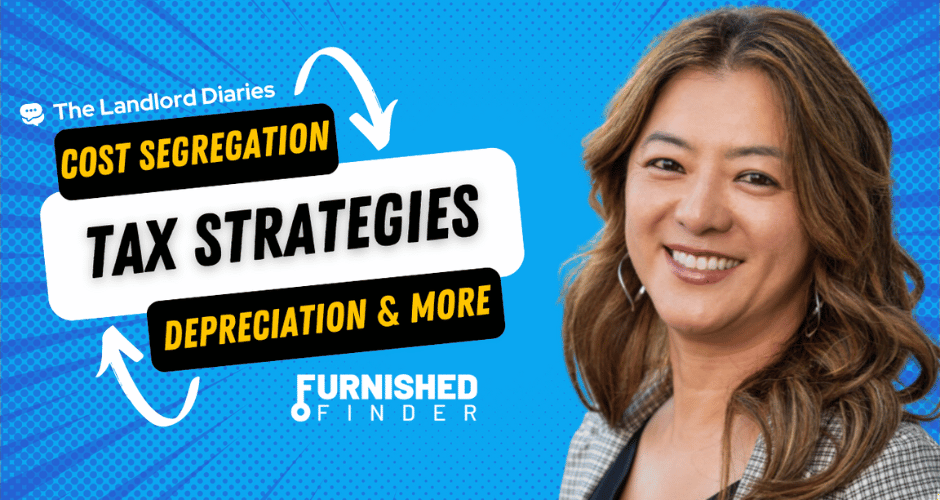
Investing in mid-term rentals can provide high cash-flow as well as some amazing tax benefits. If you’re considering investing in mid-term rentals, you're in for a treat. These rentals offer a host of tax advantages that can help you keep more of what you make.
Let’s dive into the key tax benefits, from deductions to depreciation, and how you can leverage these to boost your returns.
Maximize deductions on property-related expenses
One of the primary benefits of investing in mid-term rentals is the ability to write off property-related expenses. These deductions (opens in new tab) can dramatically reduce your taxable income, which is a crucial advantage for any investor. You can deduct expenses such as:
Property Management Fees: If you hire a property manager to handle tenant relations and day-to-day operations, those fees are fully deductible.
Maintenance and Repairs: Routine upkeep and repairs, like fixing a leaky faucet or replacing broken tiles, can be written off as business expenses.
Utilities and Insurance: Costs for utilities that you pay for, like electricity and water, as well as property insurance, are deductible.
Subscriptions: If you subscribe to Netflix, Hulu and other providers for your tenants to use during their stay, these are tax deductible items.
Overhead expenses: From home office deductions to travel and car write-offs, these items are also tax deductible if associated with your mid-term rental property.
These deductions lower your taxable income, which allows you to keep more of your rental income.
Take advantage of depreciation
Depreciation (opens in new tab) is another powerful tax benefit. The IRS allows you to depreciate the cost of the building over a period of 27.5 years. This means that each year, you can deduct a portion of the building’s value from your rental income. This is true even if the property is actually appreciating in value.
This paper deduction can offset your rental income, reducing your taxable income significantly. For example, if you purchased a property for $275,000 (excluding land), you can deduct $10,000 each year ($275,000 / 27.5) from your rental income. This can lead to substantial tax savings over time, enhancing your cash flow and overall investment return.
Write off furniture and supplies
If you furnish your mid-term rental property, you’re in luck. Furniture and supplies used in the property are also tax-deductible. This includes:
Furniture: Tables, chairs, sofas, and beds used by tenants can be written off.
Appliances: Items like refrigerators, microwaves, and washers/dryers.
Supplies: Things like kitchen utensils, linens, and cleaning supplies.
Some of these items can be expensed immediately on your taxes while others can be depreciated over their useful life. If you purchase items under $2,500, you may even be able deduct the full cost in the year they are purchased.
Utilize the 1031 Exchange for future investments
One of the most powerful tax benefits available to real estate investors is the 1031 exchange (opens in new tab). This allows you to defer paying capital gains taxes when you sell a rental property, provided you reinvest the proceeds into another rental property.
Here’s how it works: when you sell your mid-term rental, any profit from the sale is typically subject to capital gains tax. However, by utilizing a 1031 exchange, you can defer these taxes if you use the proceeds to purchase another investment property. This strategy not only allows you to defer taxes but also lets you leverage your gains to acquire potentially higher-value properties or diversify your real estate portfolio.
Conclusion
Investing in mid-term rentals offers a range of tax benefits that can significantly impact your bottom line. From writing off property-related expenses to taking advantage of depreciation and leveraging the 1031 exchange, these tax advantages can increase your net profit.
If you’re new to mid-term rentals or looking to optimize your existing strategy, consulting with a tax professional who understands the nuances of real estate investing is essential. They can help you navigate these tax benefits effectively, ensuring you take full advantage of the opportunities available to you.
With careful planning and strategic use of these tax benefits, mid-term rentals can become a highly lucrative component of your real estate investment strategy.
Episode 115 Transcript
Welcome to The Landlord Diaries, where we talk about midterm rentals and the opportunities behind them. We'll share landlord stories, talk about maximizing investment potential, and discuss how to live the very best landlord life. This podcast is proudly brought to you by Furnished Finder, the leader and largest online marketplace for midterm rentals.
Remember to like and subscribe if you enjoy our content. Woo-hoo. We're back. It's Katie Lyon and Kelly Bailey of the Landlord Diaries Podcast. We are here with you every week providing you all things midterm rentals that will help your midterm rental business. Katie, we have a unique episode today. What do you wanna tell us about Amanda Han, tax strategist and expert in the field.
Amanda Han is an incredible researcher. She's like a tax strategy master, such a great CPA, and just so welcoming and inviting, and she's. So great to just discuss these strategies with and see if one of them resonates with you. And she's just an incredible expert. So we talk about so many strategies that you can implement in your own midterm rental business or for you to think about in the future.
So this is like an incredibly actionable episode that I know you all are gonna find. So valuable.
Today we talk with Amanda Han of Keystone, CPA. Amanda is one of the leading CPA and tax strategists in the industry with a couple top selling Amazon books, as well as her teachings on prominent publications such as Money Magazine, Google Talks, and CNBC. She's a third generation real estate investor that has helped countless investors across the nation supercharge their wealth building through proactive tax strategy and savings.
Amanda has 46,000 subscribers on Instagram and frequently appears as a speaker or author on the BiggerPockets Network. Amanda, we're so glad to have you with us. As a subject matter expert, how are you today? I'm doing good. Thank you so much for having me. Really excited to be here and speak with the Furnish Fighter community.
Yes, we've had the privilege of meeting Amanda at a couple conferences. She is just so genuine, knowledgeable, and I think that's gonna come across in this episode today. Amanda's gonna share her story and just some basic tax strategy advice. Then we'll jump into specific tax questions from our Furnished Finder hosts.
So Amanda, what led you to become one of the leading CPAs and tax strategists in the industry? Gosh, I was born as a leading tax strategist. No, I'm just kidding. It's man, that must be an interesting birth story. I I actually started out my career as. I just, I always wanted to be an accountant.
I guess that's actually true. My my mom was an accountant, my uncle was an accountant, and when I was really young, I was really good with numbers and and my mom always encouraged me to be an accountant. It was something just, I always knew, in my, like going through high school and stuff and I think most people.
After college I got a job and I was really fortunate. I got a job at one of the big four public accounting firms, and I happened to end up in their real estate specialty group. And my whole career as A-C-P-A-I mainly worked in real estate, in public accounting. I worked on a lot of the very large real estate investment firms, large investment companies.
And I'm actually my grandparents and my parents both invested in real estate. My grandparents were so heavily involved in, to the extent that where I grew up, I actually lived in the condo community where my parents, my grandparents were the landlord. So for me, my true story was I grew up never wanting to invest in real estate because I saw my grandparents being very hands on landlords, and it was it's not what I wanted to do.
I wanna be in corporate America, have nice nails talk on the phone all the time. And that's what I did for many years. Until I read Robert Kiyosaki's Rich Dad, poor Dad, that was the eye-opener for my husband and I where we say, we should really invest in real estate too. We do that for a living for other people.
But maybe we should do that for ourselves. Yeah. I think being a landlord has like this reputation. I know when we were throwing around the idea of getting our first rental property, which was keeping our old primary residence, everybody was like. You know you don't wanna do that. What about terrible renters?
What about. A clogged toilet at, that's always the like nightmare situation that everybody thinks is gonna happen. I'm proud to report. I've never had a clogged toilet at 2:00 AM but it's always, I'm like, yes, it's work. And it's not like a get rich quick or it's not some money making scheme, but every job, every responsibility, every investment has its part where you need to.
Earn your keep a little bit. But you can be strategic about that. I would love to hear about what your personal portfolio looks like right now, because that is such a cool thing about you in the industry is like you're walking the walk in talking the talk, right? Like you're doing the strategies but also having real estate investments as well.
Yeah. Yeah. It's interesting. I, when we first started to get into real estate, we realized we had no idea what we were doing. We've done taxes for these large corporations that do investments, but we didn't know like the day-to-day, what does it mean to be a real estate investor.
And it was when we started going to local real estate meetups and real estate conferences that were like, oh, here's what we have to do. And we started meeting with investors and seeing there's a big need in people who just don't get tax advice, like the super wealthy clients we had, previously in the big four firms.
But I think you're right. It's that 2:00 AM clock toilet that really scares a lot of people, including myself. And we've been fortunate that we've been able to build a portfolio where we can design it. And I think all investors in the same shoe, we can build a portfolio that's designed to fit our lifestyle.
And that also evolved for us in the very beginning when we didn't have as much capital. We did, we were really hands-on with our properties. Similar story as what you were just saying. Katie one of, like our third property was just turning our primary home into a rental. But our first couple properties we were very hands-on.
We did all, tried to as much rehab, save money as possible, self-managed it. Over time we've grown our portfolio. We have. A lot of single families. We have multi-families, we have out-of-state properties in state and we also have syndication investments that we're passively in. And as we grew in maturity in our investment portfolio.
Now we also have less time for our real estate 'cause we have kids, we have our business. So we're more in the passive side of things now. That's also what I love about real estate, just being able to design a portfolio that kind of grows with you and matches where you are in terms of that current season in your life.
Any midterm rentals yet? No midterm rentals yet, but that is definitely on our list in the near future be just because we have so many clients that are in the midterm space. We have a lot of clients in the short term space as well. As we all know, it's a lot more time intensive than midterm rentals.
I just think that's such a great middle ground, where we still get much higher income and cashflow without all of the headaches. So yeah, that's definitely something that could work for us. In this season of life, I. Awesome. We happen to be midterm rental hosts ourselves, as and I don't know about you guys, but there's this great channel called The Landlord Diaries that teaches you all about midterm rental.
So thanks for tuning in today. Don't forget to subscribe or share this episode with a friend. And let's jump into the tax conversation. So let's kick it off. Talking about tax savings with maybe a. Personal example of why it's such an important topic or a client testimonial? Oh my gosh, I have so many stories to share.
For me personally because most of our time is spent in building our business real estate is our preferred asset class because it's one of the very few asset classes where we can generate income. But not pay a whole lot of taxes on it, right? Through things like write-offs.
And we also get to take depreciation on our rental property, which is just not something that's available for people who invest in like the stock market or cryptocurrency, right? We're not taking depreciation on those versus we can take it on our rental portfolio. So personally, we've definitely seen a lot of great benefits of that.
Client-wise, we have clients who invest in the midterm rental space that's. Been able to not just generate additional cash flow, but also really use write-offs and depreciation to offset taxes, not just from their rental income, but also from W2 and other business income that they might have as well.
And know what I always tell people. Once you experience the tax savings using real estate, sometimes it becomes an addiction. So we have a client who, let's say, buys a rental property, saves $30,000 in taxes. Next year they wanna do the same, right? And the best way to do it is to say, then let's take our tax savings of that 30,000.
Use it as a down payment on our next rental property as like rinse and repeat. This kind of stuff happens all the time with clients that we work with. Yeah. I love it. There's so many tax advantages and I feel like the deeper you get and the more expertise you engage with like yourselves, like the more you realize these different tax savings and strategies and you have put.
These into two books. So give us kind of the cliff notes of both of the books and then let us know, if you're just like a newbie investor and you wanna make sure that you're getting all the tax savings you can, where would you suggest someone start? Is it with one of the books? Is it somewhere else?
Fresh outta the water? Where do I go? Yeah. The reason we wrote, my husband and I wrote the books. The first book was actually, I was on a cruise and I brought a bunch of tax books with me to read written by other people because that's what CPAs do around on vacation.
You're like, let me read more about taxes. And I was so bored by the books that was, and I came to this realization like, I now understand why people overpay investors overpaying taxes because. It is just very unpleasant to read textbooks with so much tax jargon and numbers and just, even for CPA, if I didn't wanna read it, I can't imagine an everyday investor wanting to read.
And so I set out on this mission, I said, I'm gonna make a textbook that's actually fun and engaging where people will actually understand it. So that's what our first book is about. It's a compilation of client stories of what happens when they do things correctly. And also what happens when they do things incorrectly, right?
Bad planning or lack of planning. So I've gotten a lot of really good feedback on it. It's definitely for beginner investors. It's not intended for CPAs or for you to use it and start following your own return. So that's a really great place to start. But also, podcasts like this are also really great places to get your feet wet and try to get an understanding.
What are some of the basic things? And we're not here to teach people again how to file their own tax return, but what we always wanna do is to let people know what are the possibilities and the intention is so then you can have an educated conversation the next time you meet with your CPA and you know what questions to ask and what to discuss.
It's okay to go to your CPA and ask questions, right? That's not out of line. You can totally ask, can I take advantage of this or can I take advantage of this? Because sometimes we go to our CPAs or other people who are like experts in their fields and it's you even can get nervous just asking those questions, right?
Because you're like, who am I? To question how you're doing things right. But it is, it's your finances, it's your investments. It's important to be involved and it's okay if whatever these different tax strategies are don't work because of X, Y, or Z, but it should be a conversation. Yeah. And I think a lot of times people are scared.
Even like new clients we work with, people always tell me like, Hey, Amanda, here's a secret I hate taxes. I hate bookkeeping. And then I tell them, it's not a secret. 'cause everybody hates taxes, everybody hates bookkeeping. But over time in working together, what I find is that our investor clients end up loving taxes because they can see how they can control their tax.
That what they do, how they invest, how they file return impacts how much or how little taxes they pay. And so that's, a lot of our clients are like on social media, on YouTube, talking about how they save on taxes because they've changed their relationship with taxes no longer scary. It's okay, this is something I can control by doing the right things and yeah, absolutely.
That's your tax advisor is there for you to bounce ideas off of. They're not, they shouldn't be there to tell you, do this, don't do this, don't do this. A hundred of the one things you can't do, it's just about a conversation. And tax planning in its simplest form is you telling your tax advisor what you plan to do for the rest of this year and maybe next year.
And it's in those natural conversations that we can identify opportunities or pitfalls that you need to stay away from. Yeah I think that's massive. It has to be a conversation and you need to have the conversation ongoing and regularly, not at the end of the, be at the end of the year when it's too late to do anything.
Or after the fact. I already sold my midterm rental. Should I do a 10 31 exchange? No, it's too late. You already sold it, right? It's too late. Yeah. Talk to them before you sell, before you list it. That's the best time, because one of the question is, should we sell, is that really the best decision?
Or do we maybe just do a tax free, cash out refi to use it and buy more rental properties? Talking about the depreciation side, that actually transitions us into our new section, our next section very well, which we polled Furnished Finder hosts on both the Furnished Finder Facebook group, which has over 140,000 members.
We also posted it on our YouTube community tab, and we got quite a few responses of, of listeners that want to hear advice from you. So I think this is a great time to dive into those questions. And if you did not get the opportunity to see the Post, then feel free to put in the comments on both YouTube.
And now you can add you can text us on audio platform as well. If you use Spotify Apple Podcasts, just click on the show notes and there's a section at the end that allows you to text us your questions, comments, et cetera. So let's dive into the first one, which is from Nanette Davenport. At what point should you put your rental under A LLC and what is the best way to do it when it's under your name?
Ooh, I love that question. The best time I, entity, legal entity is probably one of the most frequently questions I get asked all the time as a CPA. And one important thing off the top is that when it comes to tax savings and tax deductions for midterm rental operators whether you have an LLC or not does not impact.
How much taxes you pay or save. In other words, having an LLC does not give me any more or few does not give me any more or less tax write-offs. Okay. I can write off all of the same things. I can take depreciation, I can write off a home office. My car expenses all exactly the same. So then why do we have an LLC?
It's usually for asset protection purposes, right? Because if I hold everything in my personal name, if I'm sued, then I may have. Liability concerns if I were to be sued. And so from that perspective, generally if you're gonna have an LLC for asset protection, the sooner you transfer title into the LLC, the better it is.
A mistake I see a lot is people will form an LLC 'cause they read or hear or is told LLC is good. Help protect assets but then forget to, or for some reason does not change title of their rental into an LLC. And that's a pretty big mistake because if you think about it, I have an LLC out here that is, owns nothing.
And meanwhile, I'm still operating this property that's in my personal name. So investors have this sense of false sense of security that they think they get asset protection when they actually do. And so the sooner you put your rentals in an LC, the sooner you will get asset protection. But if for any reason you feel like, or your advice by your attorney that you don't need an LLC for asset protection.
Maybe because you don't have a lot of equity in the property or because you have a significant amount of insurance or other protections, then maybe, I wouldn't even form an LC then at that point in time, but if you're gonna form one, definitely use it sooner rather than later. Yeah, love that.
And getting the property into that LLC, talk to us a little bit about that. 'cause I know that's gonna vary from state to state, correct. Yeah, so the way you do it usually basically retitling the property into the LLC. It could be done through title company, it could be done from the county depending on the state.
It's sometimes called different things, grant deed transferring the name, but essentially it's not gonna be a sale, it's just a change in title. We do have to be careful. This is another reason why you wanna. Change title sooner rather than later. Is depending on which county and state you're in, sometimes the transfer fee could be very significant.
I know Florida as an example very expensive to transfer property from personal name to LLC. And also I think Hawaii is another state. So in certain states, if I buy a property for 400,000 and if I wait a couple years and transfer my property is worth 700,000, then you might be paying very high transfer fees just to move title.
I don't think anybody, this can all sound very intimidating and I think this is gonna be the case once we get into more of the tax details too. And I want everybody to remember that this isn't gonna apply to everybody, but all of this sounds a lot more intimidating than it is. And that's why there's people like Amanda and attorneys and that's why there are experts is so they can help you.
But in most states, even something like forming an LLC is incredibly simple. So it's not something to like. Get that inner panic and be like, ah, but I can't do that. It's take a deep breath. You can do this. That was actually gonna be my last question associated with the LLC conversation is I think Katie said on one of our episodes, maybe like some stage you could do it as cheap as a dollar or something form an LLC, and then you can pay thousands of dollars to your CPA to form your LLC as well.
So it's is there a certain investor that's better setting it up on themselves versus hiring someone to do it? What do you recommend? Yeah, that's a great question. And I think it really depends on the investor. How much asset are they protecting and what's their knowledge base. If I have client, if I have a client who is pretty well versed legally.
And they don't have a whole lot of net worth, then. Yeah. And if the property's owned by just themselves or them and their spouse, then sure. It might not be a bad idea just to form it yourself or just go out legal zoom and do it. Alternatively, if I have a client who's got $20 million of net worth.
He's also a doctor that is in a high risk business. Probably recommend having an attorney form his LLCs for his rental properties because there's so much at risk and so much involved entity formation. I love that you brought that up because we have fortunately, meet a lot of investors who spend way too much money upfront on entity formation.
They're like, I wanna get into Mitchell Rentals, and then I was told to spend $30,000. On this legal firm to do, an LLC owned by another LLC, paying a third LLC. And although that might be a great structure for Robert Kiyosaki it may or may not be for someone who's just starting now.
So we always wanna look at the cost benefit when we're looking at entity formation too.
Today's episode is proudly sponsored by Furnished Finder, the ultimate platform for hassle-free midterm rentals. Whether you're a seasoned landlord or just getting started Furnished Finder has everything you need to find your next tenant. With Furnished Finder, you can say goodbye to booking fees, mark.
And commissions and hello to direct bookings. If you are ready to experience all the benefits renting your property for 30 days or more, head over to furnished finder.com where you can list your property for one low annual price. We make it easy to get started.
Thank you so much. That was a great conversation about LLCs. We'll jump into Lee G's question, who's a future podcast guest and he wants to know some cost segregation strategies and tips, and I'll let you decide if you wanna combine that with the de depreciation topic or separate those two.
Yeah, we can talk about that together. We touched on that earlier, right? Real estate is one of the few asset classes on the investment side. That allows us to take depreciation. Depreciation is basically the IRS law that says, because there's wear and tear in the building, I'm going to give you a standard rule to follow where you can write off the purchase price of your building over time.
And so for midterm rentals, usually it's over 27 and a half years. So take the building divide by 27.5. That's how much paper write off we get to get used year after year. Now that's the standard. And what I love about taxes is there are always variations or strategies that you can add on top of whatever the standard rules are.
So one of those is to be able to do cost segregation. Cost segregation, meaning we can do accelerated depreciation rather than waiting 27 and a half years to write off my building, can I break that building out into different components like specialty plumbing, fixtures, appliances, and then take faster depreciation.
And when you do that, the result is I get a much larger tax deduction upfront. Rather than waiting over a handful of years. I'd have to say in, when we do tax planning, part of what we do is we'll review tax returns from previous years. 'cause we wanna know how have they been filing, are there opportunities, are there maybe potential issues that, that we see from the past?
And I think, probably close to 40% of tax returns we review. Are not optimized for depreciation one way or the other. Maybe they're not taking it correctly or they're just not doing accelerated depreciation. So that's an opportunity area for all investors to at least take a look at. And the good news about depreciation is if you did not optimize it in the past for whatever reason, you can actually fix it.
There's a couple different ways to fix it, meaning you can go back and maybe file amended return in some cases to then claim that depreciation for older years, or what happens more commonly is we can then fix depreciation going forward. So if you're someone who like didn't do cost segregation or didn't do it correctly, you can maybe do it for this year and beyond.
And when you do it the right way, you can actually catch up. For what you've missed in the past. That's something we do pretty frequently as well when we see opportunities of things not being done correctly. Now let's talk about that cost segregation a little bit more and dive into what are the pros and cons of that, because obviously, like you said, you have the pro of you're getting to take a bigger write off.
You're accelerating the depreciation, but are there any flips to that coin, with different instances, say you're gonna sell the property in a couple of years, or, what are the cons that could come with that and what are some instances that it might not be beneficial for an investor to go ahead and do a cost segregation study and take advantage of that accelerated depreciation.
Yeah, that's a great question. 'cause I, a lot of times people hear cost segregation, they're like, yes, I'm gonna do it, but it's not a fit for everyone. Just like I said, like tax strategies work differently from investor to investor. The first downside of cost segregation is cost, right?
It's not free. You have to have a cost segregation company or person. To do the analysis so that your CPA can reflect that faster depreciation. So first and foremost, it's a cost benefit analysis. What is it gonna cost me to get it done and what is the tax savings that I'm actually gonna get? And that is the role of your CPA is to help you determine that cost benefit and then you can make a decision.
It's gonna cost me. $2,000 to save. I'm sorry. Yeah, it's gonna cost me $2,000 to save 30,000. Yeah, maybe I'll probably do it. It's gonna cost me $3,000 to save 3,200. Maybe. I don't wanna do it for $200 in savings. The second thing to understand is when you should do cost segregation I only do cost segregation if I can actually get a benefit from it.
And so if you're someone investing in midterm rentals and you can use the losses against your rental income, then I would do it. If you are someone who is high income and you don't have enough midterm rental income but you can use it against your W2 income for example, then yes I would do it. But let's say you're someone who invests in rental real estate.
But you're not a real estate professional, meaning these are just passive losses to you. They can only offset future rental income. In those cases, I generally would not recommend cost segregation because we don't want to accelerate a tax deduction if I'm not gonna be able to use it today, right? The better solution would be let me wait until a year when actually needed and can use it.
That's the year I will do accelerated depreciation. So those are two main things to consider now. When you do cost segregation or just any kind of depreciation, the way it works is it reduces your cost basis in a property. So for example, I bought my property for a hundred thousand dollars and I depreciated $20,000 already.
What that means is my cost basis is now only $80,000, right? No longer. A hundred is already wrote off 20. So eventually when I sell the property, if I sold it for a hundred thousand dollars, I now have a gain of 20,000. And and that's what we consider depreciation, recapture. In other words, you already wrote off the depreciation, you're not gonna write it off again.
So when you sell, it's gonna become taxable gain. And I think that's what you're alluding to, Katie, when you're saying if I'm gonna sell a property in a couple years, maybe I don't do accelerated depreciation. It's a little bit more involved in just that conversation because we often still have times where a client is gonna sell property.
We still recommend cost segregation. Because of differences in tax rates. Maybe this year I'm a higher rate next year when I sell being a lower rate. Or maybe next year when I sell, I'm gonna do a 10 31 exchange. In which case then I'm not gonna have recapture, then I might wanna do cost segregation on both the property I, already am going to sell and the new property that I plan to buy.
I think the main thing is like with anything in the tax world. The ben the tax strategies exist, but which ones you use and in which year is highly dependent upon a lot of different factors the cost and will you actually benefit. I think you hit the nail on the head there because.
You're exactly right. That's what I was trying to get to. And with that, it's like you hear these topics, right? And if you listen to the Real estate podcast or you read the books, like you hear these strategies, you hear cost segregation, you hear depreciation you hear all of these things, but they're not always right for everybody, especially at every time for every single rental.
So make sure that. You are relying on a professional and you understand that sometimes they might be right, sometimes they might not be right, sometimes they might be right later on down the road or whatnot. I think that was incredibly insightful. I do wanna dig into one more thing that you touched on before we get back to the questions that.
Our listeners provided, and that is, you mentioned offsetting W2 income and with midterm rentals, especially on furnished Finder, we have a really large percentage of our users that have one or two rentals. So they most likely have a W2 job, or maybe they're retired or whatever, but this is more of a.
Side entrepreneurial investment strategy than their full-time gig. So what are the strategies? Because I know in the short term world, we have a short term rental loophole, which we won't necessarily get into the details of it here because it's for short term and not midterm, but. In what instances could you take a paper loss from a midterm rental?
And that might mean like you're saying, like you use these deductions or depreciations, right? And then like on paper, and I'm just defining that for the listeners on paper, you've lost money even though you might have a positively cash flowing property. In what instances can you use that to offset a W2 income for midterm rentals?
So we're talking 30 days and up. For. Midterm rental. There's actually a thing that I call the midterm rental tax loophole. You don't hear that a lot because it doesn't apply to a lot of people. But the way it works is, let's say you have a midterm rental where the average guest stay during the year is 30 days or less.
Okay? Average on average. So you can have some greater, but some less than the average for the year piece is 30 or less, and you provide additional services. For your tenants. Then it's treated the same way as a short term rental almost. So 30 days or less. And additional services maybe cleaning services, maybe you provide like food delivery or coordination.
Just additional things beyond just like a regular midterm rental. Then it's treated almost like a hotel business, which then just means that as long as you meet material participation hours, you can use it against W2 income. Even though real estate is a side hustle and you and maybe a spouse are both working full time now outside of that, usually midterm rentals, if the average guest to stay is 30 days or more.
Then it's treated the same way as a long-term rental property. And in that scenario there's usually a couple different things that we look at. Okay. Meaning if your total income is a hundred thousand dollars or less, like from your W2 as an example, you can actually use up to $25,000 of rental losses against W2 income that's available just for almost about everyone, and that's what we call the $25,000 tax allowance.
Now if your income is over $150,000, then your midterm rental tax losses are generally gonna be passive losses, which means it is used to offset other rental income or other passive income from investments that you might have in other businesses and things like that. Unless if you or your spouse is a real estate professional, so if you're someone who's working a high W2 income.
And you have a spouse who is working part-time or maybe not working. If your spouse could be a real estate professional, then your midterm rental tax losses can also offset taxes from your W2 income. So those are the three major components. And so really for most of our clients in the midterm rental space.
The ultimate goal at some point, whether it's this year, three years, or five years from now, is for you or a spouse to become real estate professional, and then you can start really use those losses against all different types of income source. I love that. What is the definition? What do you have to be a real estate professional?
Is it like, do I need to go buy a badge? Is it a cup? Do I need a t-shirt? Does the IRS call up and they're like, ma'am, are you a real estate professional? And I'm like, yes, I have my badge. Yes. Oh my gosh, I've never heard that before. The badge reference or a Halloween costume to be a real estate professional.
Yeah. So that's a good question. What is a real estate professional, right? 'cause obviously for a real estate professional, then it's like this amazing designation in the tax world. And so real estate professional only exists when it comes to taxes. In other words, there is no licensing requirement.
You don't have to be licensed as a realtor or a broker or show houses on Saturdays. Okay? Instead, real estate professional is a set of rules around how you spend your time. With respect to your real estate. So the three rules to meet, to be a real estate professional, first you spend at least 750 hours in your real estate activities.
And that could be you being a landlord, being a property manager, being a realtor, seven hours. And that's per year? Per year. Yeah. So real estate professional is a year by year. I could be a real estate professional this year and not one next year. I could be it again. It's just a year by year thing. Okay.
So seven 50 hours in real estate. And this is the harder one for people to overcome. I have to earn more hours in real estate than my other jobs or businesses combined. So if you're someone working full-time in tech. At 2000 hours then almost impossible to spend more than 2000 hours in real estate.
And then the third requirement is you have to meet material participation in your rental properties, which really is just shorthand for you have to provide hands-on work for your rental properties now because that second requirement, meaning you have to have more time in real estate than your job.
This is the reason why, like you were saying, most investors who work a full-time job is gonna be difficult to be able to have more time in real estate. And that's where, if you're married to someone who is a stay at home spouse or working part-time or not working. It's a really great planning opportunity because then that spouse could be the one dealing with all your midterm rental stuff, right?
So you are a high income doctor and the spouse is a stay at home mom or dad. That person should be the one doing all the midterm rental stuff because then we can create these tax losses and use it to offset the other spouse who is still working at a high paying job. Awesome. So we'll jump back into the questions from our Furnished Finder host.
Ann m wants tips on how to find a tax professional, most knowledgeable on this industry and your specific properties location. Is it best to find someone located in my state? She's been struggling this for, with this for a while.
Hey landlords, are you ready to level up your rental game and simplify your midterm rental business? Get ready to meet your new best friend. Key check. Key check is your all in one solution for stress free property management with tenant paid screenings, online rent, payment processing, custom lease creation, and a suite of incredible landlord tools.
You'll wonder how you ever lived without it. No more chasing down checks or sifting through piles of applications. Key Check helps you organize and manage all things landlording in a simple and efficient way. Make landlord life a breeze with key check. The game changer for modern property owners. Visit Key check.com to unlock the power of stress-free property management and take your rental business to new heights.
Yeah, how to find the right CPA that is just such a difficult thing, unfortunately. There has been a lack of supply in CPAs. A lot of older CPAs are retiring and not as many people coming outta school are wanting to be CPAs, which is shocking to me. It's like the best job in the world to help people save money.
Nonetheless, very difficult to find CPAs and in general, and even harder to find someone who specializes in real estate. And within that you're looking for someone who is outside of the box thinking, right? Who is excited to do tax planning and think of how to save on taxes. Is it important to have someone in your state?
It would be a bonus if they're also in your state, if you're someone who likes to meet with them face to face. The reality is most of our clients are outside. We have clients nationwide and it's perfectly fine. We meet we meet on Zoom, we meet on conference calls.
Even my local clients basically refuse to drive to our office, but that's probably because California traffic is pretty terrible. Now, Amanda, you can have a different CPA and a tax strategist, correct? Yeah. That's another thing too, if you have a CPA that does your tax returns. That doesn't specialize in real estate.
Let's say you are I don't know, let's say you are a business owner. You own a restaurant, let's say, right? So your tax prepar specializes in restaurants, but you're also investing a bunch of midterm rentals and that CPA doesn't specialize in it. You can also have a tax strategist who helps you with planning on the real estate.
Who then helps you to make sure that you're using your real estate to offset taxes from your restaurant business or, cryptocurrency business, whatever that business or income source is. So that's not uncommon to do too. I think that one of the mistakes I see people make is assuming that when they get their tax returns filed for last year.
That they, that is tax planning. Okay, so really important to understand. Filing tax return and tax planning are two totally different things. I always recommend you set up a different date and time to meet with your tax person to do planning separately. Keep those separate 'cause one's looking at the past and the other's looking at the future.
A mistake people make is when they interview CPAs asking, do you work with real estate investors? And I can guarantee you the answer is going to be yes because every CPA has at least one person who owns a rental property, right? So we wanna just ask better questions, more powerful questions like what are your successful investor clients doing in real estate?
Or what are your midterm rental investors doing? And then it doesn't have to be a tax question, but I would like to hear them talk. How much do they know about midterm rentals? Do they know what Furnished Finder is? Do they know what cost segregation is? And have very open-ended questions, let them shine.
'cause I think very quickly you'll be able to know if they actually work with real estate investors or if they just have that one investor that owned that one property years and years ago. Amanda, I just have one additional question for this section. And that is going to be, is there a best time of year to talk to your CPA for that tax planning?
And then Katie, why don't you share with us afterwards what you process look like, finding your CPA and tax strategist? Great question. What's the best time to do tax planning? It's really year round. Like I was saying earlier, tax planning is not a whole complicated thing where you have to learn cost segregation and then ask all the questions.
It's actually just a conversation, right? So you call me up and or you send me email, Hey Amanda, I'm thinking of buying a midterm rental. Maybe I wanna partner with Katie in Missouri. What do you think? And from there is when we say, okay, let's talk about entity structuring. Let's talk about what you're gonna do, what they're gonna do, what about financing?
And that's where all the planning and the strategies come in. It should be happening all year round. And the best time to do it is before you buy a property, before you sell a property, before you refinance. Before is the key word, right? Before transactions. Yeah. And Kelly, we actually, we found our CPAs there's some of our good.
Family, friends and we were very fortunate because they're super savvy and really smart. But the thing that we really loved is once we got into the real estate side the person who's in charge of our account. Has had rental properties personally. So for me that was a big thing is 'cause I'm like, if you're a CPA, you're in that world and you've had a property, like surely you are looking for the best things.
But we're still, I, and I think this is like a continual process, right? It's never done it. We're still looking to see, okay, do we need to expand the strategy side? I think they do a really wonderful job at filing our taxes and filing for the entities and stuff, but. There might be a phase where it's we wanna work with an Amanda for the strategy part or something like that.
The bookkeeping has actually been really challenging for us to find someone because I feel like everybody's books are just like, there's quirks, right? And it's not, it's just like you, you have to get into the owner's head for that. But we actually pay a little bit of a higher rate to work with a bookkeeper in the same firm so that it's completely seamless.
So it's like she can make it. In like their quote unquote language. Like she sets it up how they like to have it, and then it makes it a lot easier. But it is, I don't think it's something that's ever done. I think it has to be a continual conversation, and we might get to the point where we have a certain number of rentals and it might be like, is it better if we bring in an outside strategist and then we, keep the same file or whatever it is, right.
It's just, it's never done. Yeah. Yeah. And I think, you wanna look at your CPA as a team member. We have clients who. If they're, just starting out, they have their, like you said, you have their CPA who's sufficient. They do a decent job and at some point they're like, Hey, I'm ready to scale my business, so I wanna have a CPA team helps me save taxes.
They can guide me through like, how are your other clients scaling? CPA is a very valuable person on your team 'cause they can do so much, they can share so much insight. And so we have people who grow into working with us. And then we also have clients who grow beyond this too.
We have clients who have very large deals. Now they have international and they're working with a bunch of international investors where we say, Hey, now it's time for you to graduate to an even bigger firm who can handle the complexities of the different types of deals you're doing.
And so that's just like the natural progression of, upgrading and growing as you are as needed, from your team members too. Yeah, for sure. All right. This one should be a quick one. Sharon KP says, can an LLC accept PayPal or Venmo payments through a personal PayPal Venmo account?
I'm not asking because we plan to skirt taxes. It's an LLC, and we run all of our income through our regular books. I just don't particularly want to set up a business account on either platform. This makes me uncomfortable on so many levels. You guys get a business account, like if you have an LLC, I'm not like, I can't even, I can just see Amanda's face and I'm like, it takes two seconds.
If you have an LLC. Please tell me if you disagree, Amanda, but I'm like, you have an LLC, you went, that's the hard part, right? That's the hardest part. Yeah. Yeah, it's, I mean it's really interesting you, because earlier we talked about how if you have an LLC put your, the title of your rentals, right?
And this is that second layer of it is if I have an LLC, but LLC should have a bank account. Rental income goes to that bank account. Business expenses paid from that business account. And so yes, that's always the preferred way. If we're gonna have an entity, we wanna use it for audit protection.
For liability protection, we wanna use it for its intended purpose. Katie, you just mentioned bookkeeping, right? Bookkeeping is a nightmare for a lot of people. So you can imagine if I'm getting Venmo payments to my personal account. How much harder is it to do my bookkeeping because now me or my bookkeeper have to go through all of the transactions in my personal account, try to figure out which one is business, which one is personal, which property does it go to.
So yes, a little bit of work to set things up, right? But highly recommended. Especially for midterm rental investors, there's sometimes a lot of different transactions. And so having a different bank account is always always recommended. That one got me spicy and I, you know what I think it is?
I think it's because I've gone through the bookkeeping before where it's like your personal is mixed in with your business or your real estate. And even if you have one rental property, or you're renting out one spare room in your house, treat it as a business and it will treat you like a business.
Like your profits will be higher, your cash flow will be higher. Everything will be nicer. So I don't want anyone out there going, oh, I just rent out one room. Okay. Still set it up the right way and set yourself up for success here. But it really does. It's a, it, you're creating a little bit of a nightmare for yourself, and I've been through it.
It's terrible trying to sort out all of these different things, all of these different things you can still use, if you need to pay a vendor and they prefer something like a Venmo or a Zelle, you can still do that, but it needs to not come from your balance. It needs to come through your bank account and you're really just using that as like a payment processor.
So just, put on your little business beret and. Really get legit. All right. What kind of podcast hosts would I be if I didn't ask my own questions? That's why most of us like being podcast hosts anyways, is because it's a subject we enjoy and embrace ourselves. So I. I have two for you to wrap up this section Amanda.
And the first is for the tax planning side. Let's say, you have some remodels coming up or large furniture upgrades. How do you decide whether to do it now or wait until the next year? For tax reasons. Great question. I would say that first and foremost, you do it when it's needed, right?
We were not gonna remodel or upgrade our furniture for tax benefits. Unless we actually need that to be done right. So timing of the need is gonna be important but when you do it well, you do it in the year that you'll get the most tax benefit. And that answer could be different from person to person.
Let's say you have a lot of taxable income this year, then I probably will wanna try to do it this year for two reasons. One, I want to accelerate the write off now rather than waiting until next year if the difference is. I'm going to pay for my new furniture December 31st of this year, or January 1st of next year.
That one day difference can mean a year's difference in tax write off, right? If I pay in December, I write that off immediately. If I pay in January, I have to wait for the following April to actually get a benefit for it. And then also, right now, in 2024, we have bonus depreciation. Currently it's 60% this year.
Versus next year it's scheduled to go down to 40%. So if I have a rehab or new assets, slightly more beneficial for me to do it this year. Nice. And then taxes as far as property taxes go and arguing property taxes. I know it varies state to state we're, Texas is one of those states that can see significant increases from year to year, so any advice on how to go about arguing property taxes?
Oh my gosh. I don't know that there's a blanket strategy in terms of how to argue property taxes. It, I It's not even just state by state. It's county by county. Because the county assessor is who does the actual assessment of it. We've had clients get appraisals done to see if they can argue lower valuation.
For larger properties, believe it or not, there are companies who their sole purpose is to help with reducing property taxes. We don't see that a lot in the single family or duplex, small, fourplex space. We see that a lot in like commercial real estate, apartment buildings and things like that.
But yeah, I think a lot of that, a lot of that is highly dependent upon the county and how, willing they are at making those types of adjustments. Thank you. Amanda, we have covered so much and I feel like I want everybody to feel very empowered and not overwhelmed because yes, for most people who don't want anything to do with accounting, unlike yourself, like it is overwhelming, it is a little bit intimidating.
And most of us want absolutely nothing to do with your job any day ever. Uhhuh. So God bless all of the accountants in the world and tax strategists. You are doing the work that, that we all trust to be done amazingly, so we don't have to do it. But I would love to hear your top three tips for midterm rental investors, and in particular, like the smaller ones, right?
The mom and pops, the side hustlers, the. I'm taking a work assignment for six months, so I'm gonna rent out my house for six months. If you had a client that came to you and that was their situation, what would you, what would be the top three things that you were really hoping that they took seriously?
Yeah, and I would say the top three advice that I would get to or the top three advice I would give to midterm rental investors. First is just making sure that you maximize and track your expenses. Even though you're just renting out a property for a couple months, or even if you just have one rental property take the time to make sure you have a system in place to document those expenses.
Understand what is tax deductible, because you're the first line of defense. If you don't track something, the odds of you writing it off is almost zero because your CPA is not with you day to day. They don't know what you spend money on, right? The second thing I would say is make sure you take time out to do some planning.
Again, even if it's like your first midterm rental property, if you're someone who's looking to have more rentals, you're looking to scale. Tax savings is one of the easiest money that you can make. And when we save on taxes through planning, we can then use that money to reinvest in our next property and then thereafter, right?
So take the time to do it. It's not as scary as. What it may seem, because it is not your job to understand the strategy. So your job is to communicate what your investment plans are to your CPA, so they can bring you the specific strategies. Then the third thing I would say is, continue to be updated.
Keep on top of changes, whether that's changes in your personal life, in your financial life, in your investment decisions. Be updated, right? Update yourself on what's going on in the industry and as your investment plan changes, let your tax advisor let your team know what your investment changes are gonna be, because that does impact sometimes what your overall strategy is gonna be.
For some people who invest in midterm rentals, they may be able to save lots of taxes immediately, right when they start investing. For other people who are making maybe high W2 income at a job. They may not see that immediate savings, but still important to track your expenses, have an overall plan, because maybe for that investor, the plan is to save a massive amount of taxes in two years, or five years or seven years, but we wanna know, we wanna have a goal that we're working towards to be able to save taxes and really build wealth in a much faster way. This has been fantastic. I appreciate you being here with us, Amanda. I know everyone has gained so much knowledge and like Katie said, we hope you're not overwhelmed.
And we, if you love this series on. Subject matter experts, then don't forget to put a comment. Drop us a comment, send us a message that says what type of subject matter experts you'd like to hear more from and go to town on these taxes. Guys, we don't need to be, feel overwhelmed. We, the tools are there.
We just. To find the right partner. So if you wanna connect with Amanda and consider partnering with her for your taxes she's got a ton of additional information on social media. I really like some of her like quick handouts. 20 Tax, miss Debunked, or 100 plus tax Deductions checklist. So how would you like others to connect with you, Amanda?
Oh, yes. My company's name is called Keystone, CPA, so you can go to keystone cpa.com. We have a lot of great free resources, like I was mentioned. And I also have a YouTube channel where I go a little bit more in depth on different tax strategies, real estate professional, how to pay your kids and take a tax write off for it.
And if you're, but if you're overwhelmed already and you just want like daily tax tips. In soundbites best place to find me is probably on Instagram as Amanda Hansey, pa. All right you've heard it again on The Landlord Diaries. We bring to you everything associated with midterm rental.
So this was a topic that we've been hearing you guys want more information about. So thanks for tuning in. If you are loving our content, don't forget to subscribe, share it with a friend. And if you have any interest in being a possible guest on our show, then feel free to go to the Furnished Finder website and the resource. Tab and submit. Why you, what might be a great guest for the landlord diaries?