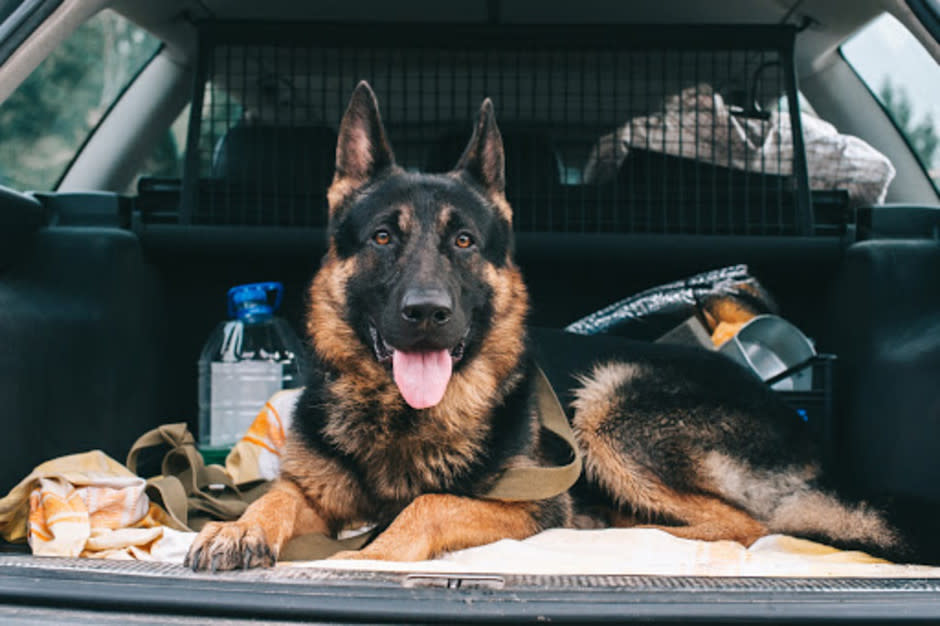
Tips for Making Travel Nursing Easier on Your Dogs
When you’re traveling with a pet, it adds another whole dimension to the experience. Dogs don’t always stick to our schedule and they often don’t react perfectly to travel.
Because of this, it is essential to plan carefully when traveling with your pooch (opens in new tab)and do everything in your power to make the trip to your next travel nurse assignment as stress-free as possible.
With these tips, you’ll be able to safely and easily transport your dog wherever you’re going.
1. Make Sure to Bring Vet Records
Whether you’re bringing your dog along for a vacation or with you to your next travel nurse contract, it is vital to bring along your pet’s vet records. If you are traveling to Hawaii or driving through Canada to get to an Alaska assignment, they will require these records for entry. But, even if your destination doesn’t require them, it is always best to have them just in case.
These records should show that your dog is up to date on all their shots, especially rabies. Many places require a rabies vaccination before they will allow your pet to enter.
Preferably, you should also take your pooch for a quick checkup before traveling and keep a record of that visit with you at all times. This is less necessary when traveling short distances by car. However, if you’re traveling by plane, this is often a must-have.
Having a piece of paper that proves your dog is in good health can clear up many possible hiccups you might encounter on your trip.
2. Bring Your Dog’s Best Food
During a trip is not the time to switch around your dog’s food. Your canine is already going to be dealing with a bit of stress, so there is no reason to potentially upset their tummy even more by switching their food.
In the best scenario, your dog will already be eating high-quality food (opens in new tab). This will keep them healthy, which is vital if you’re traveling often, as well as lower their stress levels.
If your dog currently isn’t eating great dog food, the time to switch is at least two weeks before your travel date. If your trip is already sooner than two weeks, put off switching their food until after the bulk of the travel is over. This is particularly important for travel nurses who are moving regularly, as you’ll want your dog in tip-top shape for all that traveling.
Use this time to research the best quality foods for your canine.
3. Don’t Forget Medication
If your dog is currently on any medication, be sure to have those stocked up and ready to go.
Ask your vet if she can give you a few extra dosages while you’re at it. It may be tricky to find a new vet at each assignment for refills, so you’ll want to have extra medication on standby just in case.
Some vets may provide you with a prescription, and then allow you to purchase the medication from an online retailer. If this is possible in your situation, consider having the extra bottles sent to your new address so you don’t have to carry them with you.
4. Pick Out the Perfect Crate
If your dog is traveling in your car, choosing a crate may not be necessary. But, all canines flying in an airplane will need a crate.
Crates should be large enough for your dog to stand, turn, and lie down in. However, they should not be big enough for them to walk around, as this will encourage accidents in their crate.
The crate should be strong enough to hold your pet and the handles should be sturdy as well - if your dog is small enough to get into a crate with handles. The bottom should be leak-proof just in case your dog does end up having an accident.
Ventilation is very important as well. Most crates will have plenty of notches to increase airflow, but you should check just in case.
No matter whether you’re driving or flying, you should put a large sticker on the outside of the crate that says “Live Animal”, with arrows showing the upright position. You should also have stickers indicating your name, address, and phone number, as well as the contact information for a family member or friend who can take your pet in an emergency.
For air travel, this contact information is necessary just in case you get separated from your pet. However, it is also extremely useful for car travel just in case you get in an accident and are incapacitated.
You can put bones and toys inside the crate, as well as a comfortable mat. A water bottle can also be useful, though you do not want to put a water bowl directly into the crate. It may spill and get your dog wet.
5. Always Keep Identification On Your Pet
You should always have some sort of identification on your pet. A sturdy leash and collar is the most popular option.
The leash should be outfitted with your dog’s name, your phone number, and your dog’s rabies tag. These bits of information are vital just in case your dog gets separated from you.
You should also get a tag that shows an alternative contact that would be able to take care of your dog in case of an emergency. If you happen to have an emergency and become incapacitated, authorities will be able to contact this person to arrange care for your dog. This is especially important since as travel nurses we are often solo when driving long distances or exploring new places.
We highly recommend considering a permanent form of identification, like a microchip. This is especially important if you travel a lot since microchips are universal and do not vary based on location. Your phone number may change, but the information on the microchip will not.
You should also keep a picture of your pet on you at all times. This is useful in case you need to advertise that you’re missing your dog, of course. However, it may also be necessary to prove that you own your dog, which is often required to get your canine back in the event that they get lost.
Sadly, many people claim stray dogs are theirs when they really are not in order to get free pets. Requiring proof of ownership is becoming more and more popular in order to prevent this. Luckily, a simple picture of you with your dog is all you usually need.
6. Stop More Than Your Think You Need To
If you’re traveling by car, you should stop whenever you feel like your dog needs to stretch their legs or take a potty break - and then stop some more. Truthfully, you can’t stop too much when you’re traveling with your dog.
Stopping often will prevent accidents in your car, excess barking, and even car sickness. In many cases, you can find rest stops regularly on your route. We recommend stopping frequently for short periods of time, as opposed to rarely for longer periods.
This will not only prevent you from getting stiff and tired, but it’ll keep your dog in a better mood as well.
Whenever you stop, take your dog with you. You should not leave your dog unattended in the vehicle. Not only can this result in things like heat stroke, but it is sadly not unheard of for dogs to be stolen right out of vehicles - especially if they’re purebred.
7. Talk to Your Vet About Tranquilizers
Tranquilizers are somewhat common during air travel, though they have become rarer and rarer over the last few years.
Not all dogs need tranquilizers. Many do perfectly fine without them. But, your dog may particularly benefit from them. You know your pet best and can likely judge how they’ll react to the trip, so use your instinct.
Talk to your vet about your options.
8. Check the Temperature
If you’re flying, be sure to check the temperature at all your stops. Federal regulations control what temperatures dogs are allowed to be exposed to when departing, arriving, or switching flights.
If it is too hot or too cold, your dog may not be able to fly with you at all.
It is in your best interest to call the airline and discuss this with them. If they know you have a dog, they may be able to provide you with quicker connections or suggest another route that would be more suitable.
The best time to ask these questions would be while making a reservation for your pet on the airplane. Only so many dogs are allowed on each flight, so you will need to make a reservation. Feel free to contact the airline again, however, if you find yourself with more questions or concerns.
Some airlines might even allow you to bring your dog into the airport if they are going to be exposed to temperatures that are too high or too low. You don’t know unless you ask.
Be sure to find out what would happen to your dog if your flight is delayed or if the weather forecast is wrong. Prepare for these “what if” scenarios and your trip will be much easier.
Traveling with a dog is a great way to ease loneliness and feel more comfortable at each new assignment. By implementing some structure and planning ahead, your dog will adjust more easily to each new assignment and with luck may even thrive as a pet on the road!