If you're a property manager interested in discounted pricing or integrations, please reach out to partnerships@furnishedfinder.com. We'll follow up with a custom quote and integration instructions.

Price your rental confidently from day one
If you're a property manager interested in discounted pricing or integrations, please reach out to partnerships@furnishedfinder.com. We'll follow up with a custom quote and integration instructions.

Introducing a practical pricing playbook for mid-term (monthly) rentals, short-term rentals, and hybrid strategy. Whether you’re a seasoned pro or just starting out, you can earn more, avoid vacancy, and stop guessing.
Check out our new and improved Market Insights tool where you can get valuable data and insights for your city. It’s just one of many tools we offer to help you better run your rental.

Travelers searched in last 12 months

Average length of stay

Booking inquiries, year-over-year

You’re not pricing for Saturday night, you’re pricing for sustained housing demand — and that difference directly shapes pricing strategy.
Monthly rentals are a great option if:
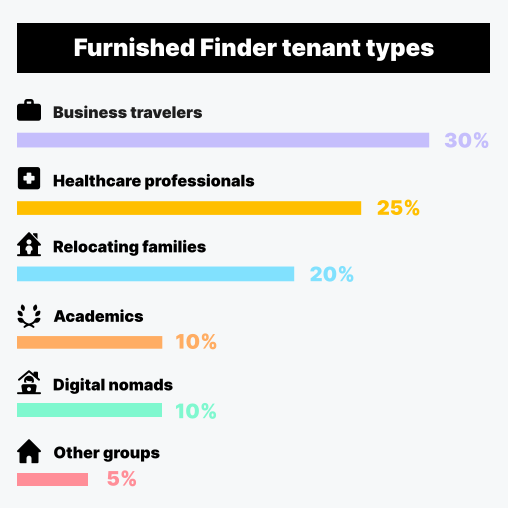
Your area has hospitals, universities, tech corridors, or high relocation activity
You want fewer turnovers than short-term rentals
You prefer steadier income over nightly management
You want operational simplicity without getting locked into a long-term lease
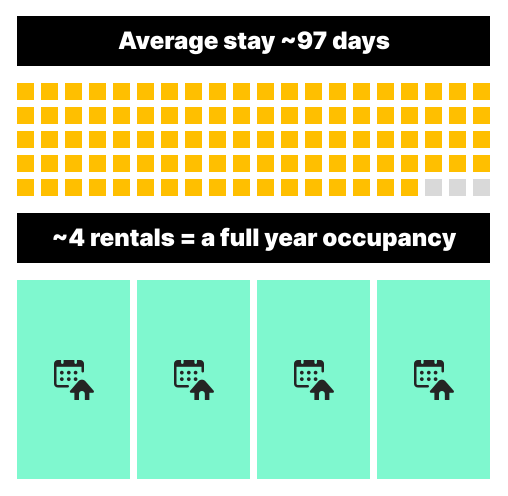
This affects pricing because monthly rental guests are:
Operating within reimbursement caps from employers or insurance placements
Evaluating cost on a 28+ day basis
Placing a premium on livability, including convenience and function
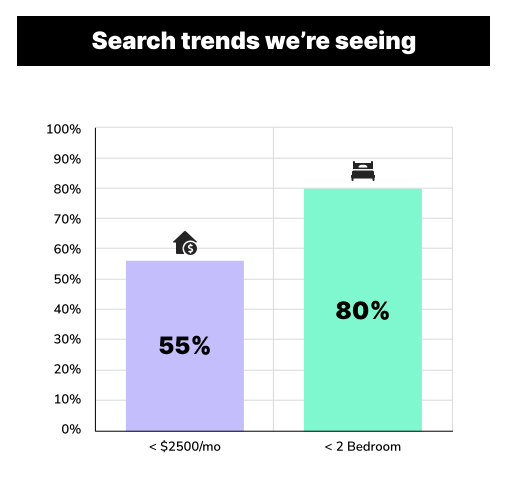
Your “sweet spot” is:
Usually positioning your base monthly rate to compete inside the dominant search bands—then earning a premium with the right amenities.
All-in pricing
Strong Wi-Fi
In-unit laundry
Pet-friendly policies
Fenced-in yard
Convenient location

Download the Furnished Finder monthly rental pricing worksheet here

Evaluate your market: Inventory, Search trends, Rent ranges by size, and Tenant types

Pet-friendly, Fast Wi-Fi, Workspace, Laundry, Outdoor space, and Proximity

Deposit (~1/3 rent)
Cleaning (~$175)
Pet fee ($300/$200)
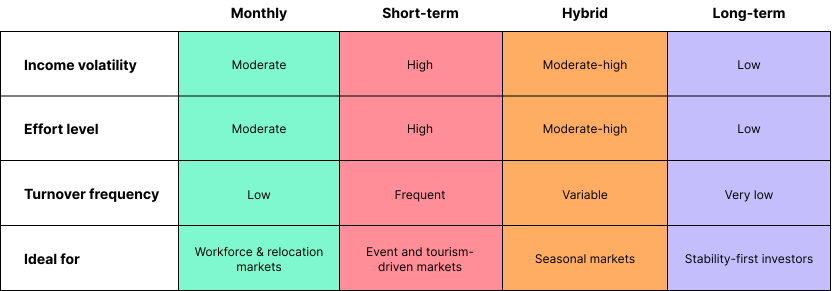
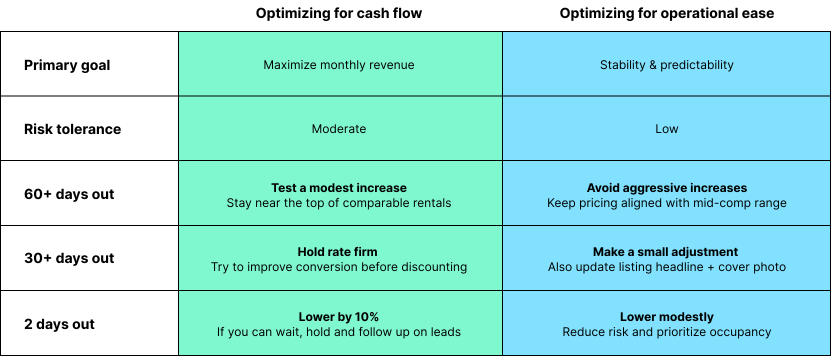
It’s one of the clearest lessons from experienced landlords, and not every landlord is optimizing for the same outcome. Your pricing actions should align with your primary objective. Use the table below to determine the right pricing behavior for your goals.

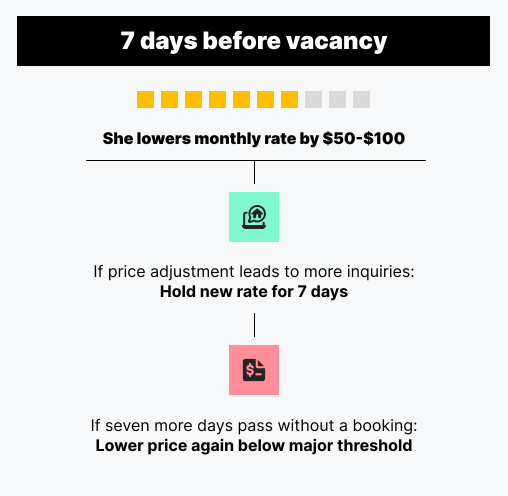
Katie manages a portfolio of 12 listings on Furnished Finder. Below are two real-world examples of how she adjusts pricing based on vacancy timing and comparable listings.
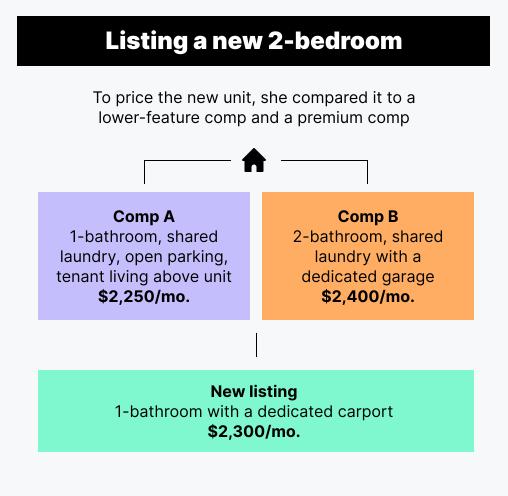
Even when listings are similar in size and market, small differences in privacy, parking, laundry, and bathroom count can support meaningful pricing differences.

Once it’s gone, it’s gone
STR nights don’t sit on a shelf. If your place is empty on Tuesday, you can’t make that money back on Wednesday. That’s why strong operators manage pricing one night at a time—so fewer nights go unbooked.
Drivers of STR demand
Traditional pricing models break down because they treat demand as steady and predictable, when in reality, STR demand is layered and dynamic.
Most hosts start with gut-feel pricing, which often lags the market: too high during slow periods and too low during spikes. Dynamic pricing replaces this with real-time, data-driven adjustments based on demand signals like booking pace, competitor availability, and lead time.
With PriceLabs, rates update automatically in the background, so your pricing is always optimized.
Seasonality:
Summer vacations, winter holidays, and shoulder seasons establish predictable highs and lows throughout the year.
Event-driven demand spikes:
Large-scale events, such as the 2026 World Cup, create concentrated surges that temporarily override normal patterns.
Booking window volatility:
Some guests plan months ahead for multi-night getaways, while others wait, creating 24-48 hour booking rushes.
Revenue optimization is a balancing act where price, occupancy, and length of stay (LOS) function as interconnected levers. A change in one inevitably impacts the others.
Your Base Price is your “home base” rate for the year — the steady starting point your pricing adjusts from. When demand rises, you go up. When things slow down, you come down.
Because everything builds off this number, getting it right keeps your pricing smart and consistent (and helps you avoid leaving money on the table).
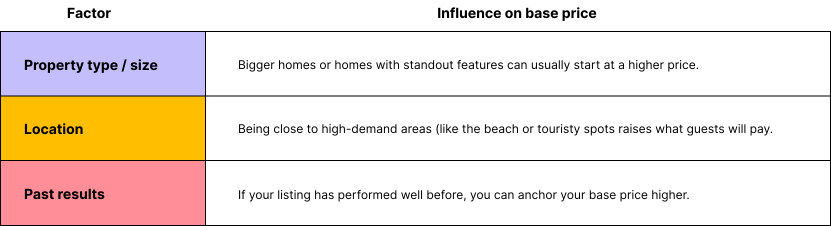
How to set your base price:
Your calendar sells out many months in advance at rates that don't reflect upcoming surges
Zero bookings even when your market is showing high occupancy trends.
PriceLabs’ Base Price Help tool analyses your market and suggests a starting base price based on comparable listings.

Nightly pricing is only half the equation. Your minimum stay settings can make or break occupancy. A flat rule like “3 nights minimum” may seem easy to manage, but it often creates un-bookable gaps and missed revenue opportunities.
Instead, a smarter minimum stay strategy adapts to your calendar in real time, capturing every possible booking without sacrificing high-value stays.
Fill gaps you didn’t even know you had
Empty nights between bookings are one of the most common sources of lost revenue.
Gap Filling automatically adjusts MinStay to match the exact number of open nights
A 2-night gap? Your minimum drops to 2 nights instantly making it bookable
No manual intervention needed, your calendar fixes itself
Adapt to demand, not rules
Why use the same minimum stay year-round when demand constantly changes?
PriceLabs’ dynamic MinStay adjusts based on:
Booking pace
Market demand
Lead time (how far out the date is)
Enforce longer stays during peak demand to maximize revenue,.
Allow shorter stays closer to check-in to improve occupancy.
One strategy, two outcomes
With a dynamic MinStay approach, your calendar works smarter:
Protect high-demand dates with longer, high-value bookings
Fill every possible gap with flexible stay requirements

Hybrid works best when your peak STR upside is materially higher than your off-season monthly floor, and when your market has enough monthly demand to absorb vacancies outside peak windows.
When hybrid works:
Strong seasonality: Peak weeks book fast, off-season needs a different playbook.
Regulatory uncertainty: You want flexibility if STR rules change or tighten.
Event-driven markets: Big spikes and slower stretches make switching worthwhile.
The 3 rules (simplified):
Protect peak windows – never lock in a monthly rental during a known peak event or peak season week.
Set a switch window – Pick a clear trigger window (by date or vacancy threshold) so you can reposition in time to capture monthly demand.
Don’t discount below your floor – Build your monthly rate from real costs and set a firm minimum so occupancy doesn’t erase profit.

These are big holidays, major events, and busy seasons that make sense for STR-only.

Decide in advance when you’ll flip from STR to monthly if it is not booked.

Update the basics so it matches what monthly renters want.
Highest earning potential?
Short-term or Hybrid can capture spikes in demand.
Steadier, more predictable income?
Monthly rentals (30+ days) often feel more consistent.
More hands-on:
Short-term
Balanced:
Hybrid
Lowest day-to-day:
Monthly rentals / Long-term
Need flexibility soon?
Short-term or Hybrid
Want a calmer monthly plan?
Monthly rentals can be a great fit