
Furnished Finder and AirDNA have partnered to deliver a first-of-its-kind report on the U.S. monthly rental housing market, powered by real booking and listing data across the leading online rental platforms. Inside this report, you'll uncover the macro trends fueling demand, evolving renter preferences, and where real estate investors are finding the greatest opportunities today. Download the report to understand what's driving this shift and why monthly rentals are becoming impossible to ignore.

Monthly rentals are no longer a side hustle or a niche strategy. They’ve become a major part of the rental market, and they’re growing faster than short-term rentals. According to AirDNA’s data, bookings for stays of 28 days or more have surged since 2019, jumping from about 20 million nights to 46 million by the end of 2025. That’s more than double the growth rate of short-term stays over the same period.
Today, monthly rentals make up nearly one in five rental bookings nationwide, and demand continues to climb year over year at a pace that’s more than twice that of short-term rentals. For landlords, that signals a clear shift in renter behavior toward longer stays and more predictable occupancy.
Furnished Finder is leading this trend—the number of available listings has grown from roughly 20,000 before the pandemic to over 300,000 today, and renter demand is also increasing sharply. Since 2022, booking inquiries have tripled and the number of unique travelers has more than doubled, showing that more renters are actively searching for furnished monthly housing and more owners are meeting that demand.
 Learn More About This Big Shift
The growth in monthly rentals isn’t a short-lived pandemic bump. It’s being driven by larger forces that are reshaping how and where people live and work, and those forces aren’t going away anytime soon.
Housing shortages and affordability pressures are pushing more people toward renting and staying flexible. Over the past decade, renter households have grown faster than homeowners, and in simple terms, more people are renting, moving more often, and needing furnished places they can stay in without long-term commitments.
This shift is especially strong in major cities. From 2023 through late 2025, monthly rentals in large urban markets have grown at the fastest pace. New York and Los Angeles show how this trend plays out in different ways. In New York, tighter short-term rental enforcement pushed demand sharply toward longer stays, making monthly rentals the clear majority of bookings in just a couple of years. In Los Angeles, where regulations have been less consistent, monthly rentals still steadily gained share, driven by workforce needs and housing availability rather than regulation alone. The takeaway is monthly rentals have proven to be a durable segment of urban housing demand, regardless of regulatory pressure.
Importantly, this isn’t just a big-city story. Monthly rentals are scaling nationwide, especially in markets tied to job creation, hospitals, universities, and temporary labor needs, not vacation demand. These are places where people relocate for work, training, or life transitions and need housing that fits in between.
That pattern shows up clearly on Furnished Finder. Inventory growth is spread across the country, not just in the largest metros. Some of the fastest-growing demand is actually in smaller markets, where job growth and housing constraints are creating real pressure and supply hasn’t caught up yet. For investors and landlords, those markets represent some of the clearest opportunities to step in early and meet unmet monthly housing demand.

Check out our new and improved Market Insights tool where you can get valuable data and insights for your city. It’s just one of many tools we offer to help you better run your rental.

Travelers searched in last 12 months

Average length of stay

Booking inquiries, year-over-year
Monthly renters' needs are different than short-term rentals. They need accommodations designed for everyday living, not vacation use. Livability, reliability, and flexibility matter far more than vacation-style amenities.
There’s also no single “typical” monthly renter. On Furnished Finder, demand comes from a mix of renters with very different needs: Business Travelers, Healthcare Professionals, Relocating Families & Insurance Placements, Academics, and Digital Nomads.
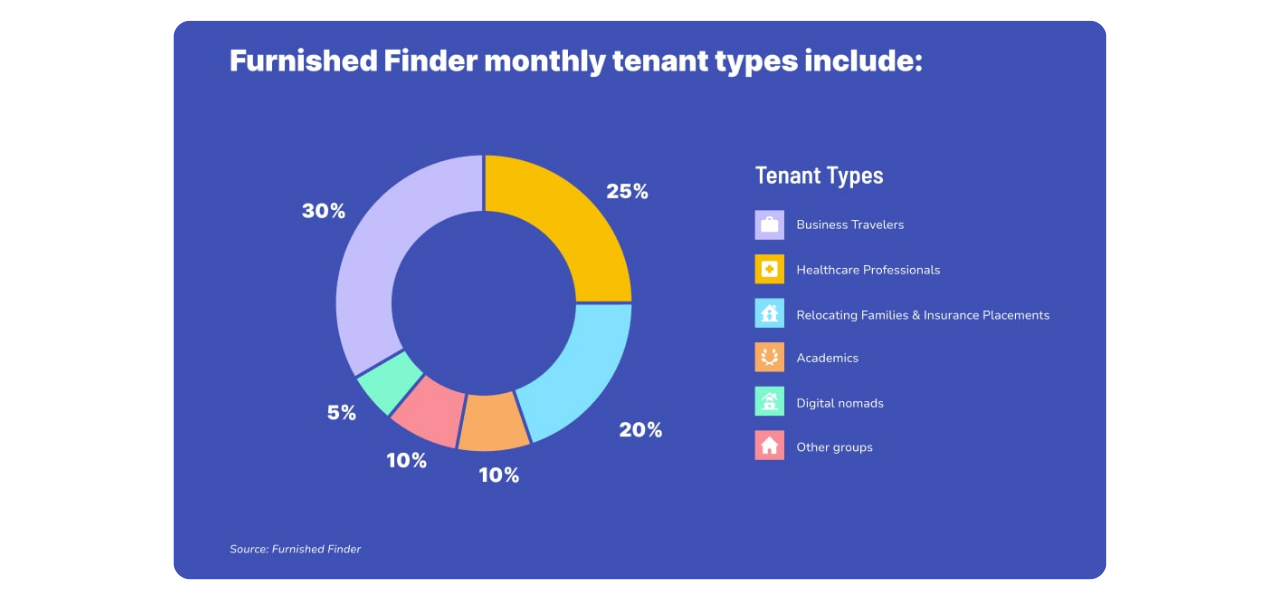
Another important shift is how and when tenants book. Stays are trending longer overall, and booking lead times are getting shorter. More than 40% of tenants secure housing within two weeks of their move-in date, reflecting how often monthly renters are responding to sudden job changes, assignments, or life events. For landlords, being responsive and ready matters.
The rental process itself also looks different from short-term stays. Monthly renters expect direct communication with the owner, clear lease terms, monthly payments instead of nightly rates, and the option to extend if plans change. These expectations signal a more stable, relationship-driven rental experience and one that often leads to longer stays, fewer turnovers, and more predictable income for landlords.
When it comes to monthly rentals, bigger doesn’t mean better. Demand consistently skews toward smaller homes and rooms for rent. Most monthly renters care far more about functionality, price, and location than extra bedrooms or luxury upgrades.
Because stays are longer and turnover is lower, monthly rentals are typically priced below short-term rental rates. That doesn’t mean they’re less profitable. In many cases, steadier occupancy and fewer gaps help smooth income over time. Pricing varies by market and property type, but the national averages on Furnished Finder show a clear middle-of-the-market sweet spot. Rooms, studios, and one-bedroom units attract the strongest demand, while larger units tend to serve more specific use cases.
Affordability is a major driver of renter behavior. More than half of renters search for housing priced at $2,500 per month or less, and the vast majority of listing views are for properties with fewer than three bedrooms. This reinforces that monthly renters are optimizing for affordability, not size
Listings also perform best when they focus on the basics renters actually use every day. High-speed Wi-Fi, in-unit laundry, a full kitchen, a dedicated workspace, and pet-friendly policies consistently matter more than decorative touches. For landlords, prioritizing these essentials creates stronger pricing power, faster bookings, and more reliable, long-term occupancy.
Monthly rentals make it easier for a wide range of first-time landlords and property owners to enter the market. Single-family homes, ADUs, garage apartments, and even spare bedrooms can all perform well as monthly rentals. The operator base is notably diverse, with over 60% female, and the majority of operators aged 55+.
Getting started typically requires less upfront capital than short-term rentals. In many cases, you don’t even need to own the property, and furnishing costs can be kept reasonable with a practical, no-frills approach. Compared to short-term rentals, monthly rentals also dramatically reduce turnover-related expenses, which can add up quickly when guests are constantly coming and going.
Many of the strongest-performing hosts don’t treat monthly rentals as an either-or decision. Instead, they blend monthly and short-term strategies, using each where it makes the most sense. This hybrid approach helps turn seasonality into an advantage, filling gaps during slower periods and creating more consistent income throughout the year.

While monthly rental operators range from individual landlords to professional managers, the space is still largely driven by independent owners. Most hosts operate a single property rather than large portfolios, reinforcing that monthly rentals remain accessible and competitive for everyday landlords, not just big institutional players.