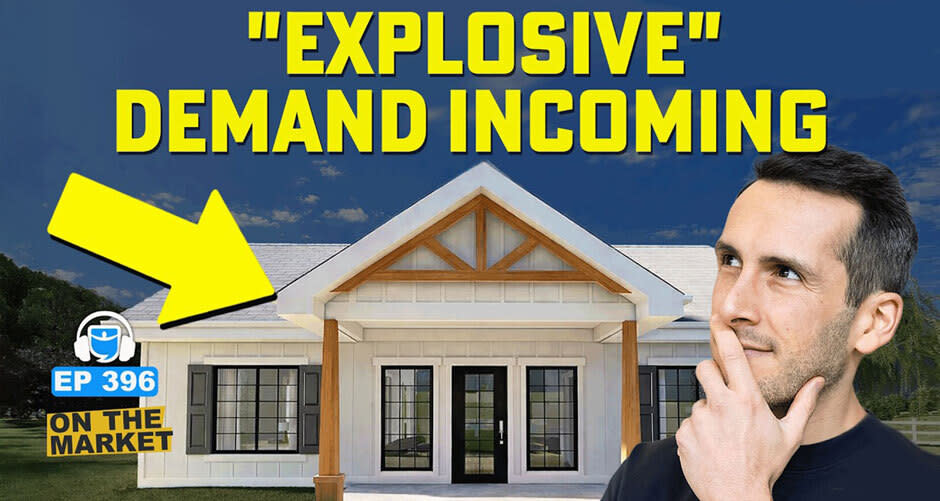
CEO of Furnished Finder, Jeff Hurst, joined Dave Meyer on Bigger Pockets' On the Market podcast (opens in new tab) to discuss the recently published report Monthly Rentals: The Hidden Gem of Housing (opens in new tab).
For years, monthly furnished rentals lived in the background of real estate investing. They were often viewed as a niche strategy used only by travel nurses. That perception is outdated. Monthly rentals, commonly referred to as mid-term rentals (or MTRs), have quietly become a meaningful and fast-growing segment of the housing market, now comprising 19% of the total rental market. New data, platform growth, and shifting renter behavior all point to the same conclusion: monthly rentals are no longer on the fringe. They are becoming a core housing solution for millions of renters and a compelling investment strategy for landlords.
Monthly rentals are growing at scale
One of the biggest reasons monthly rentals were slow to gain mainstream recognition is that there was little consolidated data. That has changed.
Data from AirDNA and Furnished Finder (opens in new tab) shows billions of dollars in bookings each year for stays lasting 28 days or longer. Between 2019 and today, Furnished Finder has experienced explosive growth, expanding from ~20,000 to more than 300,000 listings.
This is not incremental growth. It is category expansion. More importantly, the growth is happening across a wide range of markets. Monthly rentals are scaling in suburbs, secondary cities, and workforce-driven locations that historically performed poorly as short-term rentals. For investors, this signals a structural shift rather than a temporary trend.
Meyer’s Personal Experience with Monthly Rentals
In the episode, Meyer shared that he and his family relied on monthly rentals to live in multiple Seattle neighborhoods before committing to purchase a home. The priority was not luxury amenities or design themes. It was livability: parking, proximity to grocery stores, quiet spaces, and the ability to determine which neighborhood was right for his family.
This experience mirrors what many renters are seeking today. Monthly renters want housing that feels like home, not a hotel and not a long-term commitment they might regret. For landlords, this means success is less about spectacle and more about solving practical problems well.
What is driving monthly rental demand
Monthly rentals behave very differently from short-term rentals because the demand is fundamentally different.
Professionals traveling for temporary work assignments
Healthcare workers on travel contracts
Families relocating or preparing to buy a home
Homeowners temporarily displaced by renovations, insurance claims, or major life events
This type of demand is more stable, less seasonal, and less sensitive to economic swings than discretionary travel.
A clear example is the “try before you buy” renter. Many households now choose to rent furnished housing for several months while they explore neighborhoods, schools, and commute patterns before committing to a purchase. This behavior has accelerated as housing affordability has tightened and buyers have become more cautious. Monthly rentals solve this problem in a way hotels and long-term leases cannot.
Why location rules are different for monthly rentals
One of the most important insights for investors is that monthly rentals succeed in different places than short-term rentals. Below are examples of the types of demand drivers that attract monthly renters:
Corporate offices and industrial corridors
Large scale infrastructure and construction projects
Hospitals and medical centers
Suburbs with good schools and amenities
Universities and research hubs
These areas tend to have lower acquisition costs, no regulatory restrictions, and more consistent demand.
In many cases, properties that struggle as short-term rent
als or are restricted by local regulations can thrive as monthly rentals. This makes MTRs an attractive strategy for investors looking to diversify away from oversaturated vacation markets.
The monthly rental blueprint: why the model works for landlords
Monthly rentals sit in a powerful middle ground between long-term and short-term rentals.
From an operational standpoint, they require far less day-to-day management than short-term rentals. Most properties experience only a few turnovers per year, which reduces cleaning, maintenance coordination, and guest communication.
From a financial standpoint, monthly rentals typically earn a meaningful premium over traditional long-term leases. Furnished properties with flexible lease terms often command 50-100% higher monthly rents, while still maintaining high occupancy.
Furnishing costs are also significantly lower than short-term rentals. Instead of designing for weekend experiences and visual “wow” factors, monthly rentals are furnished for comfort and functionality. This keeps upfront costs manageable and allows furniture investments to pay for themselves relatively quickly. The result is a model with strong margins, fewer headaches, and predictable cash flow.
Monthly rentals are easier to test than most strategies
One of the most compelling advantages of monthly rentals is how accessible the strategy can be.
Investors do not need to commit to a full portfolio shift to get started. Many landlords begin by testing demand with a single property, an ADU, or even a spare room.
Because Furnished Finder operates on an annual flat-fee model rather than per-booking commissions, landlords can validate demand without significant upfront risk. Some even list properties before furnishing, offering to furnish once the first tenant is secured.
This ability to test, learn, and iterate is rare in real estate investing and makes monthly rentals especially appealing for new and experienced investors alike.
Tools to evaluate monthly rental demand
Investors interested in monthly rentals should start with data-driven decision-making. A few practical tools include:
Furnished Finder Market Insights (opens in new tab)
Explore search activity, inventory levels, and pricing trends by market.The Furnished Finder + AirDNA Monthly Rental Report (opens in new tab)
A deep dive into market growth, demand drivers, and investor strategy.List Your Property (opens in new tab)
Receive inquiries from real people with real housing needs. These tenant leads often reveal patterns that data alone cannot, such as why renters are coming to the area, how long they plan to stay, and what they value most in a home.
Together, these tools help investors move beyond guesswork and see how monthly rental demand shows up both in the data and in real conversations with tenants. When the numbers and the tenant stories align, it becomes much easier to invest with confidence in your local market.
Watch the full Bigger Pockets On the Market episode:
Transcript
Monthly rentals have moved from a niche to a meaningful slice of the housing economy, [music] and there is finally a data set that shows how and where it's growing. I'm Dave Meyer, and today I'm joined by Furnished Finder's Jeff Hurst to unpack their new monthly rentals report with AirDNA. We're going to start by talking about what this report is, how it's built, because it's pretty cool. with the first of its kind where we're actually getting some new insights and data about the really profitable mid-term rental market. Then we're going to dig into specifics like where demand is rising, which markets lead, and the playbook for investors who want to get into this segment. We'll cover what you need to know and how to act on it. This is on the market. Let's get into it. Jeff, welcome to On the Market. Thanks for being here. So glad to be here again and excited to be talking to everybody. Yeah, we had a super popular show last year with Jeff, but for those of you who haven't listened, Jeff, maybe you can just reintroduce yourself. Absolutely. So, I'm Jeff Hurst. I'm the CEO at Furnished Finder. Uh we are a monthly furnish rental platform. Uh the platform's been around about 10 years. I've been here about 2 years uh when we partially bought out the founders with some private equity and I have been upgrading the software, upgrading the team and helping to provide a better experience. Before that, I spent over a decade as the president of Vrbo, the chief strategy officer of Homeaway, and also the chief operating officer at Expedia Group. So, most of my career is short-term rentals. And along with that, I am a real estate investor. And so, I own three short-term rentals. Um, previously self-managed, one of them for about a decade, and now they are all property managed. So, I've got one on the beach, one on a lake, and a working ranch, which has been a different type of adventure. [laughter] Well, that's great. I mean, I feel like that's everyone's dream life, right? It's like you have a collection of short-term rentals, hopefully making you a little bit of money at least. Hopefully, we'll we'll get everyone on the who's listening to this to that point one day. That's our collective goal here. But we're here today to talk a little bit more about longerterm rentals. So, not necessarily short-term rentals, but Furnished Finder worked together with AirDNA to put together a report on monthly rentals. Can you just tell us a little bit about the scope and methodology of this report you put together? Yeah, absolutely. I mean, first of all, for those who don't know AirDNA, uh they're without question kind of the gold standard of reporting on short-term rentals. And so, for over a decade, they've been tracking Airbnb, Vrbo, Booking.com. They're constantly updating their data sets. And so, I've known the team there for a long time from My Life and Short-Term Reynolds. Um, and I had reached out to Jamie Lane there to see about collaborating on, hey, listen, we've got kind of different data sets, and I think this thing's bigger than a lot of people in my old orbit, short-term rentals, think it is, and so I'd love to get together and just like see what we learn. Uh, as it turns out, they had already been looking at upgrading their data products, which they've now done, to be better at understanding when something's 28 days or longer and when it's not. You know, it's tricky with the way they've built their platform, but they've done a great job doing that. You know, Furnished Finder is a classified site, so we don't have great booking data, but we have a ton of signal on where tenants are trying to go, where landlords are adding inventory, and then the characteristics of what's in demand and not. And so, we thought it was a great compliment. And so, it kind of came about as just an idea, and we were like, hey, let's all peek under the hood and look at each other's data and see what the story says. And for us it was really exciting because it was confirmatory of a lot of us kind of like staking our next careers on this opportunity of that. It says monthly furnish rentals are growing really fast and there's a ton of demand for them. Interestingly, it says it's very different than what most short-term rental demand is. It's not leisure based and so it does shine a light on like this thing's growing a lot faster than short-term. It's adding more inventory and it's a different type of asset class. What are some of the differences between the short-term and mid-term rental industries? you know, you start with it's obvious. The difference is one's for 30 days or more, [laughter] you know, um but when we look overall, so one key difference, smaller footprint. Um and so 70% of the inventory on Furnished Finder, two bedrooms are smaller. Um when you extend that to like Apartments.com: Apartments and Homes for Rent and Zillow, totally the same trend, smaller footprint. Uh where it is way less likely to be in a leisure destination. In general, think about it as being around universities, hospitals, and commuter corridors. And that's because the tenant types, the largest is work, commuting for work. That could have be skilled trade, but it's also a lot of professional services. Second largest is healthcare, which is how Furnished Finder built its name. The third largest and fastest growing is relocating families. I think that's the most interesting for investors because it really opens up where the category can go because of those things. It's overwhelmingly in like uh suburbs, small towns. It's in major urban areas, but it's not in the downtown corridor. What's exciting about that is the assets tend to be less expensive than short-term rental. For the price of a short-term rental, you might be able to buy a duplex or a quadplex and have a different type of key strategy. Uh it's probably typically a better cash on cash return because the entry price is lower and the cost to outfit these is way lower. Think like $7 a square foot. You know, I was talking to Garrett at Bigger Pockets like routinely a short-term rental might be more like $30 to $50 a square foot because you are investing in wow amenities because you're trying to really help help somebody have a great weekend. We're trying to help somebody get through a tough time or maybe like have a comfortable place to sleep while they're on a work assignment. So, those are the key differences. You know, the thing that I think surprises a lot of people, the average uh length of stay on Furnished Finder is over 3 months um and over a third of the tenants extend. And so you're talking about doing like three turns a year. Um, and if you're doing it well, the occupancy is actually a lot higher than a short-term rental, you know, because you might only have a few days between turns, like 90% plus. And so it it's very different. Um, but people who are great at short-term rentals can be excellent at mid-term rentals because it's actually easier. You've just got to do a different type of asset hunting. It seems easier from a property management perspective and from a design perspective as well is is what you're saying. I was I was kind of curious about that if people spend as much effort into a medium-term rental or is it just there's no ROI on that? They don't. You know, you think about like when you're when you're designing for a short-term rental, you have to think about like who's coming, where are they coming from, and what's the wow amenity. You know, is it pickle ball? Is it that we're going to do, you know, foosball and ping pong? Are we going to have some sort of different visual aesthetic or fire pit? Everybody knows how to sleep comfortably. You [laughter] know, it's like, can I stock a kitchen with basics? Can I get a reasonably good couch and TV? and can I have like a quiet place to sleep comfortably? Like you don't need to have a designer. You need to be pragmatic and you need to know how to do these things efficiently and you need to be really good at locating where are people going to need this type of inventory. Totally. Yeah. Just to my own experience with midterm rentals. I moved to the Seattle area about a year ago. Didn't know where we wanted to live. Stayed in a midterm rental in one area for like 2 or 3 months. Figured out we wanted to live on the other side of the city. Moved to that area. stayed in a midterm rental for two or three months while we did some house hunting and ultimately found the place and we wanted somewhere comfortable. We wanted parking, you know, like we wanted proximity to the grocery store. Like stuff that you look for more in a traditional long-term rental as a tenant, whereas like yeah, if I'm taking a short-term rental, I'm like, give me a golf simulator and a view of the mountains and I'll be pretty happy. That's not what I'm saying. Interestingly, the midterm use case because it's not long-term, like it actually curb appeal matters a little less. Like you don't care as much that there's wow curb appeal, that there's a fantastic, you know, you need like maybe a lawn for pets, but you may not need the perfect manicured front lawn and stuff like that because, you know, it's it's really transitional and you need it to be comfortable. And so that gives you a different type of flexibility. Also, like what you're describing, I'd say is our fastest growing use case. We call it try before you buy. And it's people who aren't sure where they want to be in a new town, but it's also people who might be priced out. And so they can't afford to make a mistake with the way housing inventory and affordability is right now. And so they're going to be really picky about what they buy after they figure out where they're going to buy. And that might mean they're in these for 6 to 12 months. And furniture is a bad investment. And so they're also want to be sure they buy furniture for the place they're going to be in for a long time and aren't moving it, moving it, and moving it. And so, you know, it's it's it's an interesting dynamic. And I found it to be um you know my kind of eat crow moment is at Vrbo I often thought that Chesy at Airbnb was kind of like I didn't believe his story about how people were going to live and increasing like okay I get it people are going to live more flexibly and what's shocked me is it's both ends of the generational curve. Yes, it's younger people but it's absolutely boomers and late Gen X really like my mom lives 2 to 3 months a year in Maine. Like she's not it's not because she's crazy wealthy and has another home. Like she travels with a friend. people are grandparent traveling. Instead of getting a, you know, living in the guest room of their kids, they're getting a house nearby that's a duplex and they can walk to their kids' house but have the grandkids at their duplex. And like there's a lot of these use cases because of the generational wealth transfer and housing where I think the older generation is actually like catching up or exceeding this idea of flexible living. That makes sense because I guess now millennials are mostly at least those who can afford it trying to settle down into a home and are less having kids, you know, they're a little less transient uh traveling less probably than these other generations. So that makes sense. So you mentioned earlier generally it sounds like the the industry the category as a whole is growing. Is that both on the supply and the demand side? It is. So in the report uh AirDNA's got a better view of like demand. So they estimate that there's over $6 billion of transactions on the short-term platform that are 28 days and longer. So that's big. We have seen from 2019 to 2025, the Furnish Flyer platform's gone from 20,000 listings to over 300,000. Oh my god. So 15 times more inventory. We think we're probably the biggest site for monthly furnished inventory just period. So like Zillow has about 50,000 monthly furnished, Apartments.com: Apartments and Homes for Rent about 100,000. Uh there's not a great number out there for Airbnb. We estimate it to be about 150,000, but then of course they've got, you know, millions of homes that could be rented for 30 days plus, but they've got a 3-day minimum or a 1-day minimum. So, it's um it's explosive growth. It it it used to mainly be healthcare and like some niche use cases. Think about like what trucks are at an extended stay America and increasingly it's way beyond that. And that was the other interesting confirming stat. 40% of all new hotel starts or extended stay really like the big institutional money is going into extended stay and you see that with new strategies of higherend extended stay but it becomes again to your point of like commercial or long-term real estate a little bit easier to go hunt because you just look where the hotels are like you know who's great at asset identification Hilton and Marriott like they don't screw it up a whole lot and so if you go figure out where they are and have a duplex nearby then your equation becomes Okay. Well, the Hilton extended stay property is going to be $3,000 a month. I can deliver twice the square footage and a private space for $2,000 a month. Are people going to choose that? Like, yeah, if [clears throat] they know, they're going to choose it. It feels like short-term rental in 2010. It's just way better. You know, it hasn't gotten as complicated yet. Where is demand for monthly stays coming from? Where are you taking it from? Right. I guess hotels is one part, but is it also I mean long-term rentals, too, it sounds like? For sure. Yeah, you know, I mean, it's part of the long-term rental platform. I think that um when you look at the big macro trends, you know, declining home ownership, increasing renership, you know, they're not really caring whether you're renting in a 12-month lease or a 3-month lease that renews four times, like you're just a renter. And so, the macro trend of more people renting probably plays into it the most. I do think there's hotel share steel, but I don't think it's zero sum. I think the hotels realize there's so much excess demand that they're building supply and we're helping augment the need for more supply. If you're a landlord, you're probably advertising on Furnished Finder. A little over half are exclusive to Furnished Finder. You're likely also on Airbnb or maybe also on Zillow and very fre it's got more of a hustle dynamic. You're more likely to also, you know, like be telling your neighbors you've got a space in the neighborhood for if somebody gets divorced or their roof catches on fire or whatever. Like that part's unique of that it's a little bit more cottage industry that way. And a lot of it is more referral or local relationships. And the asset class is unique that way because, you know, a lot of neighborhoods and even municipalities have banned short-term rentals. But this actually feels like a neighborhood asset. Like you're excited if somebody like you is moving to a neighborhood in Seattle and has a chance to live for 3 months and be sure they can buy something in the neighborhood, become a part of the community. You're not excited if a family gets divorced, but you it is nice that the husband and wife can both stay in the same neighborhood and have kids close to each other and like maintain family consistency. And then if somebody's plumbing bursts or roof catches on fire or just wants to remodel, it's great that your friends get to stay in the neighborhood. Like it just feels like an asset. 100%. I think I'm probably I was on Furnished Finder the other day because I'm starting a remodel in the next couple of months and I'm thinking about where you know it's going to be over budget. So you're looking for a way to save some money, too. [laughter] Yeah, exactly. So talk to me a little bit about, you know, we see demand seems to be going up. Supply is certainly going up. You know, one of the knocks or the question marks about short-term rentals recently has been about over supply. Is there do you have concerns about that? And I'm sure it varies markettomarket, but like do you have concerns about oversaturation in the midterm market as well? No, nowhere near what I did with short-term really. You know, short-term, you know, obviously went through a fantastic boom period. Um, the the I think the dynamic at play there is there's a lot of what I'd call irrational buyers. You know, it's very often almost like the middle class version of buying a sports team. There may be someone out there who's willing to buy it with no intention of making money. Like it's not an investment. It's actually that they just want it for usage. And so like the dynamics of who's buying those are different. It went through a boom, but the boom was very consolidated in, you know, Gulf Coast and lakes, rivers, mountains. And so there's over supply in a small number of places. What do you have everywhere but there under supply everywhere? there's a housing shortage, you know, and in most places it's a pretty durable housing shortage. And so I think the estimate is we're over 10 million units of housing short. And so when you think about where midterm rentals plays, it actually plays way more in the suburbs and in places where there aren't any short-term rentals than it does in the places where there's short-term saturation. And so it's [clears throat] more likely to be where there's a new community coming up, where there's a new multif family nearby or where there's a new hotel than it is where there's a new Ritz Carlton or, you know, a new resort property. And how can people measure or get a sense of where there's good supply and demand dynamics? Obviously, you mentioned one tip of following the hotels, which is a great tip, but are there any other ones you recommend? Yeah, so there's a uh there's a tool on Furnished Finder called Market Insights. You can reach it from the homepage. Uh you can put in any city in the US and it'll tell you how many visitors have seen that map grid. So like how many people are searching the area where your property could show up. It'll show you how much inventory is there and it'll show you by price point, bedroom type, what's um what's the distribution. Um this is a I'd say it's a solid B product we've built now, but there's some real improvements we need to make. And so my advice to people would be check it out now, but check back on it, you know, every month because I think there's going to be some things that we're doing that help make it more powerful like moving it to zip code search. We're going to do some things that better represent that, you know, if you're looking at Austin and part of the map might show a smaller town outside of Austin. We may not be accurately showing you the exact demand for that small town. And so we've got to help better calibrate the way that works, but start on Furnished Finder. Okay. Second thing, use a site like AirDNA because short-term is a good indicator. And then the third thing is use the OTAAS to your advantage. You know, go to a Booking.com or an Expedia and look at where the extended stay properties and you're kind of like think about this triangle where you've got Furnished Finder, Airbnb, and an OTAA and you're trying to figure out like, okay, well, where do things line up to where I'm getting a little bit of everything in that triangle? And then you know you're into something that's pretty special. And then tell me a little bit more about what assets people are buying because you said it's different. like doesn't have to have this wow factor. Is there some sort of sweet spot that you find has a lot of demand but is also reasonable from an expense perspective? Yeah. I mean, I think what I'd start with is let me just kind of describe the continuum. And so, first of all, of our over 300,000 listings, um 60,000 are rooms. Oh, okay. And you know, that's a very new product for me because at Vrbo, we didn't do rooms. And so, I'm kind of like I'm learning about it also. It's growing fast and it's a um it's a really interesting strategy, you know. Um, and I think, you know, of our partners, I think Padsplit's a really interesting partner to learn more about, but like co-living and how you rent out a room is a great strategy because like America actually doesn't have a room shortage. We have a housing shortage. You know, like my mom lives in a three-bedroom home and she's one person. There's a lot of people like that. And increasingly as they think about like are you willing to rent out a room or are you willing to add an ADU to a property, you know, that there's kind of a starting place there. You know, the second stop on the continuum would be there's a ton of studio apartments and onebedrooms, uh, apartments, condos, duplexes, quadplexes, but the important thing there is unlike short-term rental, it is actually viable to where you can get into this in more of an arbitrage model. And so you can take out a 2 or threeyear lease and most buildings and landlords are amenable to, hey, I'm going to have four tenants in here over the course of the year as opposed to I'm going to have 54 tenants in over here over the course of the year. And so there are people who will kind of dip their toe in the water with arbitrage. And then the majority is uh single family and it's two-bedroom or smaller. I think the sweet spot is like onebedroom with a bonus room so that you have the opportunity to play and like housing a family of three or four or having a slightly bigger place for a couple or somebody who wants some office space while they're there. That's probably the sweet spot. The inventory class in general is moving to larger footprints because of the family dynamic, but it's more like threebedroom is the larger part. There's nothing here exciting for your fivebedroom, your sixbedroom. You're like some of the most successful STR formats are those like sleeps 23, put four families here and you'll save the cost of eight hotel rooms. Like that's my lakehouse. That's not part of the situation here. I think it'll cap out around three or four rooms unless you're co-living and then the co-living strategy can allow you to yield a lot more if you've got five different tenants and a five-bedroom house and are treating it more like a monthly product. And so it's very flexible. Um, and I think what's interesting as an investor, it's a lot easier to invest in what you know because you just kind of think about like, oh, I can put one of these within a half an hour of my house. Where could I look within half an hour of my house? Right? And then self-managing is way more of an opportunity than short-term because it is closer to your primary residence and you're only dealing with it three or four times a year. And I imagine that it's also a little more flexible, not just on size, but in type of asset. Just hearing you talk, Jeff, it makes it me feel like, you know, you could potentially buy attached homes, you know, condos or town homes, whereas I think for short-term rentals, in my experience, most people want to buy single family dwellings just to stand out a little bit. But I don't know, in my experience as a midterm renter, I don't really care. I just want the, you know, a comfortable place like you said. You know, is it is it as private as, you know, a hotel room? Yeah. Like that's kind of the bar. And so like an ADU or, you know, an attached property for sure. Yeah. I think some of the people that have had the most financial success play in that like duplex, quadplex space, because you can own the dirt. You do have more flexibility. And um you know I think some of the best investors in the category underwrite it as like okay my worst case scenario is this is a successful long-term property. You know what does that return profile look like? Okay well what if I can then do 40% better than that as a midterm rental. What does that return profile look like? And that that kind of establishes your range and that midterm range can get really exciting and start to kick off cash really quick because it's basically like what's the return on furniture? And furniture usually pays itself back in like 6 months on our platform because it's $5 to $7 a square foot and then you're just making more money forever. You know, like the depreciation life cycle of furniture in mid terminal may be three or four years. So you've got three years of extra cash before you have to refresh. Let's talk a little bit more about the the economics here because in my mind there's sort of this continuum where it's like long-term rentals, least amount of management on a day-to-day basis usually, but the lowest cash flow potential if you break it down by how much revenue you're bringing in per night. That's going to be the lowest. Then in my mind, correct me if I'm wrong, midterm sits in the middle, right? Where it's like a little bit more work because you have maybe three tenants like you said in a year instead of one. You have to furnish it. There's maybe some more maintenance and costs that are there, but the daily rate you can get is higher. And then short-term rentals are sort of the highest revenue potential, but also the biggest management burden. Is that the right way to think about it? Yeah, that's that's exactly it. I mean, if you you know, I'd say a a pretty average short-term rental is probably doing something like $2,000 a week in rent. An average monthly rental is doing more like $2,000 a month in rent. Okay. Um, and then your long-term rental is probably more like $1,500 or $1,700 when you adjust for format, you know. And so we look at furnish as like your premium is probably 30 to 50% increase in monthly rent over long-term. And you're paying for furniture and you're paying for flexibility to like break the lease sooner. Um, you know, but [clears throat] it's almost a fully occupied short-term rental. Well, if you can get a fully occupied short-term rental, it wins. Like it's way more money. And and the only other difference I'd add to it is management fees are actually pretty notably different because of the extra turns, the extra standard of care. You know, management fees for a short-term rental, I think minimum are going to be 20 to 25%. And when you add in lodging taxes and all that sort of stuff, like it can be like 40 to 50% of what the tenant pays in a short term actually doesn't go to the owner. You know, in a long term, it's more like 10 to 15% and in midterm it's more like 15%. you know, you can kind of get it closer to 10, but you're way more likely to be able to self-manage it and save all that money. And so, you end up with more independent landlords like kind of self-managing who are really about profit percentage maximization in midterm, I think. And I I think it's really important for everyone listening to just think about there's sort of a positive efficiency here where short-term rentals, yes, I think everyone agrees most revenue potential, but the expenses scale with that revenue a bit. And what Jeff is saying here is that the expenses with mid-term rentals aren't necessarily proportionate to how much more revenue you can make. So your margin can actually increase definitely over long-term rentals, but potentially, you know, you could get a similar profit margin in some respects as a as a short-term rental. Jeeoff, do you have any data on just like the average occupancy? Because I I totally get the potential is really high, but you know, if you're not booking these things out, you know, potential means nothing. I don't have great data on it because we're a classified site and so we do surveys on it. The surveys would tell you that the people who are good at it are 90% plus. Like when you're full-time strategy and like you're treating this like a uh you know like a second job, not just a hustle, but like you're out talking to insurance companies and really marketing, you can be 90% plus. Um yeah, man, you're talking about like eight vacant days a year. Wow. Um and it is skewed. A ton of these end up with a tenant who rents for three months and is there for two years and then you're at the higher rent for two years just rolling it over and rolling it over and rolling it over because they got comfortable and they can afford it and it works fine and they don't want to change it. And so that skews the numbers a little bit. My hunch is more of the average occupancy probably feels more like you know 75 80%. That there is a little bit more churn because we we're in a lot of locations where like I think there is seasonality. That's something to consider. You know, there there's basically like there's two pure strategies here. One is I'm a midterm rental only. Like I'm out there trying to hustle. And the big difference you've got to think about is like your calendar is no longer a game of Tetris. You're going to get the next midterm rental booking and then that's it. And then when they give you notice they're moving out, you're going to go get the next midterm booking. But there's no forward calendar. You know, you don't have a booking 6 months out and a weekend here and July 4th and all these things that you're balancing. You're just taking a booking at a time. Whereas the hybrid model would be like I'm actually kind of like willing to take a midterm booking or maybe seasonally that's my preference, but I'm a short-term rental. Yeah. Like I'm actually always going to book July 4th at max. I'm always going to book Labor Day at max. And if I'm in Michigan, yeah, that'd be great if I got a 90-day rental in the winter, but you know, I'm also maybe not going to turn down a Christmas booking because that might be a great booking for me. And so you you're playing a different game there. The book to stay windows, interestingly, almost 30% of bookings for 30-day plus stays happen within a week. So the book to stay window is actually shorter than short term. Really? And you think about it, it's like, oh well, if I'm a healthcare worker, a business worker, like a lot of times you find out like two to three weeks out there, hey, you're going to Akran, get ready. Um, you know, go figure it out. And so like there is some of that. Or if you're, you know, pipes bursted in a freeze, you need a place tomorrow. And so it's intuitive, but it surprises people just because like you're going somewhere for 90 days and you're figuring out in five days notice like Yeah. A lot of the time you're not planning it like a vacation. Yeah. You're not No one wants to screw up spring break. They plan it six months in advance. You know, you know, at Vrbo's like what do you what do you do when you finish New Year's? You plan break. One thing, Jeff, I'm curious if you can give some advice to our audience here is, you know, I I buy rental properties and every time I walk into one of these day, they're like, "It could be a midterm rental." And I'm like, "Yeah, sure it could, but I don't know if that means it should be a midterm rental." So, do you have any maybe thoughts on what you should talk to your agent about if you want to look for these or if you like someone's telling you like you should make this a midterm rental, like how do you gut check if that's really the best strategy for the given asset? Yeah, a very cheap way to gut check it, you know, especially once you own the place. uh like if if say, you know, a common a common scenario for us is people get married and they're trying to figure out what to do with the other house, do they turn it into a long-term rental, do they sell it, do they make it a midterm rental? And so, um, let me take that use case and then I'll get to your how do you decide what to buy in that use case? My biggest advice is one, if it's already furnished, you know, Furnished Finder is $200 a year, just buy it and see what happens. You know, go put up an advertisement and if no one's bit in a month, then it's probably not your right strategy. Yeah. If you've got an unfurnished place, put it up on Furnished Finder unfurnished with a picture that says, "I'm going to furnish it for the first tenant." And you've got an $8,000 budget to pick out what you want. Wow. And so then you may end up with like, "Oh, well, I, you know, I actually do want three twin beds in my two-bedroom because I'm a single mom who's going to be with three kids. This is huge cuz now I can get three twin beds in there. That's great." And then you end up not having to invest in the furniture until you have the tenant. And the tenant actually often likes it because all the stuff's new and they get to have some input into what you put there. Wow. Now, if your earlier funnel, like I'm looking for an investment property and thinking about buying, the first thing is you go back to that first principles conversation we had like Airbnb, furnishinder, otaas, like calibrate on what have the realtor explain why they say that. But like if they're not calibrating with one of those three data sets, there's not another data set out there except they want to tell you that or someone else told them that. Yeah. But I'd say the you're still in a very safe space with a thesis of like if that investment works as a long-term, it's all upside. You can't say the same about like, well, hey, this investment as a short-term is supposed to do $110,000 a year, well, the midterm is probably not going to do $110,000 a year. And so, if you underwrite as a short-term and end up in a midterm, you may end up underwater. And we do see a lot of that with regulatory pressure. Somebody comes in and they're like, you know, I can't rent this out for less than 30 days in most major cities now. What do I do? I'll make it a midterm. Great. You're going to have some bookings, but it's actually not going to be as much money as you had thought you were going to make as a short term. And there's some fundamental disconnect there, which is a little bit of a market clearing problem. Jeeoff, this has been super helpful, and I think our audience is going to really be interested in this. Any last pieces of advice for people who are interested in the mid-term rental market? You know, I think like all investing, find something that you feel like you've got a personal attachment to and something you're curious about and then just get started. So, like what does your neighborhood need? What do people you know in your area need? And start there. It's way more approachable than like I had a great trip to Tellide. I wonder what it would be like to try and buy something in Tellide and find out who else lives there. Like, it's actually pretty hard compared to like I know a traveling nurse nearby. I wonder where she stays and what she does and can I can I provide that service better. So just start really first principles and then use data from AirDNA or Furnished Finder and otherwise and go see if it works. But you can do this in a way that's not a like financial future risking type of model. Yeah. Like start with a room, start with an ADU, start with something small and you know go try and make your first $500 and I hope it turns into 5,000 and 50,000 and financial independence. Yeah. I love that. I mean, that's a really cool approach because in real estate, you don't often get to do that. A lot of times you have to take a really big bite before swing. Yeah. And uh this is an opportunity where you can learn a little bit and you know, maybe take a page out of the uh tech approach and just be a little bit more iterative about how you're going to build and learn and go and uh improve all the time. Well, Jeeoff, thanks so much for being here. We really appreciate it. A link to the report will be in the notes. You should check that out if you want to learn more. There's all sorts of great information, maps about where demand is growing, all sorts of good stuff. So, check that out. Thank you all so much for listening to this episode of On the Market. We'll see you next time. [music] [music]