If you’re considering a monthly rental, or offering one, the most important question is simple:
How long do people actually stay?
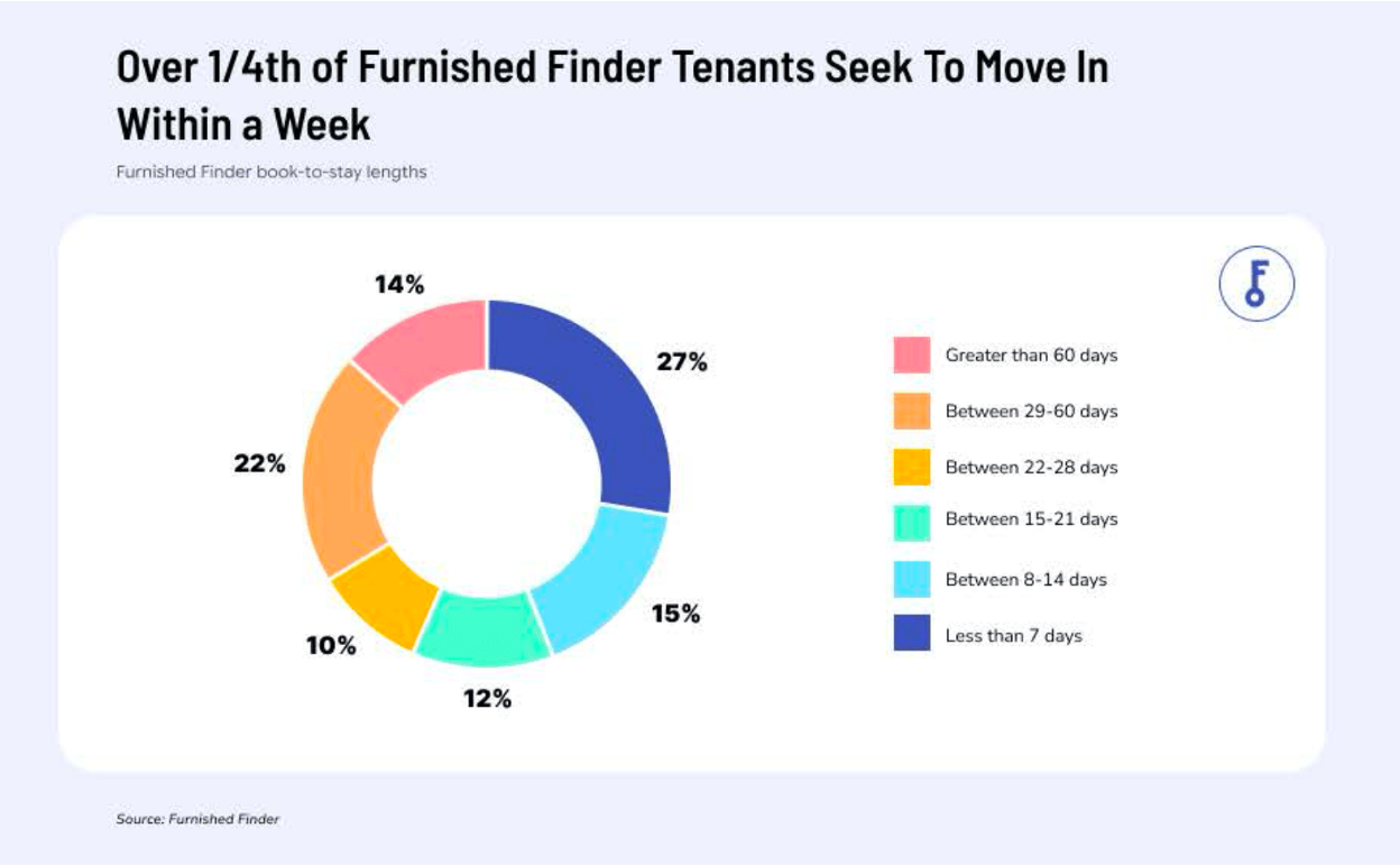
According to January 2026 data from AirDNA and Furnished Finder, the average length of stay in a monthly rental is approximately 96 days–just over three months. The average booking window is 31 days, and more than 14% of renters seek move-in within a week.
That combination–long stays and relatively short booking windows–is what makes monthly rentals fundamentally different from both short-term vacation rentals and traditional year-long leases.
In housing terms, a 96-day stay is not incidental–it’s structural. It signals that monthly rentals are being used as part of the residential housing continuum, not as a hospitality product. When the average renter occupies a property for an entire quarter, the economics, risk profile, and tenant expectations shift meaningfully.
Let’s break down what that really means.
What is the average length of stay in a monthly rental?
Monthly rentals are typically defined as stays of 30 days or more. But in practice, renters stay much longer than the minimum threshold.
Recent data shows:
Average length of stay: 96 days
Average booking window: 31 days
A significant share of renters seeking move-in within 7 days
For comparison, short-term rentals often average fewer than 10 nights per stay.
A 96-day stay isn’t a vacation. It’s transitional housing.
To put that in perspective, a property operating on 96-day stays turns over roughly four times per year. A short-term rental operating on 7-10 night stays may turn over 30-40 times annually. That difference alone reshapes operational intensity, cleaning frequency, marketing cadence, and revenue volatility.
Why do people stay 2-4 months?
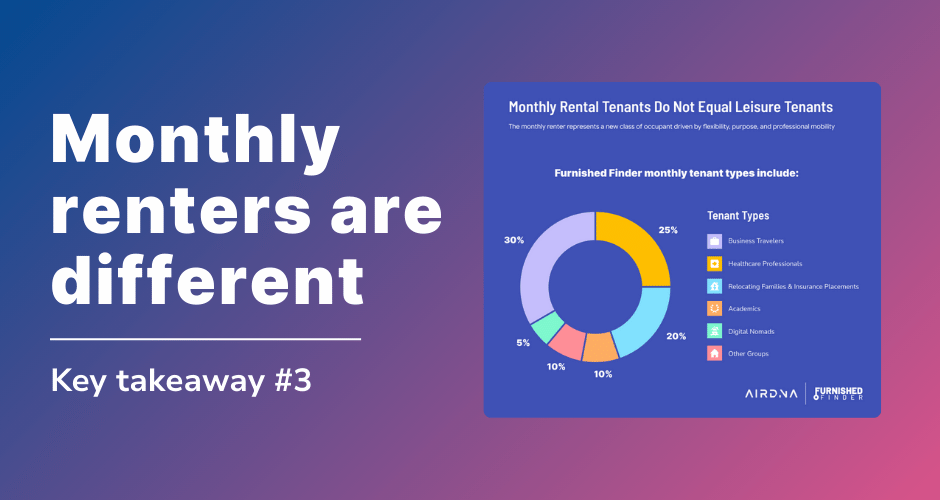
When you look at who uses monthly rentals, the duration starts to make sense. Furnished Finder’s tenant mix includes:
Traveling healthcare professionals
Business travelers on extended assignments
Families relocating
Insurance displacement placements
Digital nomads
Academics
These renter profiles share a common trait: uncertainty around duration. A traveling nurse may sign a 13-week contract that extends. A relocating family may need housing while waiting on a home purchase to close. An insurance displacement may resolve in weeks–or take months.
Monthly rentals provide flexibility on both ends: long enough to settle in, flexible enough to adjust.
They are built for life in motion–not leisure itineraries.
Long stays + short booking windows: a unique pattern
Here’s what makes monthly rentals especially distinct.
Renters stay for three months, but often book only about a month in advance.
The average booking window is 31 days, and over 27% of renters seek housing within a week.
This creates a rare housing dynamic:
Longer-term occupancy
Lower turnover
But still responsive to urgent housing needs
Traditional leases usually require significant planning and long commitments. Hotels offer immediacy but short stays. Monthly rentals sit in the middle–flexible, but residential.
This pattern–long stays booked on relatively short notice–suggests that monthly rentals function as a pressure-release valve in the housing market. They absorb demand from job mobility, relocation timelines, insurance displacement, and regulatory shifts without requiring long-term lease commitments.
That flexibility is part of why the category has expanded across major metros and mid-sized workforce markets.
Why length of stay changes the business model
That 96-day average isn’t just interesting. It reshapes how properties operate.
1. Lower turnover, greater stability
Monthly stays average dramatically longer than short-term stays.
Fewer turnovers mean:
Fewer cleanings
Lower vacancy gaps
Reduced operational costs
More predictable income
Turnover is one of the largest hidden costs in short-term rentals. With multi-month stays, operators reduce not just cleaning expenses, but also calendar gaps between guests, pricing volatility, and seasonal occupancy swings.
Instead of chasing weekend occupancy, the focus shifts to steady quarterly occupancy.
2. Pricing reflects stability–not nightly yield
Monthly rentals are typically priced at a discount compared to short-term nightly rates in the same market.
That discount reflects:
Lower turnover expenses
Reduced marketing costs
Longer occupancy blocks
Predictable cash flow
In practice, this means monthly rentals often trade some peak nightly upside for smoother annualized performance. In markets with strong seasonality or tightening regulation, this trade-off can materially reduce risk while preserving consistent occupancy.
For many landlords, stability outweighs the pursuit of maximum nightly yield.
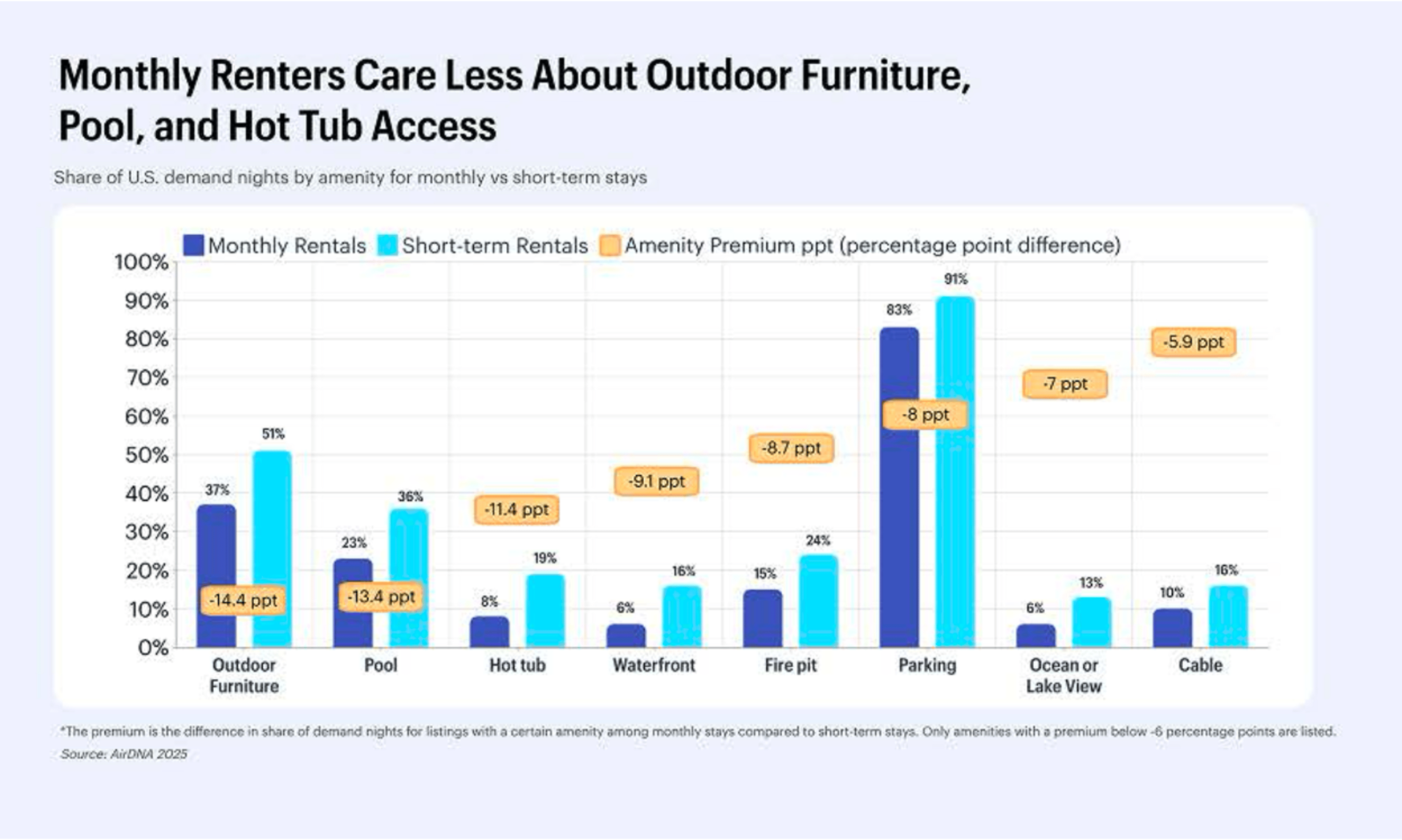
3. Amenities prioritize living–not leisure
Because renters stay for months, they care about daily function (opens in new tab):
Pet-friendly policies
Washer and dryer access
Full kitchens
Reliable WiFi
Parking
Features like pools, hot tubs, and vacation-style amenities matter less than livability over 90 days.
Monthly renters aren’t evaluating a weekend experience. They’re choosing a temporary home.
4. Property types skew toward practical layouts
Demand in the monthly rental market tends to favor studios and one-bedroom units, with strong interest in functional, smaller spaces.
Most renters are individuals or couples on assignment–not large vacation groups.
Again, the length of stay explains the demand pattern.
Are monthly rentals growing?
Yes, and not just in traditional vacation markets.
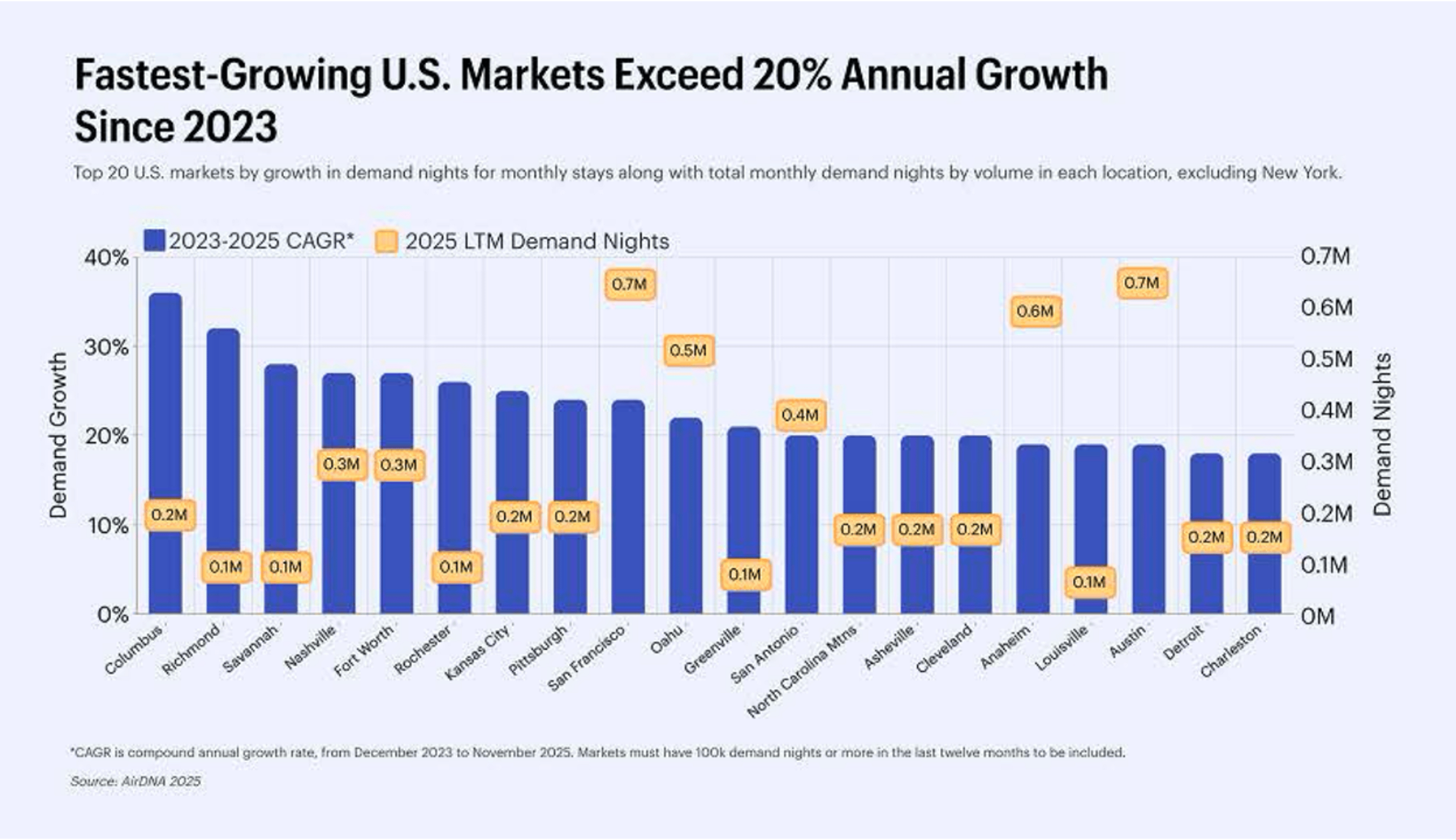
Data shows expanding demand in major metros, healthcare hubs, workforce markets, and mid-sized cities across the country.
Regulatory changes in some cities have shifted demand (opens in new tab) toward longer stays. But the more important driver is mobility.
Workforce mobility, healthcare staffing needs, remote work flexibility, and housing affordability pressures have all contributed to longer average stays and broader geographic demand.
Monthly rentals are increasingly serving as flexible infrastructure within the housing system–adaptable to life transitions, not tied to tourism cycles.
If you’d like to explore deeper insights, including market-level trends, tenant behavior patterns, pricing benchmarks, and growth data, visit Market Insights (opens in new tab) by Furnished Finder.