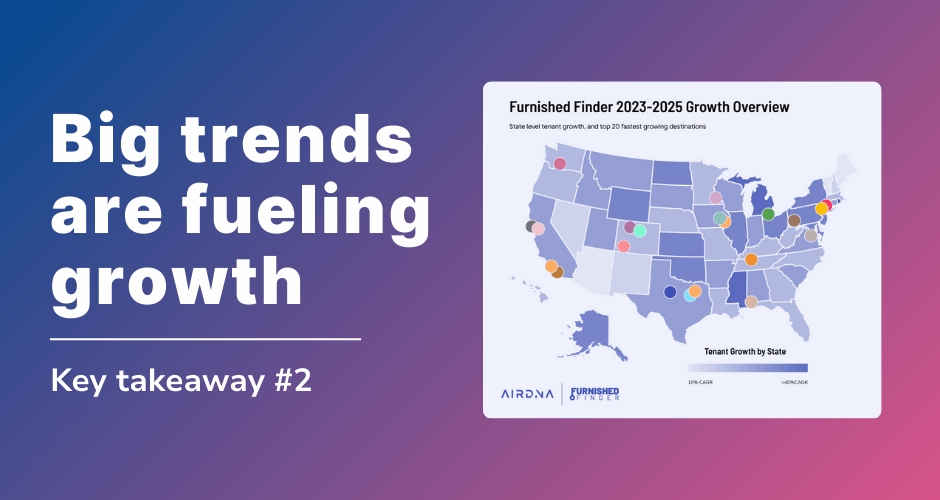
The rise of monthly rentals isn’t just a side effect of pandemic behavior. New insights show the real reasons behind sustained growth run much deeper—and they reflect long‑term shifts in how people live and work.
Data from Monthly Rentals: The Hidden Gem of Housing, (opens in new tab) a report by AirDNA in partnership with Furnished Finder, shows that rising demand for monthly rentals is tied to ongoing housing affordability challenges, changing regulations, and increased workforce mobility—not short‑lived trends.
You can explore the full report and supporting data here: https://www.furnishedfinder.com/resources/monthly-rental-market-trends-report (opens in new tab).
Housing affordability is pushing renters toward flexibility
Across the U.S., housing shortages and affordability pressures are reshaping rental behavior. The report shows that between 2010 and 2023, renter households grew by about 15%, while homeowner households rose by only 10%. This gap reflects a growing population that’s more mobile and more likely to depend on rented housing to meet life and work needs.
Mobility is now concentrated in the rental market. In 2024 alone, there were roughly 12 million rental moves compared to around 4.2 million home sales. For many households, renting isn’t a stop on the path to ownership—it’s the way they navigate relocations, career changes, and transitions in life.
Monthly rentals fit naturally into this reality. They give renters the flexibility they need without sacrificing comfort, stability, or livability, especially where buying or long‑term leases are increasingly out of reach.
Regulation is accelerating the shift in some markets
Regulatory changes are also influencing demand for monthly rentals, especially in major urban centers.
In cities like New York, stricter enforcement of short‑term rental regulations has shifted demand toward longer stays. Monthly rentals grew from roughly a third of total rental demand in 2022 to around 70% by 2024, showing how policy can quickly accelerate adoption.
In Los Angeles, enforcement has varied more, yet monthly rentals are still growing steadily—from the mid‑30% range to about 40%—driven less by regulatory change and more by real housing and workforce needs.
Together, these examples show an important truth: monthly rental growth doesn’t depend on regulation alone. Even where enforcement is uneven, longer stays are gaining share because renters want housing that fits how they live and work today.
Workforce mobility is no longer limited to major cities
While growth is strongest in large urban markets—where monthly rentals have been expanding rapidly—the trend isn’t confined to big cities.
One of the key findings in the report is that monthly rentals are scaling nationwide. Demand is rising in markets tied to job corridors, hospitals, universities, and cost‑driven migration—not just in tourism hotspots.
That’s because work itself has changed. Temporary assignments, contract roles, hybrid schedules, and rotational work are now common across many industries. Renters need housing that supports stays of weeks or months, often in places that aren’t traditional travel destinations.
What Furnished Finder data reveals about opportunity
Furnished Finder’s platform data reinforces this national story.
Inventory growth isn’t limited to large metros. It’s picking up across smaller and mid‑sized markets where job creation, housing shortages, and temporary labor needs are increasing fastest. In many of these areas, demand is outpacing supply, showing a clear unmet need—and a meaningful opportunity for property owners.
This trend highlights how monthly rentals are becoming part of the nation’s workforce infrastructure—not just a travel accommodation. They support healthcare systems, universities, construction projects, and regional employers who rely on flexible housing options to thrive.
What this means for property owners
The growth of monthly rentals isn’t tied to one factor or one place. It’s the result of overlapping, durable trends that are reshaping housing across the country.
Affordability pressures, regulatory shifts, and workforce mobility are reinforcing demand for flexible, furnished housing that feels like home. And as the report shows, this demand is broad, geographically diverse, and unlikely to reverse.
To explore the data, charts, and market-level insights behind these trends, read the full Monthly Rentals: The Hidden Gem of Housing report here:
Monthly Rental Market Trends Report (opens in new tab).