Monthly rentals sit in a powerful middle ground that more real estate investors are starting to understand. They can generate more income than a traditional long-term lease, require far less turnover than a short-term rental, and serve a type of renter that is often overlooked in the broader housing conversation.
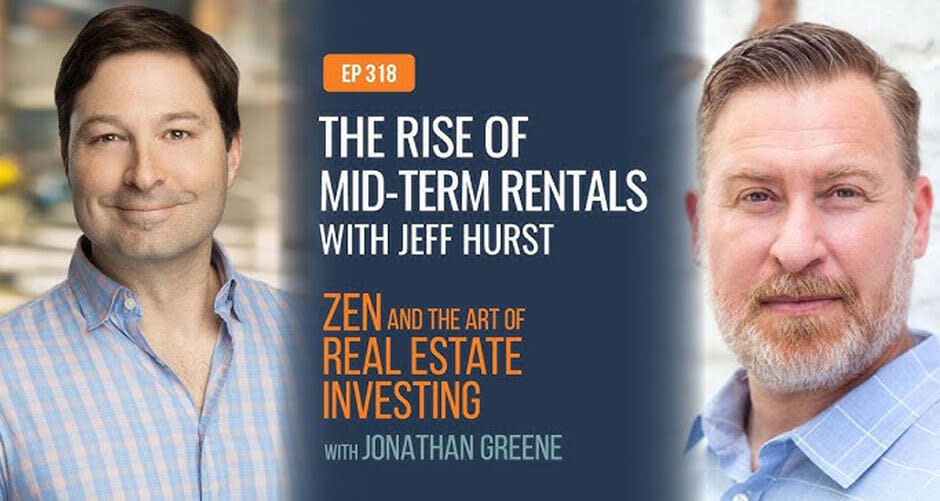
That is one of the biggest takeaways from Jeff Hurst’s conversation on Zen and the Art of Real Estate Investing and one of the clearest themes in the Furnished Finder + AirDNA report, Monthly Rentals: The Hidden Gem of Housing (opens in new tab). As CEO of Furnished Finder, Jeff framed monthly rentals as a category built not for vacationers, but for people who need a place to live for 30 days or more. These are corporate travelers, relocating families, travel nurses, grad students, professors, and people navigating insurance claims or major life transitions.
For investors, that distinction matters. A monthly rental is not just a short-term rental with a longer minimum stay. It is a different product built around comfort, practicality, and flexibility. And in today’s market, that makes it one of the most compelling opportunities in real estate.
Monthly rentals offer a different kind of return
One of the clearest themes from this episode is that monthly rentals can create a strong cash-flow profile without the same operational burden as short-term rentals.
With short-term rentals, owners often need to invest heavily in design, amenities, and constant guest turnover. The business can be lucrative, but it also comes with higher management costs, more frequent cleaning, more wear and tear, and a customer base that is often focused on leisure and experience.
Monthly rentals work differently. The renter is not looking for a weekend escape. They are looking for a place that feels comfortable and functional for everyday life. That means the investment priorities shift. Instead of a putting green, game room, or luxury experience, the things that matter most are often a good mattress, reliable Wi-Fi, parking, a washer and dryer, pet friendliness, and a layout that feels livable for an extended stay.
For many investors, that creates an appealing tradeoff: more income than a long-term rental, less turnover than a short-term rental, and a tenant profile that is often easier to manage.
The tenant demand is much broader than most investors realize
One reason monthly rentals continue to grow is that the renter base is much more diverse than many landlords assume.
A lot of people still associate this strategy primarily with travel nurses. While healthcare professionals remain an important part of the market, the demand now goes much further. Corporate travelers, relocating families, insurance placements, academics, and other mobile professionals are all using monthly rentals because they need something more comfortable than an extended-stay hotel and more flexible than a year-long lease.
That broad demand base is what makes the category so interesting. A family moving to a new city may want to live in a neighborhood for a few months before buying. A professor may need housing for a semester. A business traveler may need a place near work for 90 days. A family displaced by flood, fire, or major repairs may need a temporary home that still feels like home.
These are not edge cases. They are real housing needs, and they create a more durable stream of demand than many investors expect.
Why this strategy works in more places than short-term rentals
Another important point from the interview is that monthly rentals are not limited to traditional vacation markets. In fact, some of the best monthly rental opportunities are in places where short-term rentals may not make much sense at all.
Hospitals, universities, commuter corridors, good school districts, suburban neighborhoods, and growing secondary cities can all be strong fits for monthly rentals. The ideal property is often not a high-end vacation house. It is a well-located studio, one-bedroom, two-bedroom, or practical three-bedroom home that solves a real-life need.
That is part of what makes the category feel so approachable. Investors do not necessarily need to chase expensive beach markets, luxury mountain towns, or highly regulated urban short-term rental zones. In many cases, the better opportunity is closer to home and tied to everyday housing demand rather than tourism.
This also makes the strategy particularly attractive for investors looking at duplexes, triplexes, quadplexes, ADUs, and smaller multifamily properties. A property that may not stand out as a short-term rental can become a very strong monthly rental if it is in the right location and set up for the right renter.
Why monthly rentals will keep growing
The long-term case for monthly rentals is tied to a few bigger trends that are not going away anytime soon.
Housing remains expensive. Interest rates are still a barrier for many buyers. Furniture is costly, inconvenient to move, and often a poor investment for people who value flexibility. More people are willing to live in furnished housing for periods of time if it helps them stay mobile, reduce stress, and avoid making a rushed long-term decision.
At the same time, many independent landlords are realizing they do not have to choose only between long-term rentals and short-term rentals. Monthly rentals offer another lane entirely. They allow owners to serve real demand, create steady income, and often operate with fewer headaches than the traditional short-term model.
That is why this category continues to gain traction. It solves practical problems for tenants and opens a new path for investors who want a more balanced rental strategy.
Final thoughts
Monthly rentals are the hidden gem of housing because they sit in a space that much of the market still undervalues. They are not as flashy as short-term rentals and not as passive as long-term leases, but for many investors that is exactly the point.
They can offer better cash flow than a traditional rental, less operational strain than a vacation rental, and a broader set of use cases than many landlords realize. They also align with real-world renter behavior in a market where flexibility, affordability, and convenience matter more than ever.
For real estate investors willing to understand the model, monthly rentals are not just a niche. They are becoming a durable part of the housing market and an increasingly smart way to build income with less friction.
And if you are ready to test the strategy, listing on Furnished Finder is one of the easiest ways to get started. Furnished Finder is built specifically for monthly rentals, connects landlords directly with tenants searching for 30+ day stays, and gives property owners a targeted platform designed for corporate travelers, relocating families, travel nurses, academics, and other monthly renters, not vacationers. You can learn more about how to list your property here: https://www.furnishedfinder.com/list-your-property (opens in new tab)
Transcript
Welcome to Zen and the Art of Real Estate Investing, [music] one of the fastest growing real estate investing podcasts in the world. What if you could learn from experienced real [music] estate investors? Find out what got them to where they are now. Get insight into their daily habits and [music] take these insights to inspire your own growth. Each episode, Jonathan Green shares an in-depth look at the mindful approach [music] to real estate investing. Jonathan is a lifelong real estate investor and the founder of Streamline, a data-driven [music] investor-friendly independent real estate brokerage located in Madison, New Jersey. Whether you're looking to start from scratch, [music] get to the next level, or just for a straightforward and honest approach to real estate investing, this is the free mentorship program you can [music] take with you anywhere. Now, here's Jonathan. Thanks for showing up for another episode of Zen and the Art [music] of Real Estate Investing. And we're going midterm rental style today. And there's a report, Monthly Rentals, the hidden gem of housing. It's a collab between Furnished Finder and AirDNA. And my guest is the CEO of Furnished Finder, Jeff Hurst. We talk macro trends, fueling demand, evolving renter preferences, and where real estate investors are finding the greatest opportunities today. And much more right [music] now. This is episode 318 of Zen and the Art of Real Estate Investing with my guest Jeff Hurst. Jeff is the CEO of Furnished Finder. And if you don't know what Furnished Finder is, they specialize in monthly furnish rentals for corporate travelers, relocating families, travel nurses, and more, not vacationers. and Furnished Finder and AirDNA has just partnered to deliver a first of its kind report on the monthly rental housing market in the US. This is going to be something exciting. Jeff, welcome to the show. My pleasure to be here and excited to chat. Yeah, and before we get into your background, I was laughing because I wanted to I I love the branding of not vacationers. Is that intentional to kind of just make sure that you're showing off a different product than what people may confuse as the same as Airbnb? Totally. You know, it's all about helping people understand that we're not leisure travel. This is a these are professionals and these are families who are living in your home. Yeah. You know, they're not there for a long weekend. They're not there for a week. And they're not really there to party. They're there to live. And often they're there like, you know, out of urgency or necessity. And sometimes they're just there because that's where they got to go for work. And so, it's a totally different use case. I I I describe it as the valley between the giants. There's short-term rentals on one side with Airbnb and then there's Zillow and long-term on the other. and we're this kind of funky niche in the middle that you know borrows what we can from each side to develop our own approach. Yeah. But it's such an important niche because it's a way of making more money than your traditional rent. Maybe you have people might think well you know you don't have to do the of course you don't need to you know build a putting green in the backyard you know as you're saying because it's not it's not for that type of stay. So amenities wise it's much different type of traveler you know they they just want more creature comforts right that's what it's all about. Yeah, it's a um you know, I think it's when you look at the two sides, you can make more money than you can on long-term and you can save a lot of time compared to what you do on short term. And if you're using a full service manager on short-term, you can probably make about as much money on this. The cash on cash return. Um and you know, it's like there's just different profiles for what you're trying to sell as an investor. And like my three short-term rentals had as much to do with like places I wanted to be and where my family wanted to go and some tax benefits, but they weren't great cash investments. And midterm rentals has the potential to be a very better much better cash investment with a lot less work, but maybe my kids won't have like core memories there. Right. Well, I want to go back though because you said something so important. I want to make sure the listeners didn't miss it. So, what you pay for someone to either help you manage your short-term rental could be the difference, the same difference that you make if if you're making 1.5x on a long-term rent with midterm and you're making a 2x on short-term, but you're paying a 0.5 if everyone's following my math. There's a break even with way less turnover and way less wear and tear and a different type of clientele, right? Totally. Totally. You know, I mean, the the the difference in clientele is the biggest thing and that, you know, I was I was better part of a decade at Verbbo, was the president there, was at Expedia Group. You know, the average stays less than seven days. The average party size is closer to five. It's big on holidays. Like, there's a lot of wear and tear cuz people are there to try and create the best week of their life. You know, our traveler types about a third are corporate, 25% healthcare, 20% relocating families. They're there because they want to have the same commute for their kids. They want their kids to be able to walk to a friend's house. Or they need a place to work that's more comfortable and better value than Extended Stay America, but they're not trying to play paddle every night or be sure they've got a bowling alley next door. Like, it's about work and sleep and comfort. And that's really what the niche we're trying to serve. Yeah. And I've seen the best MTR operators go, they operationalize right after that niche. They're thinking parking, pet friendly, access to transportation, a lot of things that you can find and do there, but more things that are just what I would consider like home things because as you said, if 20% or insurance relocation of some kind, they just want a nice place to stay. And before this really existed, there wasn't a lot of options. They were stuck in extended stay America, you know, which could be hit or miss. Yeah. you know, they had extended stay Americas, they had corporate housing, which is really quite expensive um because they're selling to corporations. You know, they're not trying to sell like we are more to consumers, more to uh you know, a Zillow or Airbnb audience. And you know, the the the trick to what we do is like you invest in a handful of things that really matter. Like if you're going to be on the same mattress for 100 days, should be a good mattress. Like that's more important than the ping pong table or the paddle set or like all the yard games and things that you might do at a shortterm row. Yeah, it makes complete sense. So, I think you got your first short-term rental in 2012. Were you intentionally going after a short-term rental at the time, or did you have a property that you turned into a short-term rental? Cuz as people start, it goes either way. Yeah. No, I um Yeah, I I grew up my family had a small lakehouse outside of a town called Hillsboro, Texas, Texas. So, Lake Whitney. So, I grew up with a lot of memories being on the water. Uh you know, a lakehouse in Austin was totally unapproachable. And so we worked with another family to buy a lakehouse. At the time I was early in my tenure at Humbway. And so like I realized I had access to data that helped me know where I could make money so I could like be able to afford the lakehouse. And so that was really it. Uh it's a lake called Lake LBJ and um we've done just phenomenally well on that investment and my kids have a lot of like their best memories of childhood there. But it was about subsidizing what was for us a second home. It wasn't a I was not making like a choice versus investing in a 401k or a 529 or buying an index fund. It was like I want this for me. How do I how do I make it financially possible? Yeah. And I personally think that's the best use case for most people who are intending to get into short-term rentals because I don't think they're ready, especially not up against what you are with these like highass operators now. You know, I I I did it the same way. Like all of our short-term rentals that my sister and I had were all places where we wanted to go or old houses or they were near one of her friends in college so it was easier for them to manage and then we would use them. So at worst you're a break even. Right. Yeah. I mean I don't think we I don't think I've ever made money on that house since 2012 on a cash perspective in a year. It's appreciated a ton. But you know the uh I self-managed it for 11 years. I remember there was a year where someone was doing electrical work and cut a hole in the septic line in the yard and it was like fun stuff blowing down the backyard and it was like I drove out from Austin to help fix it and it's like that's the time when you're like oh this is not passive this is not your next fund. Well, the well the passivity part I mean especially yeah more guests is less passive even if you have a manager. Same as I always say for multif family you still have to manage the manager. The clientele for midterm rentals is much less needy overall. Obviously you can always get some outliers but if you set it up right most of my friends who do it and I have a lot of friends in the in the game uh never hear from the clients other than to say thanks everything's great. Yeah. Thanks everything's great. You know, occasionally you might have something like, "Hey, can you, you know, can you replace the vacuum?" Yeah. Great. You're cleaning the house. [laughter] Yeah. Fantastic news. Of course, I can replace. Like, what can I do to help you help me keep my maintenance costs down? You know, it's amazing how frequently I hear in the I never heard this in short term. Ne never in, you know, 12 years. But how frequently I hear in midterm that a tenant left the place better than they found it. Yeah. Oh, they ended up working in the garden or they left some kitchen stuff that they knew I needed but they couldn't didn't have room to take to the next place. I hear that all the time because they they feel a real connection not only to someone who's helping them potentially in a bind, which is the investor or the landlord, but also just to the neighborhood. You know, they end up being friends with the neighbors. We've got all these great stories about how they become a part of the community in a way that really engenders the tenants to investing in it being a great place to be. Yeah. The 30 days or more is really creates that home adjacent type of feel because you can relax a little bit in a week. I'm not going to vacuum like what do I care myself to the neighbors like [laughter] it's not it's not part of it you know and our average day is you know closer to 100 days. Yeah. But you're typically there over 3 months. A lot of times you know you're there for work but you know sometimes you could be there because you're plumbing broke or you had to sell a house and are buying a house and you've got a gap period. And so there's all these different use cases and I think what you know what's drawn into focus for me along the way is basically also just that furniture is a bad investment like [snorts] you know if you're not going to hold on to it for a while or really love it like if you're moving every two years like I was in my 20s I think this younger generation is really on to something they're saving money on furniture they're gaining kind of option value and mobility by living in furnished housing they can make a jump for the next move easier they can move for a girlfriend or a boyfriend or different things. Yeah. So, you know, what you sacrifice a little bit in that equity, you probably gain up in other ways of how you can make equity. Yeah, absolutely. I it's just smart living and it's also it's also trending with the times of housing not being affordable and this being that kind of middle option, especially where you don't have to go through the same stringent qualifications that you might have to for a long-term rental because you're dealing direct with the landlord. They can handle it however they want, right? It's not there's no there's no like overlord looking over how they're doing it. Yeah. And I mean our platform's overwhelming. It's about 95% you know or 85% of the people only have one property. Yeah. These are independent investors. There's 240,000 people who are like trying to make themselves a better life by helping somebody have a better stay. Yeah. Yeah. I I as I was saying before we got on, so I grew up, you know, in in kind of like time shares and longer stays because we always went for for Florida for multiple weeks. So, I kind of knew about this and then, you know, you started at Home Away and I when I was doing short-term rentals, home away was really the only game in there. And it wasn't like it is now. There was no AirDNA. There wasn't really a way to judge the market other to go on Home Away and just see how many other places are in there, which I still think you can do. But it was really an interesting time. I think back then, this is maybe 15 years ago, we were all learning as we go, you know, there was none, no videos and QR codes. Like, we all had little booklets and some people still have little booklets and a lot of midterm rental. Yeah, middle midterm rentals, I bet they do have a booklet because you you kind of want to give them everything so they have it there. It's just a kind of a different way. I think it's an easier management, obviously. No, it it's a throwback. It does. It feels more like 2005 to 2010 in short-term rentals. You do still have, you know, with midterm rentals, you have a lot more referrals. You have a traveling nurse who refers the next nurse. You have, you know, professor who refers the next professor or a business traveler who prefers someone else in their company. And that feels a little bit more like kind of the cottage industry of pre-airbn, pre- internet, short-term rental. Um, and you know, as such, like we're still a classified model where, you know, we've got as much in common with Facebook Marketplace as we do with Airbnb. You pay us a flat fee, $199 a year, and we send leads your way because most people want to come see the place or they want to FaceTime. Like, it's it's hard to do this over it's hard to do this just over a messaging platform because you're going to be there for 100 days. Yeah. And there's a good chance you're already in the neighborhood and it's like, "Hey, can I just stop by and see this place? Like, I've got questions." Yeah. Right. That is a big difference. It's not a lot of people crossing the country on these relocations. It's just people locally who had an insurance issue or they're already contracts. So maybe they're staying there in a hotel while they find it. You made a really good point that I wanted to just highlight before we get into uh some parts of the study. But I've, you know, I'm a licensed realtor. I own my own brokerage. And I've been telling people for now several years that midterm rentals, if you're a realtor, you should be getting as many mid-term rentals as you can because you have a client base if you're high-end and doing a lot of transaction that will always need your services because people don't sell because they have no place to go. They don't want to go to their parents. But if you could say, "Hey, you can just stay in my midterm rental. It's open these dates." They'll put the house on the market and then they have a soft landing space for, you know, 13 15 weeks while they look. And I also think the buyers coming in can use midterm rentals as a hedge to not come in just for a weekend. But hey, you know, come in for two weeks or two month, you know, two months and see what you can find. Yeah, absolutely. And I mean the the other thing for for realtor brokers is like the for those that are also willing to play in the property management game or have affiliations with property management, you know, you can make a slightly higher fee on a much bigger monthly rental check. Um and so there's actually pretty good economics there and that's like a structural gap. I see a lot of the long-term property managers don't want to do the extra three turns a year. The short-term fees are pretty prohibitive for what the category needs. And so like I think there'll be a lot of expansion in that space and that'll start to feed the ecosystem because you'll see more inventory come on because there are more managers. You'll see more realtors and brokers interested in using this as part of how they make money on transactions because they can reduce friction, you know, for the seller who needs to get out or maybe to get the buyer to, hey, just stay here for 3 months and then you'll be able to take possession. Let's go ahead and do the deal. Do at least. Yeah. Yeah. As the CEO of Furnished Finder, I'm sure it's, you know, exciting to see that you could have all this expansion, but is there like a part of you that thinks if if now all of a sudden there becomes next year like now everybody wants to manage MTRS, you know, like they did with STRs, like will it kind of kill that mom and pop vibe that you guys have that I think is so successful? I don't think it'll um I don't think it'll kill it. Uh I I I think the ind you know, the industry will need to evolve and become more professional as it grows. like it's just it's a natural part of how it scales. Um and so do I think the short-term rental industry is worse off now than 2010? Like there's way more inventory. It's more professional. It does feel different. Um like it's just got a different vibe. I think the houses are often a little bit too commercial. um like they they don't have the same type of like they don't have the same familiarity you used to get as often of like wow I'm in I'm in a place that's really cared for that someone you're going to like Disney World but then again our use case doesn't need that as much you know if it's got good linens and a good mattress and is quiet and cared for like that's really the standard of care we're looking for and so I think there's a chance it may be more of a benefit for this category as opposed to where in short-term rentals I think some people felt it as a trade-off I think it's probably more it's it's probably just more good. Um, and if you if you shop our site versus like this is in the report versus like a Zillow, I think Zillow's got about 50,000 furnished monthly rentals and 40,000 of them are more of like your big box. You know, it's your gray stars and your corporates and we're 300,000 that are almost all independent. You know, if anything, we're maybe too far to that side of like they're all by the individual landlord. They're all So Yeah. Yeah. 85% that that's that's crazy that only own one. That that that's way more than I would have thought and a testament that there's a lot of growth left to be done there. And I think if interest rates come down a lot of them will buy more than one. Yeah. Yeah. Especially if they Yeah. They're they're having a good time. It's very easy on the management. Yeah. I think it makes sense. I one thing I've seen that's really interesting with midterm rentals that I think is important for what you guys do is I've seen so many people doing them in multifamilies so that you know you can have a two or three family and you can have long-term rent, short-term rent, midterm. You can really experiment in multifamilies because you don't need that curb appeal that you really do need with the short-term, you know, you don't you don't need necess you could use a backyard definitely helps. Parking helps, uh, pets help, but if you can have pets and you have a shared backyard, like multifamilies, you're getting this like double. You could be house hacking one side and midterm rental the other, and you're just upgrading your income. I I think it's it's a total hidden gem that do especially I think of it as like duplex to quadplex. Yeah. You know, I think when you get into multif family where it's more like dozens, I think it, you know, I know plenty of people who are doing it doing in Austin and doing well. Yeah. Um, but that's a different type of endeavor than for most, you know, retail investors. Um, but you know, the opportunity to have a quadplex, live in one, rent out the other three, and then have them, you know, potentially flip back and forth between um, long-term, midterm, like there's a ton of yield management you can do. And it's a it's really clever and a much faster way to either pay down your note to get the land appreciation or in a lot of these neighborhoods. Um, and I I think about mine in Austin as an example, there's still a lot of duplexes and quadlexes in my neighborhood. Yeah, increasingly they're becoming single family homes or tear downs. And so you also get this different vector of exit value where maybe it's a duplex that you're running this way for 10 years, but eventually someone's going to actually, you know, build a million dollar house on it or do something very different with it that changes your exit strategy. Yeah. [snorts] And I found that espe I'm in New Jersey and we have a lot of two families, three families, four flamies. Uh in most areas the multifamilies are lined up with where good transportation is. So you don't have to be in city center to be very successful with midterm. It's almost preferable if someone has to oh I have a quick quick jot on the travel now I don't have to live where it's noisy. Yeah it's a it's a great when you you know you think about in the report our top tenant types you know it's corporate it's healthcare and then it's relocating families. Yeah. You know, really that's multif family is about being close to commuter corridors for corporate. It's a close to it's about being close to hospitals. It's about being close to, you know, universities very frequently. And you know, the family things, the one thing that can flip a little bit, you know, most neighborhoods still have some small multif family to where this works. You know, where I think mid-term rentals is interesting is what may have been a tear down or, you know, a unit that you had trouble long-term renting because it doesn't have the same curb appeal is actually a really interesting monthly rental. You don't need per curb appeal, you know, you need it to be in the right location so your kids can go to the same school so you can have the same commute. You're just trying to, you know, get through a remodel or get through an insurance claim or find out if the neighborhood's right for you. It doesn't have to be perfect and so you've got a chance to extend the asset life of some of these instead of having to do huge capex, you know, like a ter. Yeah, it's a great point. It lies at this perfect point of convenience. mid-term rentals like the long-term rental you I'm going to be here for a year so I really wanted to you know feel like my home and then short-term rental you know I wanted to have everything including a butler yeah [laughter] right and here you have this thing in the middle it's like I mean it's close to my work you know furniture's okay got a TV seems fine yeah but you know I' yeah I'd love it if it had a bigger yard but it's a fenced yard it's fine you know I'd love to have more space but it's fine you know and I think that's like it just needs to be fine and you know you've got to remember that I I I think you know when you when you think about the investing aspect of it you know investing in what you know is easier for midterm because you can think of the use cases in your neighborhood you don't have to imagine well I wonder if everyone that goes to you know this leisure destination are similar I wonder you know what are the corridors and like it's a different type of dynamic if you just think about like who's in my neighborhood you know who's at the extended stay America nearby you're closer to the pattern of being like I can solve that and like you know I can solve for I know a lot of families who've been stuck between a buy or a sell or who needed to remodel or who had you know in Texas we've got a big winter storm coming up it's like the plumbing's going to burst you're going to have roof issues like you can invest in what you know and you can invest in it nearby so you're there to take some of the cost out of it yeah I think even university is pretty sneaky for midterm rental because if you have a lot of international students or just students who are from across the country their family's not coming for 3 days they might want to stay and get you know have a tour for you 30 days of the whole place. Yeah. You know, it's it's your pre-tennure um professors are great. Yeah. Professors and grad students and like they don't have a lot of money. They need affordable housing. They don't want to buy furniture. Most of them may not even have furniture and so like there's a real use case there and they're great tenants. Yeah. Fantastic. Yeah. Great. Yeah. Graduate students specifically. But I mean honestly now these days college kids are pretty good. I mean they like barely even drink anymore. like the the dynamic for what who the party groups are. It's really not the young kids [music] anymore. Yep. It's it's changed a lot. Yeah. Hey, it's Jonathan. Are you still stuck choosing between short-term rentals and long-term leases? Because if so, there's a smarter middle ground. Furnished Finder is the leading platform for furnished monthly rentals, connecting real estate investors directly with reliable midterm tenants. With more than 300,000 listings, 240,000 independent landlords, and over 6 million travelers searching each year, Furnished Finder is where monthly renters come to find their next home. Furnished finder tenants include business travelers, traveling health care professionals, relocating families, insurance placements, digital nomads, academics, and more. They stay an average of 90 days or more, treat properties with care, and deliver steady, predictable income without the constant turnover of short-term rentals or the discounted rates of long-term leases. And here's the best part. There are no booking fees or commissions. You keep 100% of the rent. If you're curious what your property could earn each month, visit Real-Time Monthly Rental Market Data & Trends to see how your local monthly rental market is performing. Let's get [music] back to Jeff. Cool. Well, [music] let's get to the study. How did you guys pair up on this study with their DNA to get this going? I read through the whole thing. I found it really interesting and it definitely matched like my historical context of how I've watched, you know, short-term rental, midterm rental versus time share and all the things that I grew up with. Yeah. I mean, huge thanks to Jamie Lane and Bram and if you want to have them on the show, I'm happy to make an introduction. You know, I knew the AirDNA folks from my time at Pervo. Yeah. Um, and I knew that they had been, you know, Airbnb has kind of like been in and out of talking about these stats, you know, um, and so I knew AirDNA was trying to track it. And so I reached out to be like, hey, I think there's something interesting we can do here. And really, you know, from the short-term side, it's really about like how do you help people understand the impact of regulation? like there's been so much regulatory pressure on short-term rentals, which has been a big theme that AirDNA is trying to understand, but a lot of those homes don't end up staying on Airbnb or go somewhere else and a lot of times it's somewhere else Furnished Finder. Yeah, the idea was let's collaborate to calibrate between our data and their data to tell a story of like what's happened since because everybody knew it was big in co but I don't think people really knew how much bigger it's gotten since co and that it's a durable trend that's not just about digital nomads and like you know wanting to be in the mountains or wanting to be in your a safer house it's bigger in a hotel. Yeah. We started working on with them a few months ago and were really didn't know what to expect of what the trends would bear out and were really pleasantly surprised how similar their data set was to ours not only in how much growth is there but in how similar the footprints are and like it's not just about New York and LA. It's everywhere. And there's a really unique opportunity to combine this with a short-term investment strategy or replace an investment strategy and add to your portfolio term. How do you think the investors, you know, kind of found out about it? Because me me just thinking about it, it really seems like something that was more passed personto person as an idea because you weren't seeing like a ton of Tik Tok content, you know, on midterm rentals after the pandemic. Pandemic, it popped and everyone was saying, "Oh, it's only travel nurses." So, some people did it. But as you look at the study, it just keeps going. And then you're adding these more client bases like we're talking about into the mix. But I I don't know how the investors are figuring it out other than talking to people like us. Yeah. I mean I I think there have been um yeah a handful of things made it happen. I mean one like I don't think this company exists without co like we were so known for traveling nurses. People wanted to help and house nurses and so there was almost a hero mentality to adding your inventory to our site and how we like got scale there. And then the good thing about that was like nurses travel a lot and they tell people and so that helped us meet other investors and helped the platform grow. I think what's happened since then like when you think about how more and more investors learned is that you know there were some really good content creators early on who helped spread the word about monthly rentals and like gave it more of like the bigger pockets type of feel. Yeah. Yeah. Jesse Masquez was way out ahead of the curve. I was like, you know, I remember seeing it. I was like, "Oh." And then as Ziana and and Sarah uh who did the book for Bigger Pockets, I was like, "Oh, that's when it was really like an alert to me." And that was during co Yeah, I think that you know that that was the kindling before the fire. And then as that happened, you know, I mean the other thing about you know uh my experience with short terminals also their network effect businesses to where like and I think it's um because it's more of a community asset, an investor is more likely to tell their front. Yeah. Yeah. And so I actually think most of it is just flatout referral of, you know, it's a more approachable price point. You know, you don't have to be, you know, in your 40s with like real wealth to start investing in this. People are doing it with arbitrage. You know, you can get started, you know, in places that are more like $100,000 than the average short-term rental is probably more like $700,000. And so those things made it more approachable and I think more uh there was more opportunity for people to spread the word on the investor side. Yeah. I mean, you can finally buy a condo as an investment and make it make sense. If the HOA is, you know, you're not sure ever what's going to happen with the HOA, but you know, if you have more than LTR income, you're at least in a better in a better space. Yeah. And you know, and it's it's not, you know, these things aren't only in steamboat. Like one of the fastest growing places was Clarksville, Tennessee. Like it is approachable real estate value in Clarksville. You know, when I talk to people about even the Austin market, I'm like, "Yeah, it's kind of interesting in central Austin, but it's more interesting on the outside of Austin where they're building factories, where they're investing in data centers, where the families are moving, and you can still get, you know, you can get a quadplex for a really reasonable amount of money. Yeah. You have a ton of contract workers who are going to be in and out. You're, you know, your ability to rent is going to be, you're at 100%, you know, other than changeovers there. Yeah. It's interesting with with the 85% only owning one unit. It's just like I wonder I wonder if you have any data on it. How there's probably not a distinct data, but I wonder your your thought like how many people kind of were moving from their house and were just like, you know, we all used to think like, hey, let's, you know, the accidental landlord thing, but now I think it could really be like more of a conscious choice. Like, hey, long-term rents don't look that good, but we have this at a 3 point, you know, 3.1 interest rate. Like, let's just keep this puppy and do MTR. You have a better chance of success. Just leave your furniture and get get other stuff. Yeah. I I I it's I'd say when we look at where our landlords come from, um you know, a little over a quarter started in short-term rentals, you know, maybe they had regulatory pressure or maybe they're adding to their marketing mix. Um a little under a quarter, more like 10% had a long-term rental and are like, I want to try and chase yield. You know, I want to furnish it, make more money, convert it. The majority of them are actually starting off. And we see the people starting off, there's there's there's three types. Um, one of them is making a purchase because their friends told them you should get into mid-term rentals. It's a great way to like, you know, grow your wealth to create generational wealth through real estate. Not as much work as an STR, more money than LTR. The second one, more the accidental type, it's um, you know, it's uh, it's marriages most commonly, but then it's inheritances and then sometimes it's divorces. Um, and all three of those, especially marriages. We've got two houses. Do we really want to sell it in this market? It's already furnished. No, let's rent it out. let's turn it into a monthly and I think that's made a big difference and we're seeing a lot of that come online. Yeah. And then the um you know the third use case that we see is there are people who are um starting to add to their portfolios and that's increasingly common. You know, it's still 85% have one, but that 15% is becoming more of our inventory base because they figured out how to get two to work and then five to work and then maybe their next one is a quadplex. And so they go from five to nine because it's a very replicable skill set. Um, and you don't have the same type of saturation concerns if like there's only so much waterfront or there's only so much ski in, ski out. You can do these in a lot of places. Yeah. And also competition to me is irrelevant. the more the better because there's so many different uh you know avatars who are coming in and every every place needs more midterm rentals just because you know they they need it. There's all these other things that are going to come up especially with the you know more weather anomalies create more insurance issues. Well the you know in the report we talk about the most invested hotel category right now is these extended stay hotels. That's where almost all the capital is going in the hotel space. And so then as an individual landlord, you have to ask yourself, you know, okay, so if an extended stay America is $70 a night, $2,100 for a $550 efficiency without a stove, [laughter] you know, can I do better than that? And it's like, damn right I can. Like a duplex and I can do that at $1,800 for two studios. Like I can absolutely provide a way better experience. And so like the competition's good, but also because so much of the competition is going into this hotel category, the value opportunity to push off them is actually great because you can provide such a better experience. Yeah. I mean, and it's the many amenities, you know, Wi-Fi, pet friendly things that maybe aren't, you know, just better looking sheets and stuff that extended stay is just going to be every room looks the same. You don't have to over personality and, you know, have a bunch of accent walls and, you know, Instagram things, but it's going to be set up. It looks nice. All the ones that I look at now there is still the kind of like mom and pop version which I think you look at them and you're like still renting because there's always a use there's an avatar that that needs it. Yeah. I mean you know the uh there is a this is a very a lot of this is a very mass market product. You're solving a need of someone who needs to be there to make money you know uh for next week. Yeah. Our mission in helping independent landlords and independent tenants is really about like if we can save people the 12% that Airbnb charges on a rental and you do it nine months a year for a traveling nurse, it's two weeks of take-home pay. Yeah. Like it matters. And so like building a lighter weight platform we think helps to solve you know hopefully eventually you know some of the affordability issue and some of the housing stock issue because it makes it more approachable for investors to invest in useful you know housing instead of another place in you know another place in Aspen. Yeah. Are you guys able to do the like 199 uh model because you don't have all this like backend, you know, crazy technology that Airbnb is and you're not trying to create, you know, lists of the best stays like it's it's a different type of product, but it it really works, but it seems like wow, it it's worth more. Yeah, it's um I mean, certainly the return on our product is higher because, you know, we think the return is closer to like 40 or 50x on your $200. you know, if you even if you get one rental at $2,000 a month, you know, $6,000 for giving us 200, it's a good deal. [laughter] Um the um it is lighter weight from a tech platform. Um but really like most of the money in online travel markets is is spent on marketing. Yeah. And we don't have to spend as much money on marketing because since we don't have service fees, there's a more obvious reason why you should come to our site. You know, it's $6,000 you should come to our site to save 700 bucks. like it adds up and especially when you know our the median income for a travel nurse I think is near $90,000 like $700 over three different stays a year you know when it's taxfree from your stipen like it really adds up. Yeah, and for the investor, that definitely incentivizes them once they figure out, oh, wow, this is going pretty well to get another one. Especially because geographically, I wanted to talk about I've been already I already know this, but it literally works anywhere. I I don't think there's a market in America where you could get an MTR and it wouldn't work if it looked nice. Do you? The when it doesn't work, it's because it's overbuilt. Yeah. Right. Right. You know, there are footprints that don't work and there are price points that don't work, but there are very few places that don't work. Yeah. And I think, you know, and if there is a place that doesn't work, it's more likely to be a really high-end leisure destination just because like it doesn't work relative to your alternative for it, right? Even though every one of those leisure destinations needs more affordable housing for like the working class to come manage the leisure destination. Like that's what all the, you know, Rocky Mountain rebellions are about is that there's not enough housing for the working class. Um, and they still haven't figured that out even though they've regulated away the short-term rentals. Uh, what was some other big ahas that you had when you started to get the data from AirDNA and you guys are looking at it together that really started to verify more of what you've already been doing for these years? Yeah, I think you know um what what jumped out at me from the AirDNA lens I mean the first thing was how durable the growth was. uh Airbnb has not reported it as consistently as they did in CO and so that was a big aha. Um the second thing from AirDNA's data was the um uh I was surprised that the book to stay window for midterm was shorter than short term. Yeah. Yeah. Right. Two two weeks, right? Yeah. And you know I knew we had that on our site. I was I expected the kind of Airbnb verbbo use case to be more leisure driven and so it showed me that there was quite a bit more cross shopping. Um because you know within a month people are planning these 90-day stays in a way that you don't see as much with the leisure side. Yeah. Um and then it was pleasantly you know I think that those those sites are more consolidated towards New York and Los Angeles than we are where there's been more regulatory pressure but it was pleasantly surprising how this category is everywhere for them um in terms of the 30-day stays and then from you know amenities and what people look for it was comforting to know that we don't have it wrong. like the pet numbers were almost identical. The footprints on like one to two bedroom almost identical. There's a there's a format that works here. Um and I think it's uh it's really validated by the uh by the numbers AirDNA put together. Do do you think that there's a overall like an ideal bed bath count that works best for midterm rental? Just I I mean I know it obviously can be big families get displaced, but I I love two-bedroom single family houses. I just think I think that you can buy them for cheap compared to a threebedroom and they always rent for the same amount as a threebedroom cuz a three-bedroom always has a small bedroom anyway that nobody likes. Yeah. I think if you've got the um you know I think it's probably a two-bedroom even though it's not the dominant category on our side because the two-bedroom can have your office flex space. Yeah. Yeah. And depending on how you furnish it, a family that's accustomed to a three-bedroom might be happy in a tutu because you can put the kids in the same room for 90 days. And so I think Yeah. That's like the hybrid vacation mode where you're like, "Oh, well, it's not usually how we live, but let's talk more." Yeah. You've got you've got the most flexibility in that model, whereas I think in a three-bedroom, you really have to hunt a different tenant type. You're not going to get, you know, your your singles and your couples potentially for more space. Yeah. because then you have a little bit of wasted space where in the two-bedroom like you were saying I think for 90 days someone's willing to that's a little bit less space but it's fine instead but you don't want too much space cuz what are you going to do with it? Yeah. A real two-bedroom maybe a bigger onebedroom that has a flex space that may not qualify as a real bedroom but could actually have a bed in it. Yeah. Yeah. It's just interesting to see from the investor's point of view. Like I I was looking for them for a long time and I was just looking at all the two bedrooms. my market, the prices are just stupid. So, it's really it doesn't it doesn't make sense yet, but I can still see in certain areas where it would work. Uh, and I think investors are going to start to put on a different lens. Uh, but I've always said, you know, MTR is something that, you know, I don't know, I would say like 99.9% of realtors don't have any even clue about. They probably don't even know what MTR stands for, much less what Furnished Finder is. So, it is very important for realtors to get into this understanding of it too because there's a big client base that can participate in all ways that that it's just a it's just a helpful thing to know. Everybody knows what Airbnb is. Everybody knows what rental property is, but like this is a perfect opportunity for real estate professionals to kind of get the knowledge because they're just going to have a different client base to help 100% agree. Um, and you know, you're starting to see the leading edge of them are doing it. And so it's just like don't get too far behind. You know, start to educate yourself and learn more about this super fast growing category. Yeah. It is there any other way than just kind of going on Furnished Finder. Say you, you know, you have an extra house in, I don't know, De Moine, Iowa. Is the best way to just kind of look on Furnished Finder, see if they have anything out there? We have, yeah, we have a new tool uh referenced in the AirDNA report we collaborated on. It's called market insights. Oh, right. And so it used to be called our stats page, but we just updated that. So, um, for every search market, say, you know, it's a, we'll use Austin as example to show you, hey, this is this is the details of what a traveler who searches Austin sees, how many travelers have been there, how many listings are there, and then as you scroll down the page, you can actually, and here's what's in Austin, the, you know, composition by price point, the composition by bedroom format, the composition by, you know, we have 60,000 rooms on the platform. And so you can get started by just renting out a room. Yeah. Which is a fascinating strategy and I think co-l livingiving is a really interesting space to get to understand better too. And so we're gonna, you know, we we just relaunched this a few weeks ago and kind of every month it's going to get better because we're getting feedback on, you know, what I really want to see is the price points, but I want to see them for three bedrooms specifically. So how do we build that in and start to build in more granularity? Eventually we'll get to a place to where you can just tell us the address and the format and we'll tell you what we think will happen. These are who we think your tenants will be. But as it is, you can learn tenant types, you can learn rent ranges, you can learn bedroom types, and you can get a feel for supply and demand. Yeah, I the co-living thing I can really see developing in this space as well. People maybe they come, they want to come and meet for 30 days together. You know, maybe they're both, you know, remote workers. Now they're going to say, "Hey, well, let's meet in an affordable area. We could both live there, hang out, see each other for a month." You know, as we all get older, we don't see our friends that much. Everybody's lonely. So, this gives that longer option, you know, and at the at the investor angle, uh, one of our big customers is Padsplit, and I really admire what they're doing. But at at the investor angle, if you've got a four bedroomedroom where you can rent out each of the four rooms at a higher rate than you could the house, but also know that if you have a vacancy room, you've probably got three roommates who are pretty keen to know who the other roommate's going to be. Like, they're going to help you market and they're going to help try and find someone to move in to take over that spot. And that, you know, can keep your turnover cost down while you're still yielding more on these. Yeah. You know, you really like America doesn't have a housing shortage. It has a room. You know, we don't have a room shortage. We have a housing shortage. Yeah. If people were living in all the rooms, we'd still have excess rooms. Yeah. And I, as you're I really see the direct referral so much more important in this business. Like in short-term rental, sure you can crush it and on Instagram will get you a lot of referrals. But as you're saying, it really works with travel nurses because they're just going to tell the next people in the cycle, hey, this is a good or they post it in their travel nurse forum. You could be good, you know, for the next five years like that if you're in, you know, near a hospital. But, you know, people always forget, they always talk about travel nurses, but what I've always said is if you're near a hospital, there's a lot of people who are in the hospital for a long time. Families need to come. They need they need to stay a lot of time. Some people could get treatment for, you know, six months in the hospital. That's an alternative option beyond travel nurses that I don't think people think about and they really need to stay other than a hotel because they're they're they're worn out from whatever's going on. Mayo Clinic, MD Anderson, Johns Hopkins, but almost any hospital. And interesting, a lot of the regional ones where people have to commute to. Yeah. You know, even if you're only there three days a week, you might want to pay to have the place seven days a week because it's so much more comfortable at such a traumatic time for probably about the same amount of money as checking in and out of a hotel. Um, and it's another one where it's like, you know, invest in what you know, but also invest in something you're passionate about. Like, you can feel really good about helping people through that type of time. Yeah. Yeah. Yeah. I mean, I think it my I grew up with a dad who was a landlord and was dragging me to all the properties and there's really if you like landlording, which I don't enjoy it myself, but I what you said about it, I like that. I just don't want to do the operational aspect. But you can really help people. This mtr really insurance 20% of the people have just had their home flooded or fire or some other calamity at the home. They literally have nowhere to go that feels like home. It's a huge huge advantage to be able to provide that for people. MPS the insurance companies pay a lot more than people think. Yeah. And the 20% isn't just insurance. It is some of that, but actually most of it is what I call try before you buy. And so it's a family moving to Austin from Seattle. The house is super expensive now. So they don't want to take a winger on it. they can't afford to get it wrong. So, they live in the neighborhood for 6 months and really get to know is it that street or this street and what side of the street do I want to be on because of the fun pattern in Texas really matters. And like those sorts of things start to create a dynamic. And what I've been surprised by is how many of them actually get in there and like, you know, this is fine. I'm actually just going to stay here for another two years and wait until I can get something I'm really in love with even though I know this is the neighborhood I want to be in. Yeah. Midterm rental landlord. Like now you're making midterm rents for 2 years with no vacancy. Like it's fantastic. Yeah. I mean it takes the pressure off. I remember like so many people, you know, they commute out here for where I am from New York City and they don't even have a car. So then they have to figure out how to rent a car and drive out and it's just like every weekend's another thing and they have two kids. It's like this is this isn't working. Like just just do it. You know, make the move. Put your furniture in a pod. Stay with somebody else's furniture. There's just so many cases for this that especially in a tight housing market can help you. And like you said, you know, get more comfortable. If you're only coming out on the weekends, you're not really going to get a vibe for the town. You know, you want to see it at all hours, all days, weekends, nights, everything. And travel around more. Yeah. Yeah. Absolutely. What do you think uh the next year brings for you guys? cuz the report, you know, seems to suggest things are only going up and very steadily in the right direction just because people are figuring it out. They're doing it the right way and it just takes a lot less uh from a management point of view than short-term rentals. Yeah. I mean, two two thoughts on that. If I just look at like, you know, for your investors, like what are the macro trends here? We're at least 5 years away from solving the housing shortage if we really work on solving the housing shortage. [laughter] So like assume we're 20 years away like it's just not going to resolve itself that fast. There's going to be a need for this type of housing. Even with likely lower interest rates, they're not going back to three. Like there's still going to be some real pressure there. And I think there's still going to be a stickier sales market of just people have different expectations. And so I think you're going to continue to see this more durable trend of more people renting and more people choosing to rent and furnish rentals. Tariffs make furniture more expensive. And so is another reason why you might see more people choosing to basically rent the furniture as part of it. They can save the cash. They can invest it differently. They can spend it on a vacation. So I think all the macro trends have like, you know, more like years behind them for this category than that I'm worried about them flipping. As a platform, what are we focused on? You know, it's really getting people to understand, hey, this is real and it's not intimidating. You know, we need more inventory. Uh we're growing demand a lot faster than we're growing our supply. And that's good if you're a landlord because you're going to stay occupied, maybe be able to take some rent, but it's not great for us because we need to have more available inventory. And so we're focused on making it easier to get your listings live, providing tools so that it's easier, you know, because it's it's not just uh set it and forget it like Airbnb like you do, you know, we use TransUnion and you run credit screening reports and you talk to tenants and you need a real lease and you want to figure out how to get paid so you're not losing, you know, uh, too much money on your card processing. And so like we're investing a lot in making those things easier and we're investing in making it easier to bing property. The other thing we'll do is we'll do a lot more integrations this year so that people who use software platforms to manage properties can be more turnkey with us. We can accept their photos, their descriptions, their rates, you know, to the extent it has a calendar, a calendar, and that should help us bring more inventory on too. And a lot of that'll be happening, you know, in the second half of this year. Yeah. And also with the the threat of a couple weeks ago of eliminating these big players from buying all the single family homes, it just gives more opportunity for these one owners to say, "Hey, you know what? You know, Bob's selling down the street. I can get that off market and I'll just do the same thing." Yeah. The the the you know, the the coming wealth transfer and like you know, it's I'm I'm generation X. I think you know, generation X and boomers like money was made in primary residences. Yeah. Yeah. There's plenty of money. You know, we need more people to be excited about investing in primary residences and creating rental homes and doing it in a place that helps solve the housing stock. And I I I think that is going to start to happen, whether it's through the wealth transfer and like seeing fewer tearowns and more of this come online or whether it's through more investors that maybe used to have chosen to do a short-term rental play. Yeah. Do realize, hey, I can actually create I can buy a quadplex for what I was looking at that short-term rental on. I want to do that and I want to create more housing and that'll start to spur actually more construction which is what's going to be required. Yeah. And for people who are thinking about it like your potential for failure when trying MTR is much less than short-term rental because you're up against so many experienced operators and short-term rentals and crazy amenities and you don't have, you know, a cowboy pool and you don't have a swing set. You you don't you don't need any of that and you could always adjust to long-term rental and you're and you're only down, you know, a little bit, right? you underwrite for a longer long-term rental and you make your money because it may be a successful midterm rental. And that's actually a great pro tip for people who are thinking about getting started. Just put it unfernished on our site and in your description, right? $8,000 furniture allowance. You're going to have all new stuff. Tell us if you want twin beds or a queen bed, you know, tell us what footprint you want. You know, you want an L couch or you want a regular couch. And then you can actually without having to buy the furniture and help it works if you don't have it. You can actually have a tenant who comes in is like, I'm going to be there in 3 weeks. Okay. You know, I've got I've got it all set up. Here's how we're going to, you know, furnish this and you get to be involved in these selections and it'll be ready in 3 weeks. And then you're like, you've completely de-risked it. And you don't even have to make a choice of am I advertising long-term, midterm. Do both and just see if midterm works first. Yeah. Do you know what the percentage of people who are doing it on arbitrage are or even a guess? It's um it's relatively my guess would be high single digit mid single digit sounds about right um and the you know what's interesting about the arbitrage model is not nearly as you know I think gray as it is in short term like it's actually I think a very clean legal model um and so you can get in you know the you you can get into a unit for basically a security deposit and start to build wealth and operating income and a lot of people have built successful businesses that way. you just don't create the same uh you know, you don't you don't participate in the appreciation. Yeah. I think as an arbitrage model, you just have a much better pitch. If you say you're doing midterm rentals, it's only 30 days and up to a landlord who's like, "Oh, you know, that wear and tear, like our average stay is 112 days." You say, "Oh, you know, okay, three tenants a year. This this is sounding pretty good." Instead of one every weekend and disturbing other neighbors and everything. Totally. Yeah. Um awesome. Uh, obviously the best place for people to find more information about you, Furnished Finder.com, right? Yeah, check us out on Furnished Finder. Uh, encourage people to learn more. You mentioned Katie been a guest from our landlord diaries podcast. And the easiest way to find me is on LinkedIn. Yeah. And they can go to Furnished Finder.com and then there's a resources page where they can find the exclusive report on these month monthly rentals, the hidden gem of housing. Absolutely. It's uh free on the homepage. It's uh right at the top. Right. Click it on the top. All right, Jeeoff, I really appreciate it. Fun show and I I also got to slip in some uh questions just for myself, but hopefully the listeners got got some benefits out of it, too. My pleasure and thanks for having me. Yeah, I appreciate it. That was Jeff Hurst. He's the CEO of Furnishedfinder. Again, easy to find. The Leader In Furnished Monthly Rentals . Check out the monthly rentals hidden gem of housing collab with AirDNA. I'm Jonathan [music] Green. We'll see you next episode. Thanks for sticking around to the end so you can get a preview of who's coming up on episode 319 of Zen and the Art of Real Estate Investing. And it's a return guest, my friend Jose Beranga. Last time we talked about his book, The Business of Home Building: How to Start and Operate a Residential Construction Company. And now he has a new book. And we talk a lot about [music] dirt. It's called Dirt Rich. Explore the world of land investing and development. Next episode with Jose. [music]